



Exploring Expectations versus Reality in Driving School Camp Experiences
Understanding Driving School Camp Experiences
In an age where swift licensing is paramount, driving school camps have flourished due to their promise of quick results. A recent survey conducted by Sakuras Co., Ltd., targeted individuals who obtained their regular car license (automatic transmission only) without prior licenses or only with a small motorbike license. This research focused on the discrepancies between their expected schedules and the actual routines encountered during their training camps.
Key Findings of the Survey
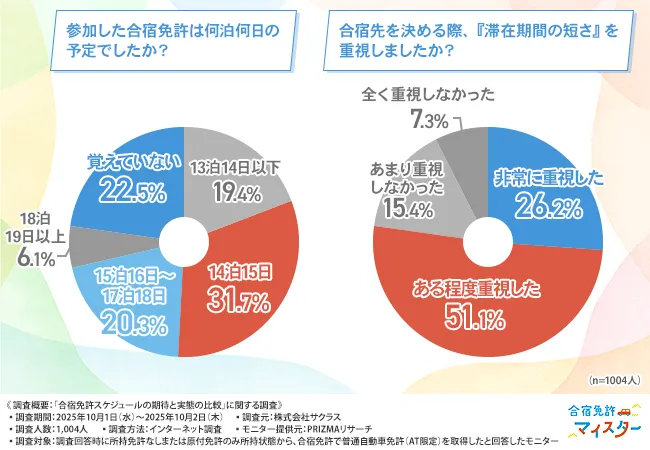
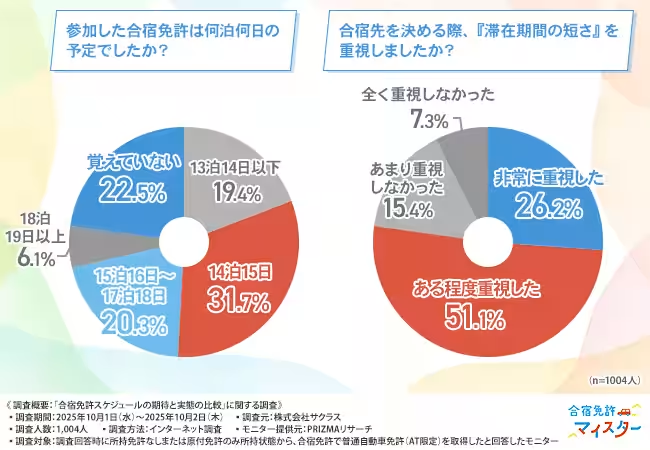
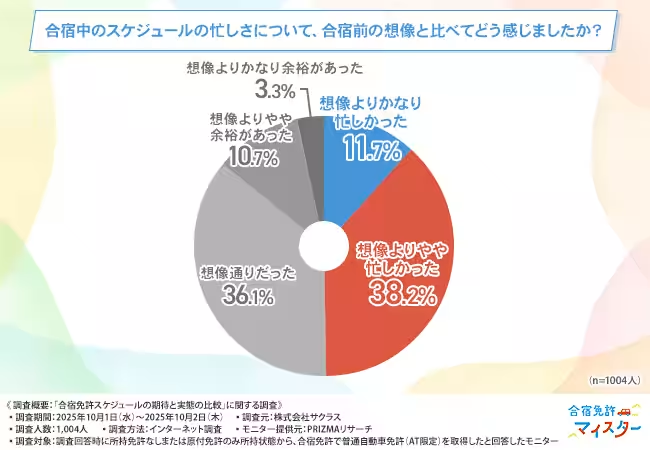
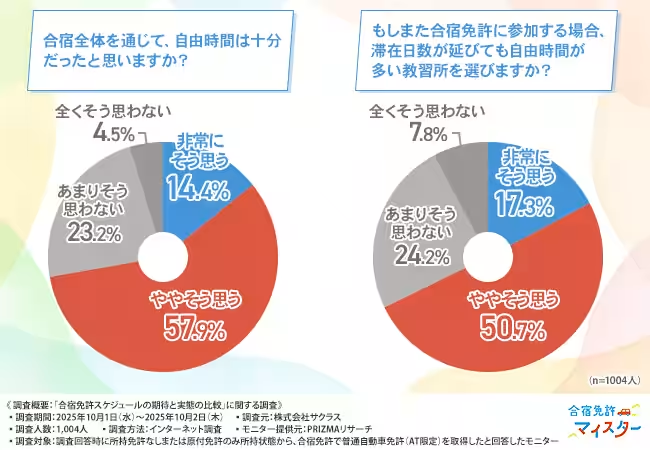
Around 80% of participants indicated that they prioritized a shorter stay when selecting a driving school camp. However, about half of the respondents felt that their actual schedule was busier than expected. Conversely, 70% reveled in their leisure time during the camp, suggesting a nuanced relationship between scheduled training and free time. The essential question arises: how does leisure time figure into the overall satisfaction of the participants?
What Participants Asked When Choosing a Camp
The survey revealed that the most common duration reported was '14 nights and 15 days,' aligning with the stipulated minimum period to obtain a car license. When probing whether participants emphasized duration in their decision-making, 26.2% confirmed they heavily prioritized short stay, while 51.1% somewhat valued it, illustrating a distinct trend toward efficiency in their choices.
Participants' responses further elucidated their actual experiences. Nearly half reported that their schedules turned out to be more hectic than they had imagined. This perception hints at the rigorous and structured environment of driving school camps, which can pose mental and physical challenges for learners.
Additionally, when asked about leisure time, approximately 70% believed there was ample free time throughout the camp. This indicates that, while curriculum intensity is high, there remains a significant allowance for relaxation, which is critical for enhancing overall satisfaction during an often demanding learning phase.
Shifting Priorities for Future Camps
Interestingly, when queried about future participation in driving school camps, about 70% declared a preference for schools that offer more leisure time, even if it meant extending their stay. This statistic indicates a shift in priorities; while the initial selection emphasized shorter durations, experiential insights have led many to reconsider the value of downtime.
Surveys results transcend mere numbers; they embody a fundamental truth in education—balance is key. The findings suggest that prospective drivers now understand that while efficiency remains significant, ample leisure time is equally essential for a fulfilling driving school experience.
Conclusion: Balancing Efficiency with Leisure Time
The investigation shed light on the delicate balance between the intensity of a curriculum and the necessary leisure time during learning. Attendance at driving school camps mostly prioritizes shortening the learning duration, yet sufficient leisure time plays a crucial role in learners' overall satisfaction.
Participants' revelations about their experiences serve as a recommendation for future learners and driving school providers alike: maintain a healthy balance between efficiency and relaxation. A well-structured camp not only caters to rapid skill acquisition but must also consider participants’ mental and emotional well-being.
For those contemplating their future driving school experiences, consider both the duration of stay and the amount of leisure time during the schedule to ensure a fulfilling and enjoyable learning experience.
For comprehensive insights and comparisons of driving school camps, visit Driving School Meister. Here, users can discover reputable driving schools tailored to their specific needs, ensuring the best possible guidance throughout their journey to obtaining a driving license.

Topics Consumer Products & Retail)
【About Using Articles】
You can freely use the title and article content by linking to the page where the article is posted.
※ Images cannot be used.
【About Links】
Links are free to use.