



Safety Precautions for Cooking Appliances to Prevent Accidents
The Importance of Safety Precautions for Cooking Appliances
As the leaves turn and fall settles in, many of us are drawn to the kitchen, eager to whip up seasonal dishes. Cooking appliances like microwave ovens and induction cooktops are often viewed as safe options since they don't involve open flames. However, a startling number of accidents arise from their misuse. The National Institute of Technology and Evaluation (NITE) highlights the need for caution and awareness when using these devices, encouraging consumers to stay informed about potential risks.
Rise in Cooking Appliance Accidents
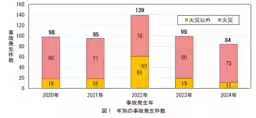
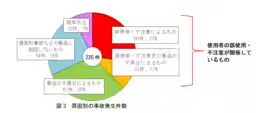
Between 2020 and 2024, NITE reported a total of 515 accidents involving cooking appliances. The most frequently reported culprits were microwave ovens and induction cooktops, with almost 40% of these incidents attributed to user error or negligence. The statistics reveal a concerning trend: convenience may sometimes invite carelessness, which can have dire consequences.
Understanding the Mechanisms at Play
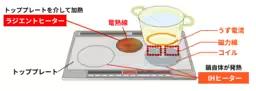
Modern cooking devices often incorporate multiple heating methods. For example, microwave ovens can operate in both microwave and oven modes, while induction cooktops may feature both induction and radiant heating elements. Misunderstanding how these functions operate can easily lead to missteps, such as incorrect mode selection or timer settings. Such oversights can result in smoke, fire, or other hazardous situations.
Important Safety Tips
To safeguard yourself when using cooking appliances, consider the following recommendations:
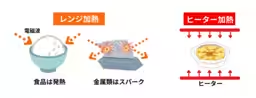
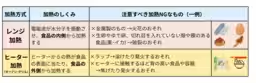
- - Know Your Appliance: Familiarize yourself with how different heating mechanisms work, such as distinguishing between microwave heating (which warms food from the inside) and heater heating (which cooks from the outside).
- - Follow Instructions: Always consult the user manual or product packaging for safety guidelines. Ensure that you are choosing the correct mode and setting the timer accurately.
- - Clean Regularly: Regular maintenance is key. Allowing food residue to accumulate inside a microwave can create a fire hazard, while flammable materials left on or near heating elements can ignite unexpectedly.
A Closer Look at Incident Statistics
The data from NITE reveals that out of the 515 reported accidents, approximately 388 incidents involved fires, underscoring the prevalent fire risk associated with cooking appliances. Each year, microwave ovens and induction cooktops continue to be significant contributors to these statistics.
For instance, in 2022, a specific incident involving electric kettles drew attention due to their connection to overheating. In this case, the kettle's heating base suffered damage, prompting a recall of 45 units. While this was unique to kettles, the lesson remains clear: proper usage and maintenance of all cooking appliances are vital.
Real-World Examples of Cooking Accidents
Incident: Microwave Oven
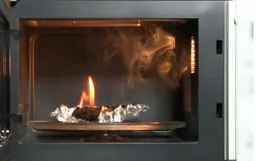
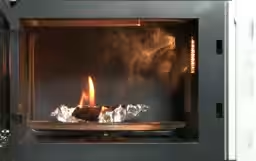
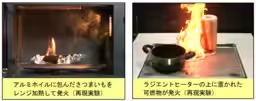
A shocking incident highlighted in a NITE survey showed that a sweet potato wrapped in aluminum foil caused a microwave to catch fire. The user reported smoke filling the room and narrowly avoided triggering the fire alarm. This incident illustrates the necessity of understanding safe materials for microwave cooking.
Incident: Induction Cooktop
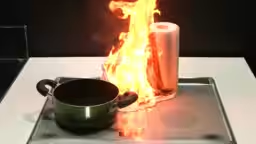
Another alarming case from June 2021 involved an IH cooktop linked to a fire that severely damaged both the appliance and surrounding items in a care facility. While the exact cause couldn't be pinpointed, the fire likely initiated from an accidental activation of the cooktop, igniting nearby flammable materials such as towels.
Best Practices for Safer Cooking
Educate Yourself: Understanding the differences between cooking methods is essential. For example:
- - Microwave Heating vs. Heater Heating: Using metallic containers in a microwave can cause sparking and fires.
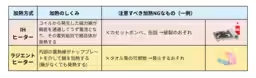
- - Induction vs. Radiant Heating: Induction cooktops directly heat cookware through magnetic fields while radiant elements heat via an electric coil, which can become dangerously hot. It’s important not to leave any flammable materials unattended near either type.
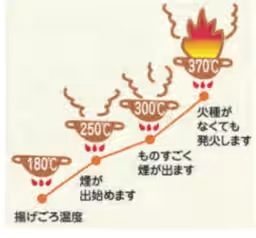
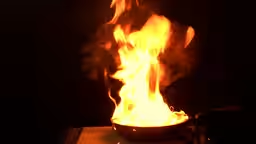
Adhere to Guidelines: Always confirm that settings are correct before starting the cooking process. This also includes using appropriate oil temperature controls when preparing fried foods.
Maintain Cleanliness: Regular cleaning is crucial to ensure safe operation. Removing food debris from microwaves and ensuring nothing obstructs induction cooktops can greatly reduce fire risks.
NITE's Commitment to Safety
To further aid consumers, NITE offers a web search tool called NITE SAFE-Lite, where users can easily search for product-related safety incidents and recalls using familiar product names. With this service, consumer safety can be prioritized, enhancing public awareness about risks associated with cooking appliances.
In conclusion, while cooking appliances are invaluable components of modern kitchens, understanding their safe use is paramount as we embrace the warmth of fall cooking. Let’s commit to safe and informed cooking practices to enjoy the season’s delights without unnecessary risks.


Topics Consumer Products & Retail)
【About Using Articles】
You can freely use the title and article content by linking to the page where the article is posted.
※ Images cannot be used.
【About Links】
Links are free to use.