



Next-Generation Bio-Manufacturing Companies in Asia: A Comprehensive Survey Analysis
Comprehensive Analysis of Asia's Bio-Manufacturing Sector
Introduction
In the rapidly evolving field of bio-manufacturing, understanding the trends and dynamics among startups and large enterprises is crucial. Axetimes Co., Ltd., headquartered in Osaka, Japan, has conducted an in-depth analysis focusing on bio-manufacturing enterprises in Asia, particularly Japan, China, South Korea, and Taiwan. This report offers valuable insights into the development strategies and technological advancements of these companies as they contribute to a sustainable bio-economy.
Overview of the Report
Released on September 17, 2025, the report titled "Next-Generation Bio-Manufacturing Companies: Technology Development and Business Plans, 2025 Edition [No.2: Company Edition | Japan, China, South Korea, Taiwan, and Others]" examines the landscapes of 40 startups and 20 large companies. The report organizes and analyzes their technical developments and business strategies to create a comprehensive resource that stakeholders can utilize for strategic planning and alliances.
Key Insights from the Survey
- - Emerging Trends: The report identifies significant trends among the identified companies, focusing on areas such as core technologies, organizational structures, and alliances.
- - Diverse Applications: The companies surveyed are making advances across various fields including biotechnology, food safety, energy production, and sustainable materials.
Recommendations for Target Audiences
This report is especially beneficial for specific sectors:
- - Chemical and Textile Manufacturers: Companies involved in the production of chemicals and textiles can gain insights into new materials and methods.
- - Food and Pharmaceutical Industries: Insights into bio-manufacturing applications relevant to food safety and drug development.
- - Energy Sector: Organizations looking to innovate sustainable energy solutions through biotech advancements.
The Importance of Bio-Manufacturing
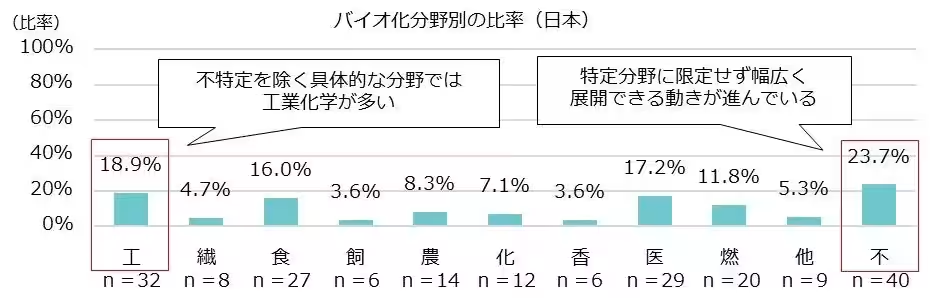
Bio-manufacturing leverages biological systems, like microbes and enzymes, to produce valuable products. This method stands at the forefront of high-value production and novel functionality development. The report highlights that companies particularly in Japan are developing broadly applicable technologies without confining themselves to specific fields, which shows a permissive and flexible innovation environment.
Market Trends: Regional Analysis
- - In Japan: The survey finds a majority of innovations classified as ‘unspecified’, indicating that Japanese companies are diversifying their operations beyond traditional markets and technologies. The report notes strong engagement from the chemical industry, with several enterprises focusing on upstream processes like raw material development. A notable highlight is the pharmaceutical sector's movement towards high-value therapeutic applications.
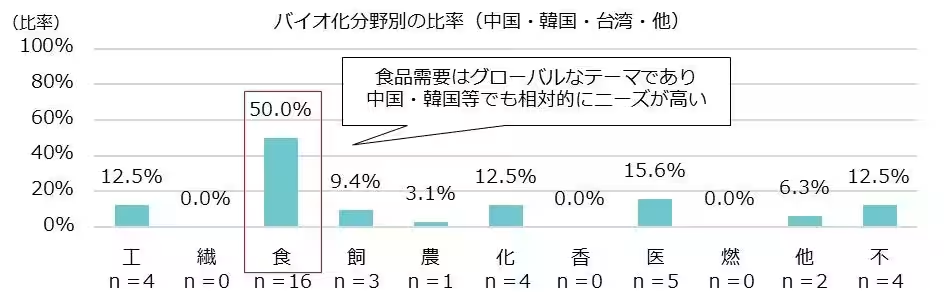
- - In China, South Korea, and Taiwan: The report shows that companies are notably focusing on food applications, reflecting global population growth and the urgent need for food security. This trend underlines the rising demand for innovative solutions in the bio-manufacturing of food products.
Conclusion
The findings in Axetimes’ report equip industry stakeholders with critical information to inform their strategies and make informed decisions in the bio-manufacturing domain. Understanding these dynamics is key as global markets shift towards sustainable solutions, emphasizing the crucial role of biotechnology in shaping future industries.
Future Outlook
As researchers, producers, and policymakers look to innovate and enhance the bio-economy, continuous assessments like these become vital. The report will serve as a framework for understanding industry evolution and fostering collaboration among various sectors.
For more information on securing your copy of the report or to access free sample insights, visit Axetimes' official page.


Topics Business Technology)
【About Using Articles】
You can freely use the title and article content by linking to the page where the article is posted.
※ Images cannot be used.
【About Links】
Links are free to use.