



Innovative Cacao Bioplastic Pens Highlight Africa's Sustainable Development at TICAD9
TICAD9 and the Cocoa Revolution
The TICAD9 (Tokyo International Conference on African Development) took place from August 20 to 22 at Pacifico Yokohama, gathering global leaders and stakeholders to discuss Africa's development. Among the key exhibitors was Meiji Company, which highlighted its role in promoting sustainable cacao production through innovative technologies. Their commitment is not just to chocolate but to transforming the entire cacao plant into usable, eco-friendly materials.
Cacao Bioplastics: The Solution to Waste
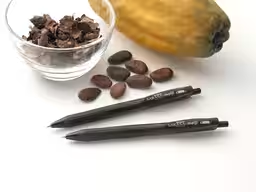
Meiji, in collaboration with Hemicellulose and Zebra Co., has developed an eco-friendly gel ink ballpoint pen made from cacao seed husk, termed 'Cacao Bioplastic'. This product not only serves as a writing instrument but also as a remarkable example of upcycling, allowing previously unused parts of cacao to serve a new purpose, aligning with the conference’s sustainability goals. The beautifully branded 'Sarasa Clip' was distributed as a commemorative item to dignitaries, showcasing innovative Japanese technology in action.
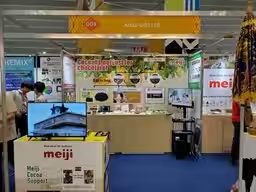
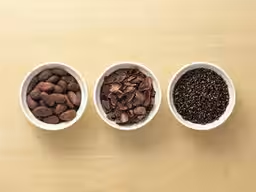
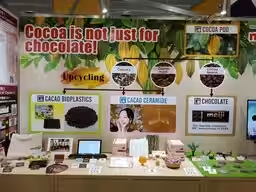
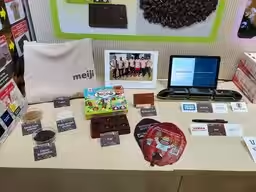
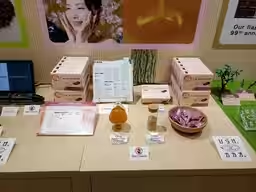
The display theme 'Cocoa is not just for chocolate!' encapsulated Meiji’s vision, presenting items like food trays made from cacao bioplastic, along with cacao ceramide-infused chocolates and other inventive products. The cacao plant often faces significant challenges with less than 30% of its fruit being utilized for chocolate, while the remaining portions typically go uncaptured as feed, fertilizer, or fuel.
Addressing Social Issues in Cacao Production
Cacao production in Africa encounters several social and environmental issues, including deforestation and child labor. Meiji has responded to these challenges through its 'Meiji Cacao Support' initiative, providing assistance to cacao farmers for nearly two decades. Their approach transcends traditional cacao sourcing as they focus on creating value from the entire plant, including less utilized components like seed husks. The recent recognition of two Meiji employees as development chiefs in Ghana underscores the impact of their efforts in fostering sustainable cacao practices.
Collaborative Innovations for a Sustainable Future
The partnership with Hemicellulose to create 'Cacao Bioplastic' demonstrates the power of collaboration. The development process required extensive testing to resolve issues related to the material's heat sensitivity, taking around two years to bring the finished product to life. The outcome is not just a testament to innovation but also symbolizes the potential for cacao to address pressing global environmental concerns.
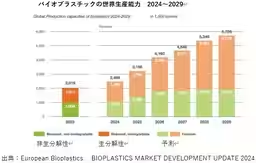
Bioplastics are rising in prominence as a solution to problems like global warming and ocean pollution. According to European Bioplastics, production capacity for bioplastics is projected to more than double by 2029, underlining the growing importance of materials like 'Cacao Bioplastic'. This new form of bioplastic balances hardness and flexibility, promising wider applicability across various industries.
Future of Cacao in Africa
With the ongoing TICAD Business Expo promoting Japanese enterprises and their contributions to Africa’s markets, Meiji underscores the need for sustainable practices in cacao production. By advocating for the inclusion of upcycled products in everyday use, they are paving the way for innovative solutions that also create new business opportunities in the African landscape.
In conclusion, Meiji's innovative approach exemplifies how industries can contribute to sustainability while addressing socio-economic challenges linked to cacao production. Through continuous efforts, they aim to not only expand the possibilities of cacao but also play a pivotal role in achieving a more sustainable future. For further details on Meiji’s initiatives, visit their sustainability page here.
Topics Consumer Products & Retail)
【About Using Articles】
You can freely use the title and article content by linking to the page where the article is posted.
※ Images cannot be used.
【About Links】
Links are free to use.