




Six Months After Implementation: Understanding the Real Transport System Management Records and Their Operational Impact
Six Months After the New Regulation: Insights from the Real Transport System Management Records Survey
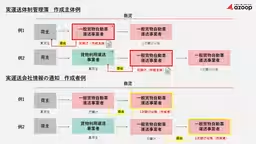
In April this year, the implementation of the Real Transport System Management Records became mandatory for transport operators in Japan. This initiative aims to visualize the complex subcontracting structures from prime contractors to secondary and even tertiary contractors to address issues such as long working hours, low wages, and a shortage of drivers in the logistics industry. Amidst this regulatory backdrop, Azoop conducted a survey involving 100 transport businesses focusing on their operational realities concerning these records.
Survey Background and Findings
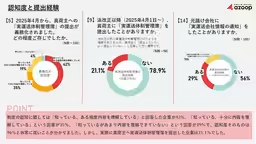
The concept of the Real Transport System Management Records was introduced to provide clarity about the subcontracting structures involved in transportation. From this survey, it was evident that while awareness of the regulation is impressively high at 96%, only 21.1% of those surveyed have actually submitted the required records. This gap highlights the challenges operators face in actually adopting the policy, which include insufficient information sharing and increased administrative burdens.
Key Findings:
- - Awareness vs. Action: A high recognition rate of 96% suggests that most companies are aware of the regulation; however, the low submission rate indicates operational hurdles.
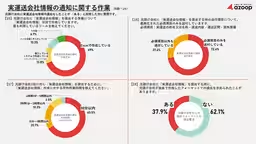
- - Information Sharing Issues: Over 60% of respondents noted that they do not receive adequate information from clients, which is crucial for compliance.
- - Administrative Burden: The new requirements have led to an overall increase in paperwork and administrative tasks. This has been particularly taxing for transport companies who find the increase in task complexity burdensome.
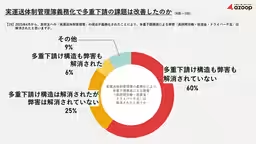
- - Persistent Subcontracting Issues: Approximately 60% of respondents feel that even with the new regulations, the challenges associated with the multi-tier subcontracting structure have yet to be resolved.
Details on Key Topics
1. High Recognition, Limited Action
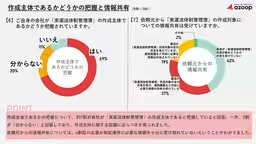
Among those surveyed, a significant 42% reported that while they know of the policy, they understand it only to a limited extent. A further 19% recognized it but could not grasp its intricacies. The disconnect between awareness and actual practice indicates a gap that needs bridging for broader compliance. As many companies await clearer instructions from their clients regarding record submissions, they remain in a state of readiness rather than active compliance.
2. Information Sharing Deficits
The foundation of the Real Transport System Management Records mandates transparency in the information related to the transport process. However, 42% of survey participants stated they had not received the necessary information, while another 19% indicated that while they were informed that their transport was subject to record-keeping, other vital details were lacking. This suggests a significant communication gap that prevents effective implementation.
3. Increased Administrative Work
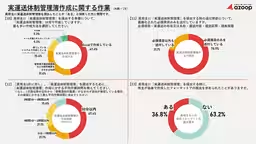
The introduction of these records has created new administrative responsibilities for transport operators. The requirement to cater to various standards set by prime contractors adds to the complexity; nearly 40% of respondents reported needing to adapt to different submission formats. Such variations result in increased administrative work, arguably framing the regulation as an additional paperwork burden rather than an efficiency-centric tool.
4. Ongoing Subcontracting Concerns
When queried about the effectiveness of the regulation in alleviating issues related to the multi-tier subcontracting structure, around 60% confirmed they still perceive significant issues. Another 25% acknowledged that while some improvements were noted in the structure, the overarching problems have not been fully addressed. This highlights a disconnect between the intended objectives of the regulation and actual outcomes.
Conclusion: Moving Forward
Addressing the challenges unearthed by the survey will require collaboration across all levels of the transportation sector. Enhancing transparency in communication and streamlining administrative processes will be essential steps. As the logistics sector evolves, companies must adapt to these regulations while advocating for necessary reforms to create a more efficient operational framework. Azoop is already addressing these issues with its innovative services, emphasizing a digital transformation approach to help transport businesses navigate these changes effectively.
About Azoop
Azoop specializes in providing DX services, including the 'Truckers Manager' platform, which assists transport companies in easily generating the required management records using their daily operation data. Headquartered in Tokyo, this company is determined to lead the way in transforming the logistics industry’s operational landscape.
For more information about Azoop and their services, visit Azoop.


Topics Other)
【About Using Articles】
You can freely use the title and article content by linking to the page where the article is posted.
※ Images cannot be used.
【About Links】
Links are free to use.