



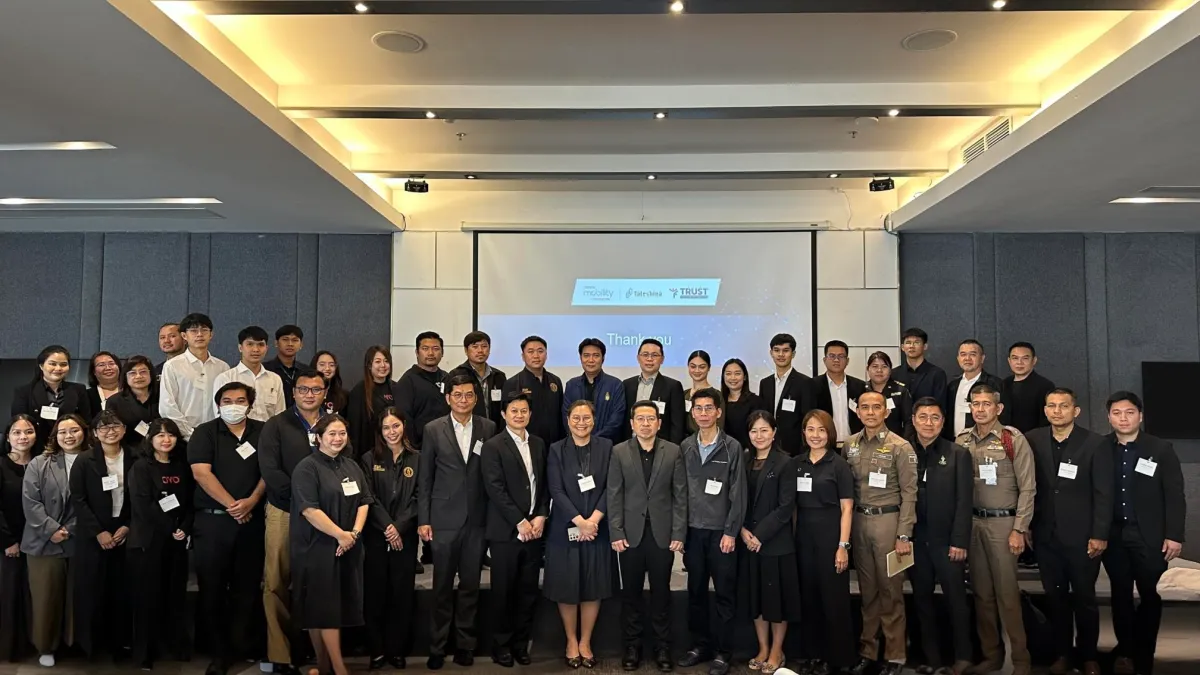
Toyota Mobility Foundation Hosts International Workshop on Traffic Safety in Bangkok
Toyota Mobility Foundation's Workshop in Bangkok
On July 3rd, 2026, the Toyota Mobility Foundation (TMF), led by Chairman Akio Toyoda, organized a vital workshop in Bangkok focused on enhancing traffic safety measures. This event was part of the global initiative 'Tateshina Conference,' aimed at eliminating road traffic injuries and fatalities, which emphasizes collaborative efforts across various sectors.
The workshop engaged key stakeholders in the pursuit of actionable traffic safety strategies. Utilizing insights gathered from analyzing accident hotspots in the Chatujak district, participants explored effective measures to address these critical areas.
Overview of the TRUST Project
As part of the TRUST initiative — which stands for Thailand Road Users Safety through Technology — TMF partnered with several organizations including the Bangkok Metropolitan Administration, the United Nations Human Settlements Programme, Asian Institute of Technology, Toyota Motor Thailand, and Road Accident Victims Protection Co., Ltd. This project aims to leverage diverse data sources, including vehicle probe data and CCTV footage, to conduct AI-driven analyses. The goal is to identify risks and dangerous behaviors that could potentially lead to serious accidents, ultimately fostering more effective traffic safety interventions.
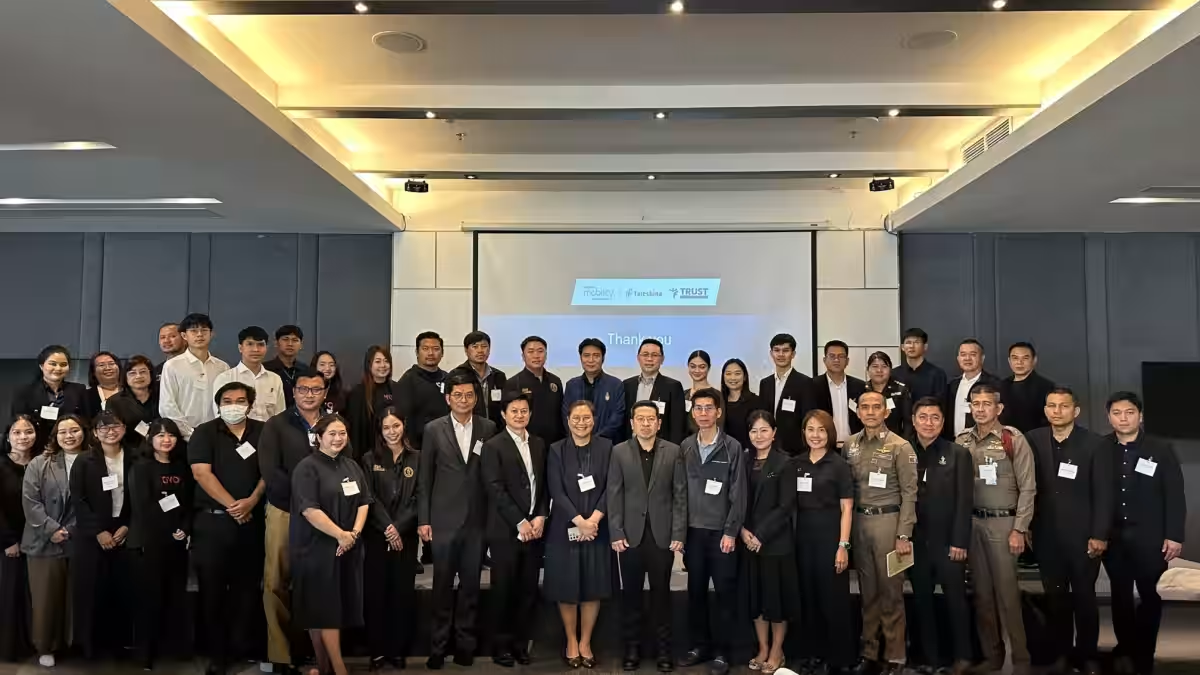
During the workshop, representatives from various governmental offices, including the Disaster Prevention and Mitigation Bureau, the Traffic Policy Planning Bureau, and local police, as well as private sector stakeholders, came together. They validated analysis results, categorized issues, and set priorities for strategic actions to enhance traffic safety in the region.
Workshop Insights and Analysis
1. Background of Traffic Incidents
Traffic accidents in Thailand remain a pressing social issue, particularly affecting motorcyclists and pedestrians in urban areas like Bangkok. Following previous initiatives aimed at enhancing safety, there is now a crucial need for data-driven investigations into the causes of accidents. Effective measures must be promoted through inter-agency collaboration based on concrete data.
2. Focused Analysis of Accident-Prone Areas
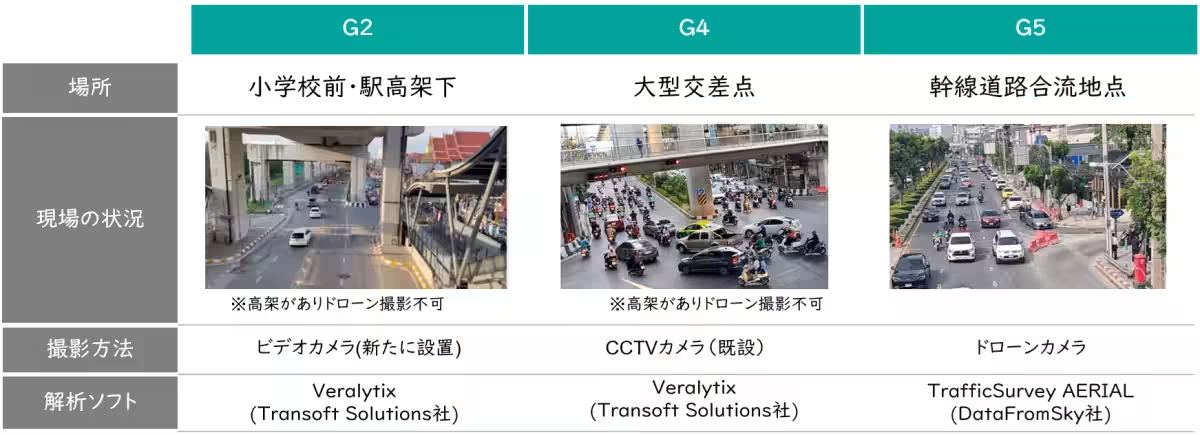
The TRUST project zeroed in on three critical intersections for in-depth analysis:
- - G2: Front of Wat Samian Nari School near an elevated station
- - G4: Ratchada-Raprarow large intersection
- - G5: Merge point of Ratchada Soi 32 main road.
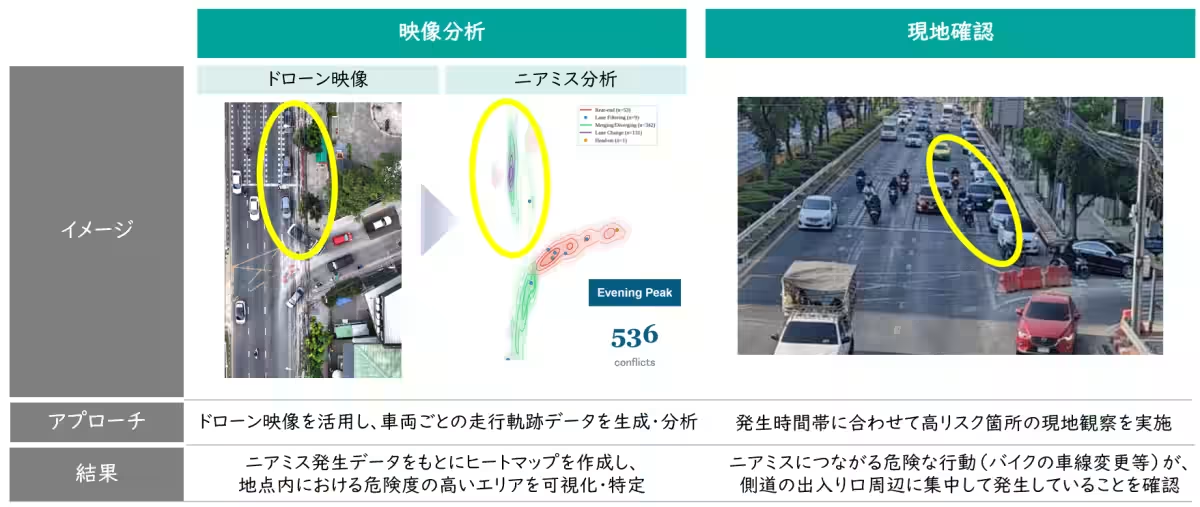
To evaluate these sites effectively, various analytical tools were employed including CCTV footage, drone imaging, and AI analytics from companies like DataFromSky and Transoft Solutions. This multifaceted approach helps visualize vehicular and pedestrian movements to identify accident risks.
In addition to traditional incident records, the analysis incorporated near-miss assessments using Time to Collision (TTC) evaluations. This innovative approach revealed potential risks often overlooked by conventional observational methods, enabling a quantitative examination of behavior patterns.
3. Key Findings from the Analysis
From the analysis, divergent risk factors were identified at each accident hotspot. For instance, at the G5 merge point, vehicle congestion during lane changes emerged as a predominant risk factor, particularly due to inappropriate lane changes to avoid traffic — leading to significant collision risks between straight-moving vehicles and those turning. Moreover, integrating AI analysis with on-site observations facilitated a clearer visualization of dangerous driving behaviors relative to road and infrastructure conditions.
4. Strategic Action Discussion
Building from the findings, participants debated action plans across three primary dimensions:
- - Infrastructure Improvements: Enhancements like better road markings, improved visibility, and redesigning traffic flow to reduce speeds.
- - Behavioral Interventions: Initiatives encompassing traffic safety awareness campaigns, driver education, and stricter enforcement of traffic regulations.
- - Vehicle Data Utilization: Leveraging vehicle probe data to monitor driving behaviors.
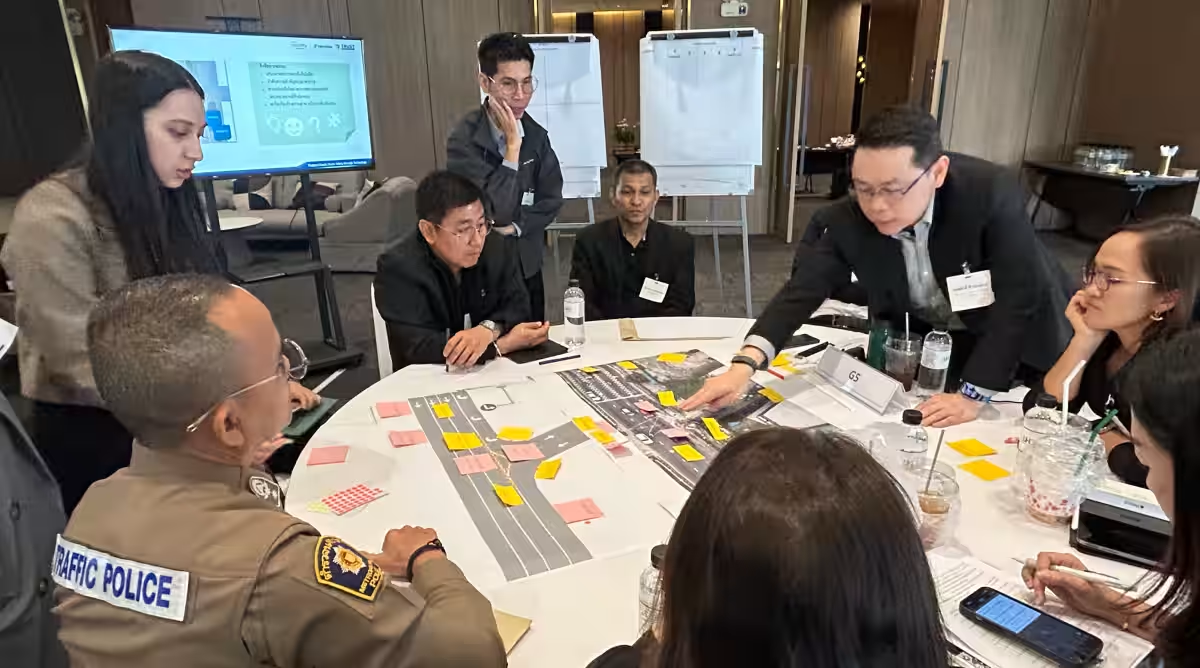
The workshop structured these discussions into short, medium, and long-term action priorities. Participants utilized large maps for group discussions to establish these priorities and formulate a clear direction for implementation.
Future Directions
The workshop represented a crucial step toward enhancing traffic safety collaboration within Bangkok. Stakeholders shared prioritized strategies reflective of local realities while clarifying roles for ongoing initiatives. Furthermore, the KUB-DEE-DAI-DEE project contributed insights, connecting traffic safety with broader public engagement and education.
The TRUST project is poised to continue turning data-driven analyses into concrete strategies, working alongside stakeholders for a safer, inclusive, and sustainable mobility future.
Topics Consumer Technology)
【About Using Articles】
You can freely use the title and article content by linking to the page where the article is posted.
※ Images cannot be used.
【About Links】
Links are free to use.