



Revolutionizing Property Restoration: A 3D Solution to Ongoing Disputes
Tackling the Property Restoration Dilemma with 3D Technology
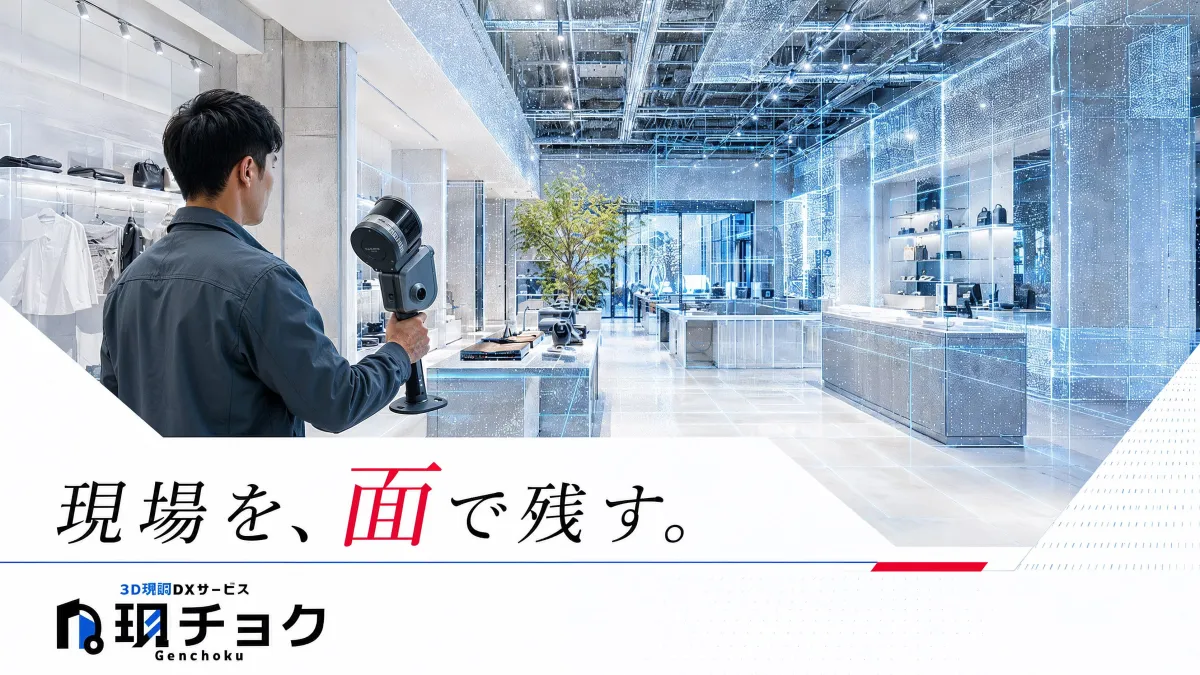
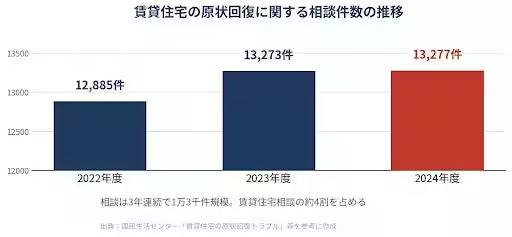
In recent years, the number of disputes arising from property restoration, particularly in rental housing, has been steadily increasing. In Japan alone, these disputes surpass 13,000 cases annually, as noted by the Consumer Affairs Agency. A significant issue contributing to this trend is the lack of clear, verifiable records of the condition of properties before and after tenants vacate them. To address this challenge, Space Lab Inc., a subsidiary of iceberg theory holdings, has developed a groundbreaking 3D documentation service named "Genchoku".
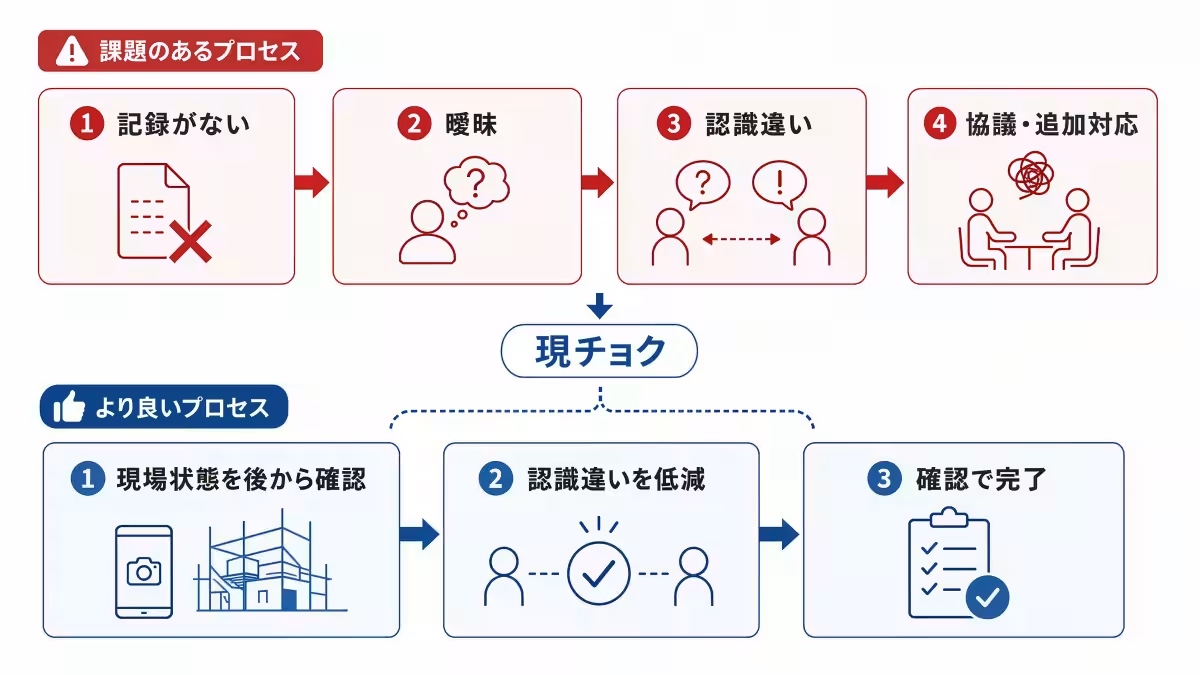
The Current State of Issues in Property Restoration
The core of the problem often lies in the discrepancies between landlords and tenants regarding restoration costs upon moving out. Many people have encountered misunderstandings in what can often become a drawn-out negotiation. According to the National Consumer Affairs Center, property restoration queries represent about 40% of all rental-related consultations. The existing guidelines issued by the Ministry of Land, Infrastructure, Transport and Tourism provide frameworks for determining these costs, yet the persistent issue arises from the lack of recorded evidence of the property's state at crucial moments, such as before the tenant moved in and after they vacated.
Without clear documentation, all stakeholders must rely on their memories and interpretations of the events, which can lead to further delays and disputes. For example, a contractor may experience losses tied to restoration efforts, reflecting a significant impact on their revenue without an accurate way to quantify these costs. 3D scanning technologies, however, are poised to enhance the documentation of these projects, providing holistic views that photographs alone can't capture.
The Shortcomings of Traditional Photographic Evidence
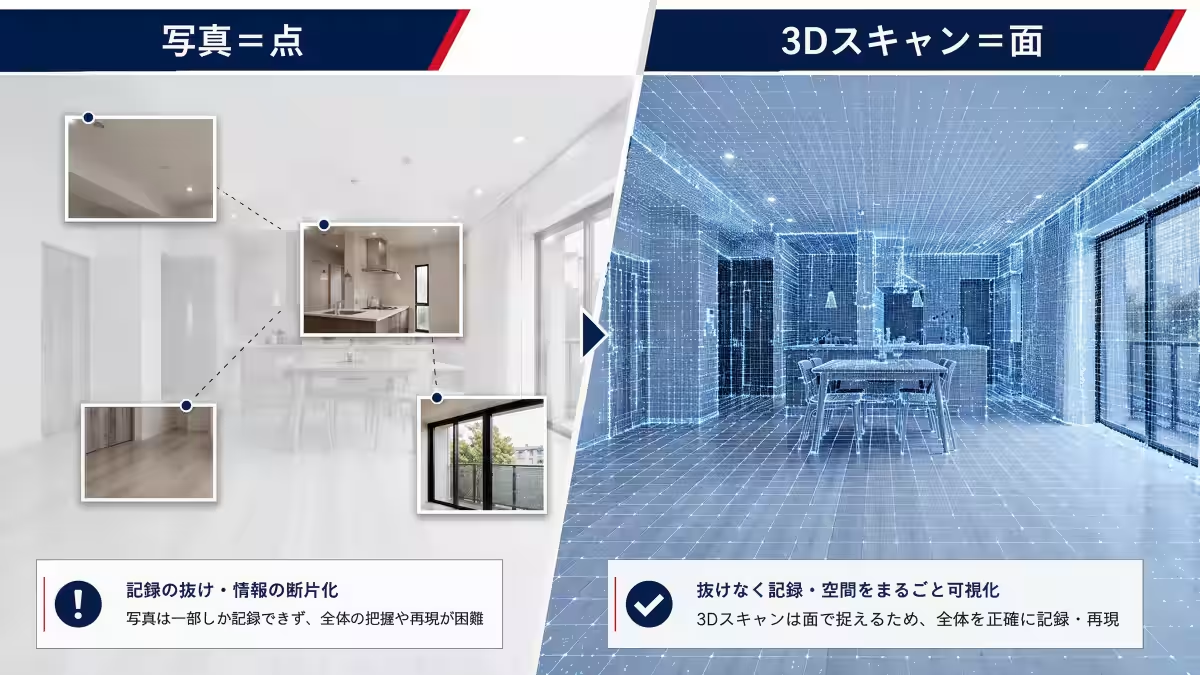
While photographs have long been the standard for documenting the condition of rental properties, they have inherent limitations. Photos can only capture "points" of interest, which often leads to oversight of critical areas that may result in disputes later. Key shortcomings of relying solely on photographs include:
- - Omissions: Critical areas may not be photographed.
- - Limited Perspective: The extent and severity of damage may be unclear.
- - Ambiguous Location: It can be difficult to ascertain the exact location of any damage.
- - Timing Issues: Photos may not effectively indicate whether the condition was noted prior to the tenant's move-in or after their departure.
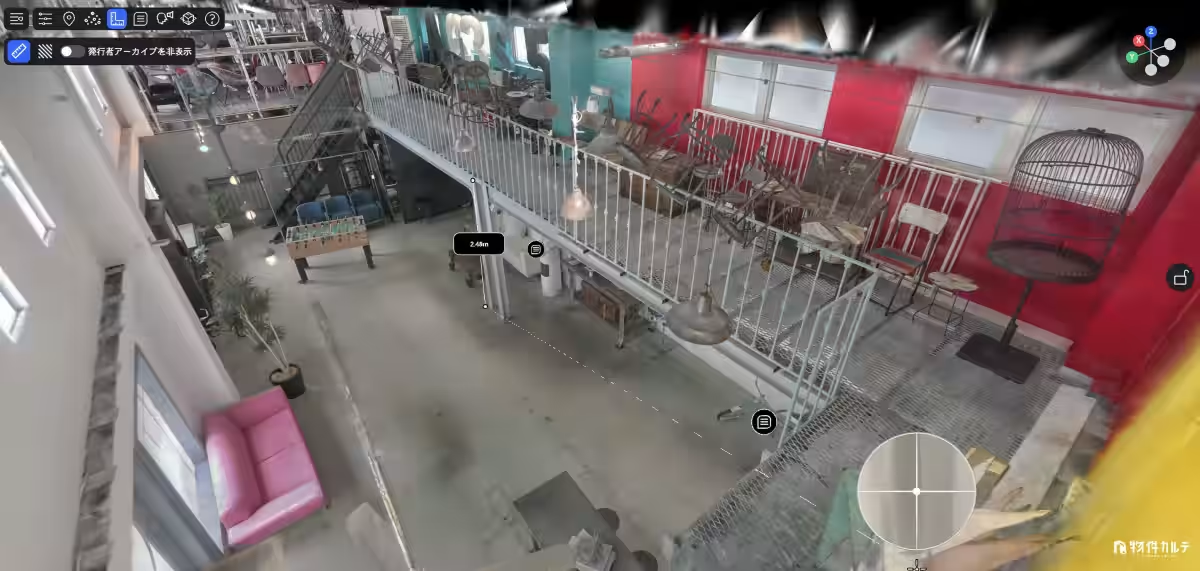
To address these issues, the "Genchoku" service offers a method that produces comprehensive 3D representations of the site, allowing for detailed recordings that fill in the gaps left by photos.
Introducing the Genchoku Service: A New Paradigm in Documentation
The “Genchoku” service provides an extensive range of documentation, including 3D scans and web-sharing tools, to create accessible records of the property's condition. The recently introduced "Trace Plan" allows a third-party professional to record the current state of the property in 3D format, storing this data for future reference. This format reduces misunderstandings that arise from different perceptions of the property's state, thus alleviating burdens associated with confirming conflicting narratives.
Benefits for Various Stakeholders
- - Landlords and Tenants: By recording the state of the property before and after tenancy, both parties have access to a verifiable record reducing disputes.
- - Contractors: Documentation assists in project scope confirmation and clarifies responsibility for damages, helping to prevent costly misunderstandings.
- - Cultural and Historical Properties: For invaluable structures that require meticulous care, having detailed records can safeguard against unauthorized alterations or damage.
The service charges start at approximately $500 for up to 400 square meters, with plans for long-term archiving options available. Each recording is not just a snapshot but a valuable asset that can support ongoing property management and restoration decisions.
Highlighting Success at Industry Events
At the recent "Construction DX Exhibition Plus" held at Tokyo Big Sight, the response to "Genchoku" was overwhelmingly positive, with over 750 business cards exchanged in just three days, indicating strong interest in the new service. Potential clients expressed enthusiasm for further discussions on how they can utilize this cutting-edge technology within their operations, further affirming the demand for comprehensive and reliable property condition records.
In conclusion, the approach taken by Space Lab to document properties in 3D streamlines the restoration process, enhancing clarity and protecting against future disputes. As the digitalization of construction and property management advances, services like "Genchoku" may become the industry standard, revolutionizing how stakeholders interact and manage their assets effectively. A lack of ambiguity around property conditions can indeed enable all involved parties to focus on their primary objective—efficient and successful management of real estate transactions.


Topics Consumer Technology)
【About Using Articles】
You can freely use the title and article content by linking to the page where the article is posted.
※ Images cannot be used.
【About Links】
Links are free to use.