




Unlocking the Mechanism of Wheat Variant WS1: A Breakthrough in Drought Resistance and Water Conservation
Understanding the Water-Saving Mechanism of the WS1 Wheat Variant
In response to the escalating severity of droughts, the ability of crops to survive while conserving water has become a critical issue for food production. A formidable research team, which includes experts from Kobe University, Yamaguchi University, Tokyo University of Agriculture and Technology, Okayama University, and Tottori University, has made significant strides in this field. They have identified a wheat mutant known as WS1, which demonstrates a remarkable combination of high survival rates while minimizing water usage.
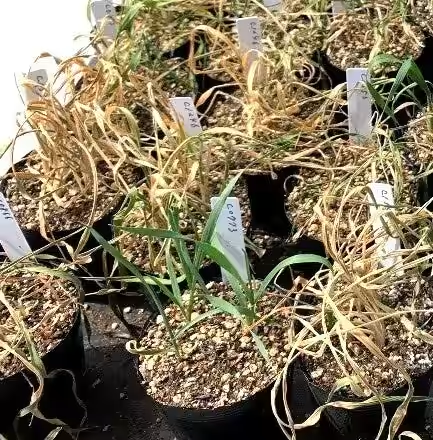
The key discovery is that WS1 possesses an extraordinary capacity to close its stomata, thereby reducing water loss significantly. This mutant shows a unique adaptation strategy that prioritizes survival over growth, diverging from traditional plant responses to water deficiency. Notably, WS1 exhibits a reduced dependence on the plant hormone abscisic acid (ABA), instead relying on metabolic and protein phosphorylation reprogramming to achieve drought resistance. This remarkable capability suggests that WS1 operates on a survival mode, where the focus shifts from growth to enduring adverse conditions.
The implications of this research are promising for the future of agriculture, especially in areas susceptible to drought. As the world faces the increasing challenges of climate change and water scarcity, developing crops that can thrive under such conditions is paramount. The findings from this study have been published in the journal Plant, Cell & Environment on April 19, 2026, providing significant insights into the mechanisms at play.
Research Background
This pioneering study, led by Associate Professor Ryosuke Mega of Kobe University's Graduate School of Agricultural Science, along with prominent researchers including Professors Taishi Umezawa from Tokyo University of Agriculture and Technology and Tomoyuki Kosaka from Yamaguchi University, aims to address one of the pressing challenges in food production. The focus was on understanding how certain crops, like the WS1 wheat variant, can maintain high survival rates while effectively reducing water consumption.
The research team conducted an in-depth analysis of WS1, revealing the sophisticated internal mechanisms that allow this wheat variant to adapt to arid environments. The findings indicate that the plant's metabolic processes and protein functions are recalibrated to favor survival rather than growth. This adaptability could serve as a model for developing future crops that are resilient to drought, ensuring food security in the decades to come.
Conclusion
As we stand on the precipice of potential agricultural crises due to environmental changes, breakthroughs like the WS1 wheat variant offer a glimmer of hope. The development of crops that conserve water while ensuring survival could transform agricultural practices and enhance food production sustainability. Collaborative efforts among various academic institutes are crucial in paving the way for innovations that align with the goals of achieving a resilient agricultural future. As we continue to tackle the challenges brought on by climate change, research such as this is invaluable in guiding our agricultural strategies.
Acknowledgments
This research project has received financial support from the Japanese Government’s Moonshot Research Program (Project Number: JPJ00923), Japan Society for the Promotion of Science (KAKENHI) Grant (Project Number: 20K06759), and collaborative research at Tottori University's Arid Land Research Center.
For more in-depth information about this groundbreaking research and the WS1 wheat variant, please visit the Okayama University press release.





Topics Consumer Products & Retail)
【About Using Articles】
You can freely use the title and article content by linking to the page where the article is posted.
※ Images cannot be used.
【About Links】
Links are free to use.