



Does Having a Daughter Influence a Father's Gender Equality Attitudes? Insights from Japan
Examining the Impact of Daughters on Fathers' Gender Equality Perspectives
Introduction
The question of whether fathers' gender equality attitudes change after having daughters has gained notable attention in recent research. This article draws from a robust study conducted in Japan, focusing on how the experiences of fatherhood can potentially reshape political beliefs and attitudes towards gender roles. As researchers have explored the influence of children on their parents, this study aims to uncover the reverse effect—how daughters may encourage larger acceptance of gender equality principles among fathers.
Research Overview
Conducted by Professor Yoshikuni Ono from Waseda University and Associate Professor Daina Chiba from the University of Macau, this research utilized the comprehensive Japanese General Social Survey (JGSS) to analyze the political attitudes of fathers who have daughters. The study's innovative approach relied on the nearly random nature of a child's sex at birth, allowing for a focused investigation into whether having a daughter truly correlates with greater acceptance of gender equality principles.
Key Findings
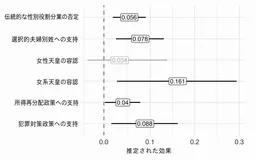
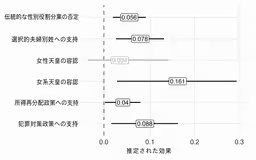
The comprehensive analysis revealed a compelling trend: fathers with daughters exhibited significantly more progressive views on gender roles. These fathers showed a marked disapproval of traditional gender role divisions and demonstrated increased support for reforms related to gender equality, such as the introduction of separate surnames for couples and support for a female imperial lineage. This shift in perspective was linked not only to concerns about women's rights but also extended to support for broader government interventions in social issues like income redistribution and crime prevention initiatives.
However, it’s crucial to note that these influences were limited to attitudes surrounding gender and did not extend to other areas such as immigration policy, national security, or party alignment, highlighting the specific nature of these changes.
Methodology
The research's originality lies in leveraging the random sex distribution of newborns in Japan, where intervention in sex selection is minimal. This setting allowed the researchers to draw more rigorous causal conclusions about the effects of having daughters on fathers' gender attitudes by comparing fathers of daughters and sons who were otherwise similar in all other aspects.
Broader Implications
The findings underscore the significance of family dynamics in shaping political consciousness. They suggest that parental interactions in home life—notably with daughters—can cultivate a deeper understanding of gender-related issues. This revelation prompts an important reconsideration of how societal changes related to gender equality can be both propagated through traditional educational systems and influenced through personal familial experiences.
As fathers navigate the complexities of raising daughters, their evolving perspectives may play a crucial role in supporting gender equality initiatives. The implications of this shift not only reflect personal enlightenment but also could potentially translate into political and social action towards achieving gender equality in the broader societal framework.
Conclusion
This study draws attention to the reciprocal nature of parental influence, asserting that while parents traditionally communicate political ideologies to children, the influence can indeed flow both ways. Future research should focus on the relationship between these attitudinal changes and actual voting behaviors or political participation to ascertain the tangible impacts of having daughters on civic engagement.
Importantly, as Japan continues to navigate its gender disparities, the findings encourage a multifaceted approach to fostering gender equality—one that includes both institutional reforms and emphasizes the transformative potential of personal familial experiences.
Future Directions
Several challenges remain for future studies. The current investigation primarily focused on the effects of having a first daughter, and there is a need to examine how variables like family structure and the number of children may further influence fathers' attitudes. Moreover, findings specific to Japan warrant careful consideration when applying them to different cultural contexts. Comparisons across different countries with varying social and political landscapes can provide deeper insights into these dynamics.
Overall, this research delineates a crucial avenue towards understanding how intimate familial experiences can incite significant shifts in political attitudes and societal norms regarding gender roles.
Acknowledgments
We extend our gratitude to the Osaka University of Commerce's JGSS Research Center for facilitating access to the valuable datasets employed in this study. This research, titled “Do Daughters Change Their Fathers? Evidence from the First-Daughter Effect in Japan,” is set to appear in the June 2026 issue of Public Opinion Quarterly.
Topics People & Culture)
【About Using Articles】
You can freely use the title and article content by linking to the page where the article is posted.
※ Images cannot be used.
【About Links】
Links are free to use.