



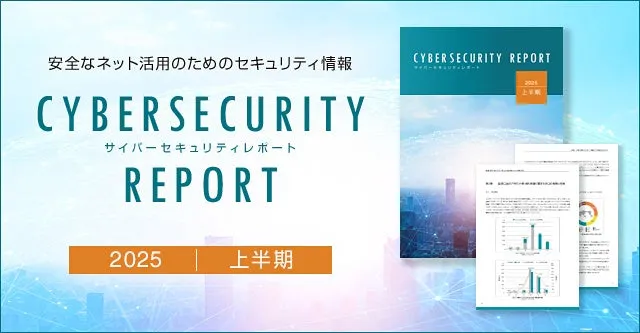
Canon Marketing Japan Releases First Half 2025 Cybersecurity Report Detailing Threat Trends
Overview of Canon Marketing Japan's Cybersecurity Report
Canon Marketing Japan, led by President Masachika Adachi, has released its "First Half 2025 Cybersecurity Report," which addresses the alarming rise in account takeovers of securities accounts and various cybersecurity threats observed in the first half of the year. The report provides insights into tactics used in cyber attacks, trends in active cyber defense across countries, and highlights notable instances of malware detected both in Japan and globally.
As a security solution provider, Canon MJ operates a Cybersecurity Lab, where ongoing research and information analysis are conducted to stay ahead of emerging threats. Regular updates are provided to support security measures for its customers. The newly launched report outlines the intricacies of account takeover cases within the securities domain, focusing particularly on the surge in phishing attacks that became prevalent within the first months of 2025.
Key Highlights of the Report
1. Increase in Securities Account Takeover Attacks
Starting from March 2025, there has been a notable increase in unauthorized access and trading of securities accounts. The main contributing factor appears to be phishing attacks aimed at stealing authentication details, notably becoming more sophisticated due to advances in AI technologies. These enhancements have led to phishing emails written in natural Japanese, making them hard to distinguish from legitimate official communications. Attackers aim to execute fraudulent trades, gather personal data, damage corporate credibility, and manipulate markets for financial gain. This section aims to delve into the structure and causal dynamics of the rising incidents of account takeover.
2. Active Cyber Defense and International Trends
In May 2025, a new law concerning “active cyber defense” was approved, underscoring the necessity for more proactive strategies amidst evolving cyber threats. Conventional passive defense methods struggle to manage sophisticated target attacks, thus necessitating a shift toward robust defensive measures. Japan's active cyber defense strategy centers around three core components: enhancing public-private cooperation, acquiring communication data, and implementing access mitigation measures. This approach is designed to allow for early detection of attack signs and prevent damages. The report examines specific methodologies for implementing this approach and compares Japan’s strategy with practices implemented in other countries.
3. Noteworthy Malware Trends
The report also details the emerging trends of malware detections within Japan and worldwide. It highlights a significant increase in specific malware types, such as HTML/Phishing.MetaMask, primarily posing threats to cryptocurrency users. Several new attack vectors, including ClickFix, demonstrate a shift towards using users to inadvertently execute harmful commands, showcasing the evolving nature of cyber threats.
4. Understanding Support Scams
The report outlines the persistent threat of support scams, where users are misled with warnings of potential viruses on their systems, directing them to contact fraudulent support services. These scams have been recognized as major threats due to their widespread impact, motivated in part by the increased availability of phishing kits through Cybercrime-as-a-Service. Users are encouraged to remain vigilant and updated on the latest scams to protect themselves from falling victim to these schemes.
5. The Need for Proactive Measures
As the cybersecurity landscape continues to evolve, it is essential for users and service providers to implement robust security measures against potential threats. The report emphasizes a collaborative approach to cybersecurity, where both individuals and organizations must remain proactive in their defenses.
The comprehensive report on the first half of 2025’s cybersecurity landscape showcases Canon Marketing Japan's commitment to combating cyber threats through research, education, and collaboration. For deeper insights, download the full report from Canon’s ESET Cybersecurity Information Hub for the latest findings and recommendations.
Additionally, a detailed video explaining the report can be found here: Watch the Explanation Video.
Topics Other)
【About Using Articles】
You can freely use the title and article content by linking to the page where the article is posted.
※ Images cannot be used.
【About Links】
Links are free to use.