



Visualization of Nationwide Water Placement Activities: 2025 Uchimizu White Paper Released
Insights from the 2025 Uchimizu White Paper
On August 1, acknowledged as Water Day in Japan, a significant announcement surfaced regarding the popular practice of water placement, known in Japanese as "Uchimizu." This year, the Uchimizu Operation Headquarters disclosed the findings of a nationwide survey that tracks participation in Uchimizu initiatives throughout Japan for the first time.
Overview of the Uchimizu White Paper
The 2025 Uchimizu White Paper meticulously compiles data regarding the trend of Uchimizu activities, assessing its adoption rates across demographic segments and geographical regions. Here are some of the highlights:
1. Participation Rates
- The survey forecasts that over 9.56 million individuals will participate in Uchimizu activities in 2025.
- There has been a notable increase in participation among younger demographics, primarily those in their teens to thirties.
- Specific regions are stepping up notably, with Hiroshima and Shizuoka as forerunners, showcasing participation ratios of 25% and 24%, respectively.
- Additionally, Mie Prefecture reported a significant year-on-year growth rate of 35% in participation.
2. Monthly Activity Trends
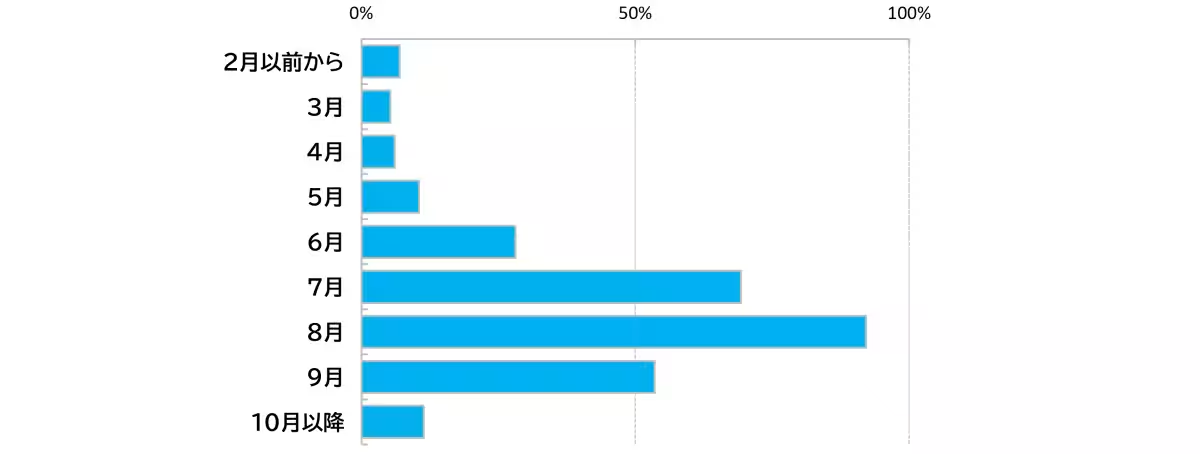
- Uchimizu activities tend to increase from May onwards, reaching the peak in July and August, maintaining high levels into September.
- Over half of the participants reported engaging in water placement on more than 70% of the days, excluding circumstances like rain or extreme cold.
3. Water Usage Analysis
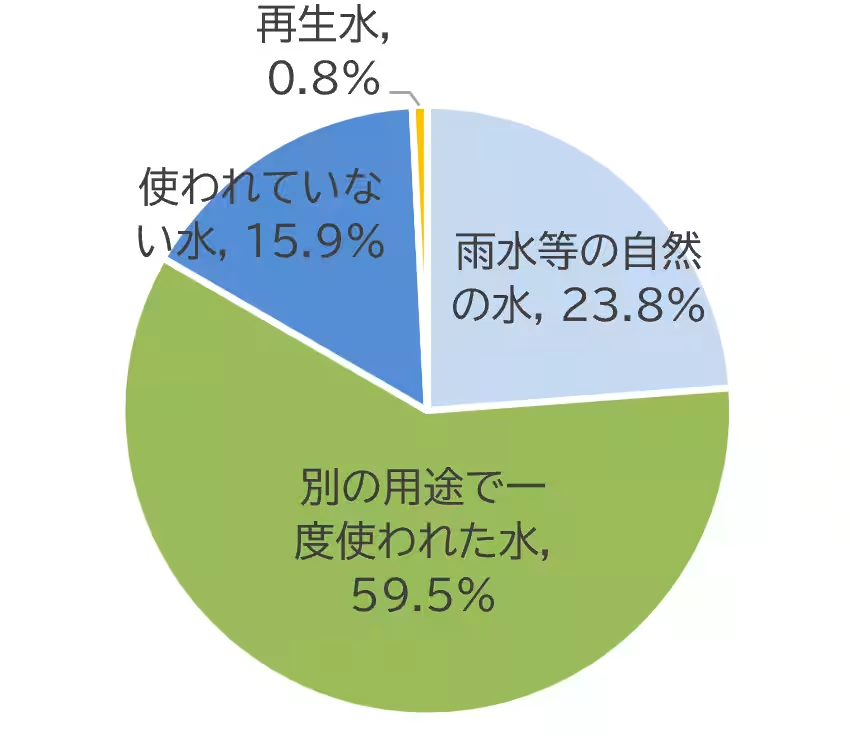
- The Uchimizu Operation Headquarters encourages participants to use alternative water sources, such as bathwater leftover or rainwater, rather than directly using tap water.
- In 2025, the percentage of people using only non-tap water for Uchimizu approaches nearly half, marking an increase from the previous year, while usage of direct tap water has decreased to below 30%.
- The predominant sources for Uchimizu water have been identified as recycled or reused water, with rainwater also ranking high.
4. Consciousness and Behavioral Changes
- An impressive 99% of the participants noted a shift in their awareness after engaging in Uchimizu.
- Key areas of heightened awareness include concerns over extreme heat, the status of water resources, local aquatic ecosystems, and drainage issues.
- The survey highlights that approximately 88% of those with increased awareness took tangible actions, such as learning about environmental changes, practicing water conservation, and favoring the use of rainwater or recycled water for future Uchimizu activities.
The Uchimizu Headquarters
Founded as a non-profit initiative, the Uchimizu Headquarters promotes water placement activities across Japan. They aim to encourage the public to utilize water efficiently, linking past cultural practices from the Edo period to contemporary environmental actions. Each year, over 8 million individuals participate in this social action, responding to climate change in their daily lives. The headquarters initially conducted the unprecedented "Oedo Uchimizu Operation" in 2003, where collaborative initiatives garnered attention across the globe, even in places like Paris and Spain.
Future Directions
With 2026 on the horizon, the Uchimizu Operations are set to continue inspiring action against climate variability while fostering a sustainable approach to water resource management. With countrywide support, including collaborations with various governmental and non-governmental agencies, initiatives will further educate and promote the environmental importance of Uchimizu practices.
Conclusion
The release of the first ever Uchimizu White Paper marks a crucial step in acknowledging the significance of water conservation and the power of collective action. As participants gear up for future endeavors, the blending of tradition with environmental stewardship serves not only as a means of cooling down but also as a reminder of our responsibility toward the planet's precious resources.
For more detailed insights, check the downloadable version of the Uchimizu White Paper online: Uchimizu White Paper 2025.
The Uchimizu operation continues to strive towards a cooler climate through the fun, community-involved practice of water placement. Just as the Japanese have done for centuries, we can harness the power of water to affect change—one splash at a time.
Topics Environment)
【About Using Articles】
You can freely use the title and article content by linking to the page where the article is posted.
※ Images cannot be used.
【About Links】
Links are free to use.