



Starbucks, Kirishima Distillery, and Miyakonojo City Collaborate to Create a Circular Economy Using Coffee and Shochu By-products
A Sustainable Future: Starbucks and Kirishima Distillery Join Forces with Miyakonojo City
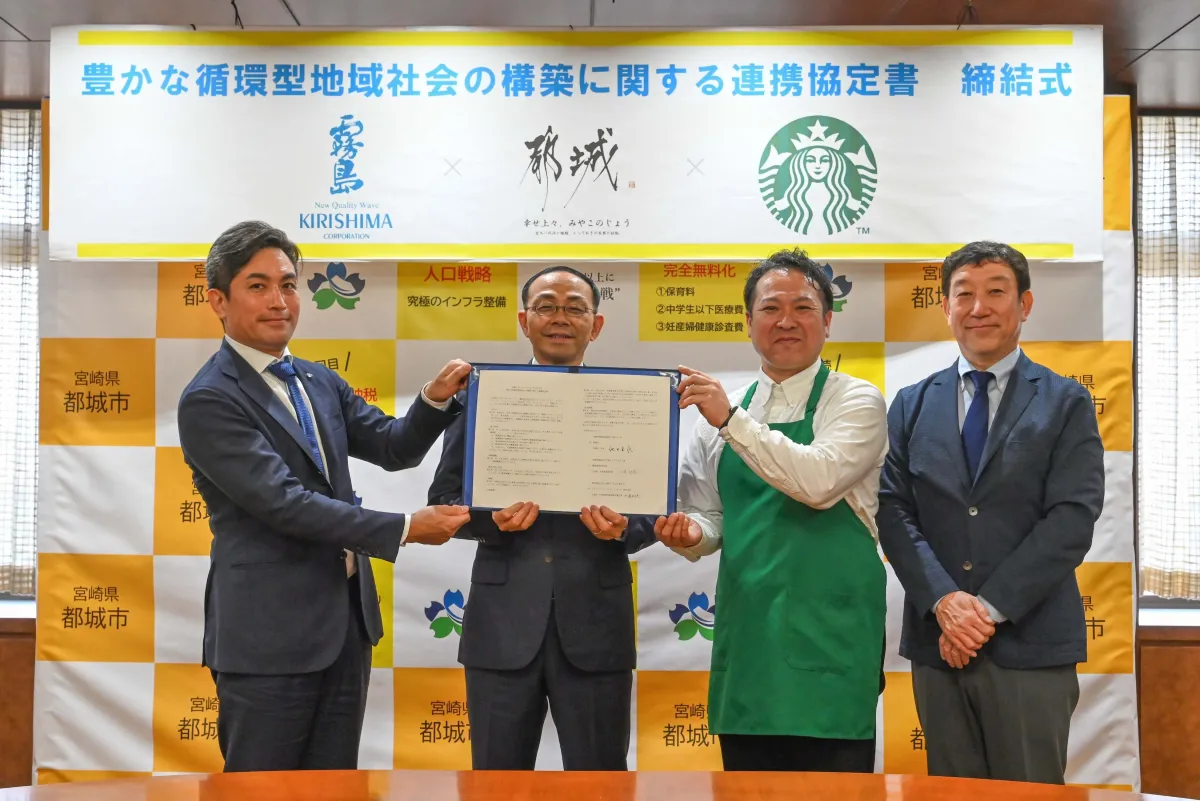
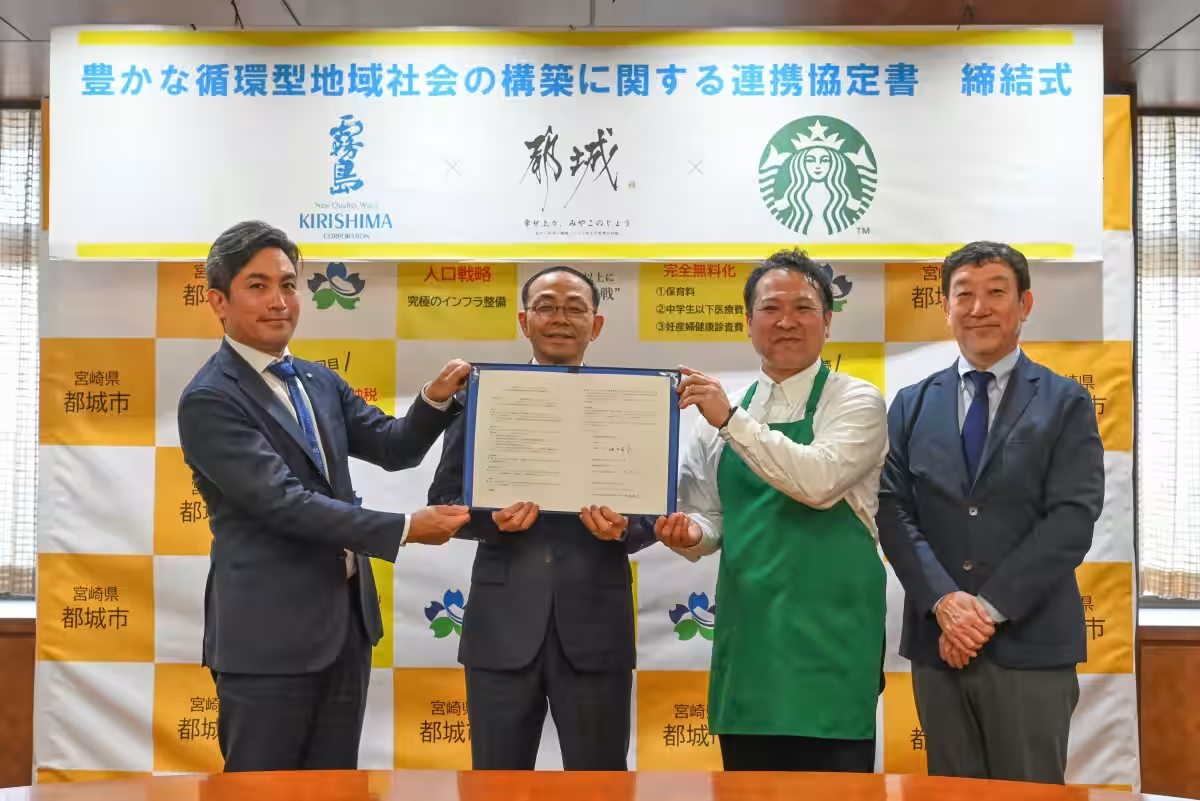
On April 27, 2026, Starbucks Coffee Japan, Kirishima Distillery, and Miyakonojo City signed an agreement to work together toward establishing a circular economy utilizing coffee grounds and shochu by-products. This collaboration represents a significant commitment to promote sustainable practices and reduce waste in the community.
The Collaborative Vision
The alliance aims to harness the by-products generated from coffee and shochu production to create energy and contribute to a greener future. These efforts are in alignment with Miyakonojo City's goal of achieving carbon neutrality by 2050, which was officially declared in March 2023. The city is actively pushing for renewable energy adoption, energy conservation, and natural resource preservation, fostering an environment that supports sustainable living.
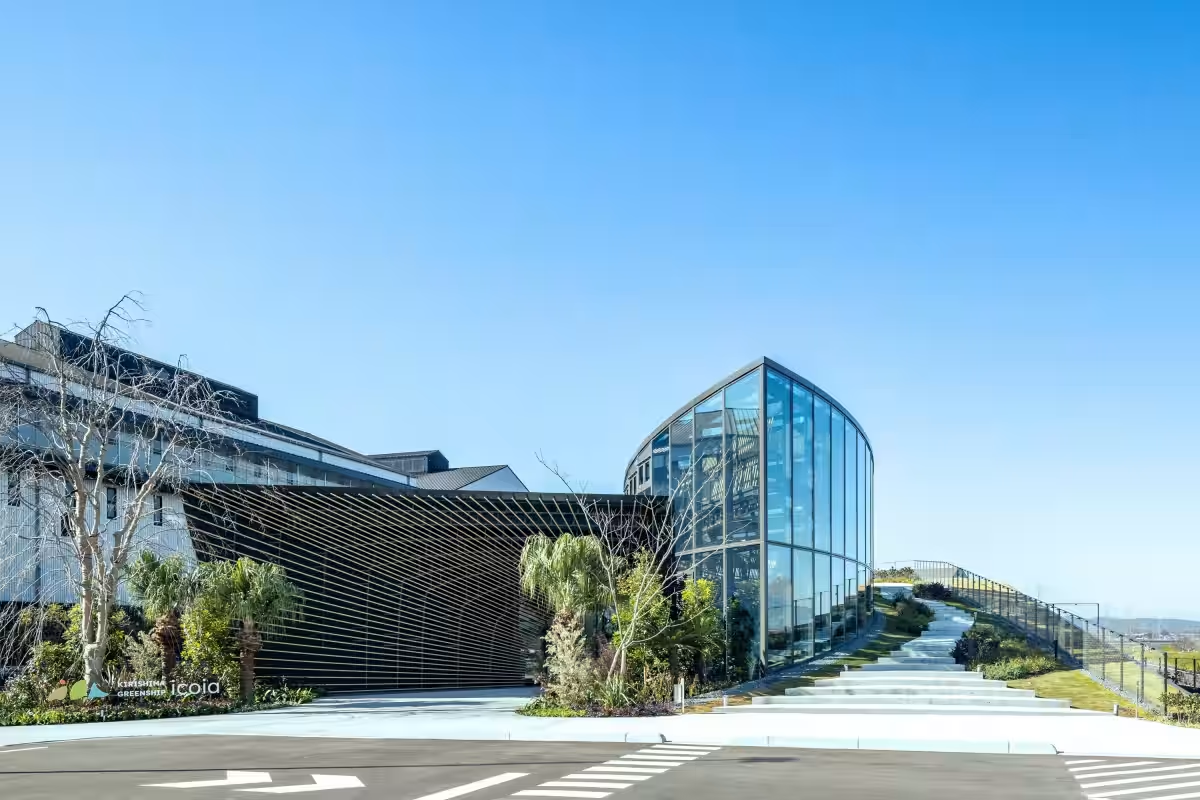
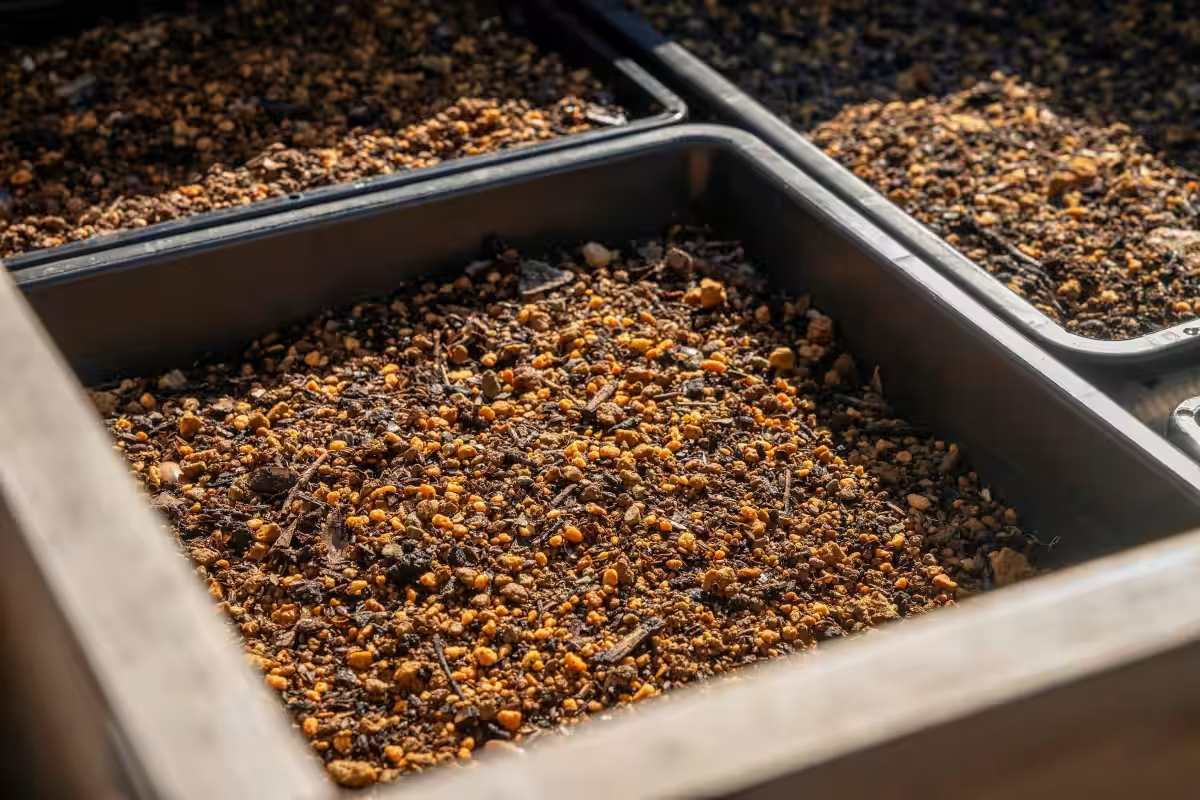
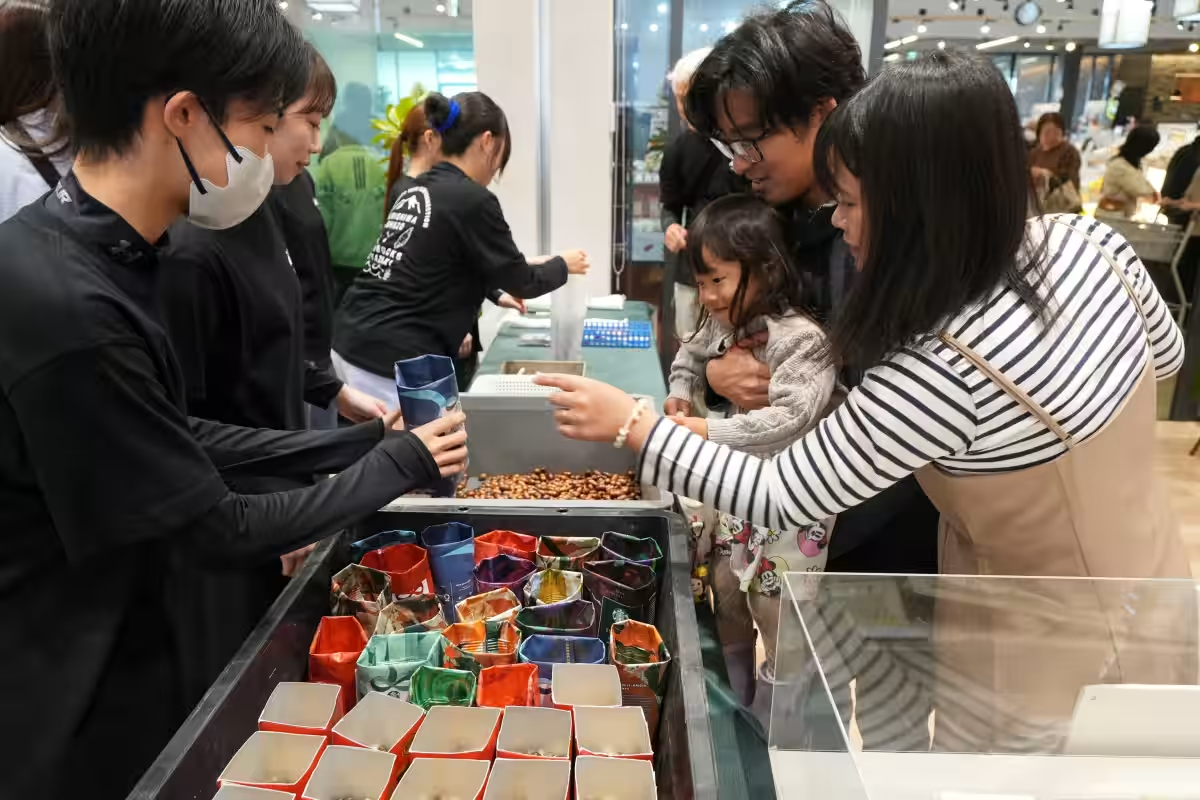
Both Starbucks and Kirishima Distillery have emphasized their dedication to community engagement and environmental responsibility. This collaboration builds on their ongoing joint project that began in 2022. One of its practical outcomes includes the opening of "KIRISHIMA GREENSHIP icoia" on January 27, 2026, where locals can participate in workshops centered around making compost from coffee and shochu by-products, promoting resource circulation and environmental stewardship.
Sustainable Resource Utilization
The newly formed partnership symbolizes a commitment to repurpose the waste material of coffee grounds from Starbucks and shochu lees from Kirishima Distillery, reducing waste and enhancing local resource circulation. As of March 2, 2026, two Starbucks locations in Miyakonojo City have begun to send their coffee grounds to a recycling plant operated by Kirishima Distillery, marking the city's first use of a new recycling designation system aimed at promoting the reutilization of resources.
These initiatives not only reflect a strong commitment to sustainability but also quickly translate into tangible benefits. With the Starbucks stores contributing approximately 20 kilograms of coffee grounds each day, the recycling process generates about 2.2 cubic meters of biogas — enough energy for approximately 1.4 households. This eco-friendly approach will potentially lead to the reduction of approximately 0.9 tons of CO2 emissions per year.
Commitment to Continuous Improvement
Through this partnership, the three parties will not only work on waste reduction and local resource enhancement but also actively engage the community with workshops and educational programs focused on environmental conservation. These initiatives highlight the possibilities of cooperation between local businesses and government entities in paving the way for a richer, more sustainable community.
As we look ahead, the collaboration between Starbucks, Kirishima Distillery, and Miyakonojo City shines as a beacon of hope for creating a sustainable circular economy. Their actions serve as a blueprint for how utilizing local resources smartly can lead to a greener, more ecologically balanced future.
Conclusion
The commitment of Starbucks, Kirishima Distillery, and Miyakonojo City to work cohesively in the pursuit of a circular economy exemplifies how partnerships can foster community resilience and environmental responsibility. This groundbreaking agreement will surely inspire other regions and businesses to explore similar collaborative paths toward sustainability.
Topics Environment)
【About Using Articles】
You can freely use the title and article content by linking to the page where the article is posted.
※ Images cannot be used.
【About Links】
Links are free to use.