



The Rise of Spot Work: Exploring Employment Trends and Wage Gaps
Introduction
The landscape of work is rapidly transforming, especially with the rise of spot work. A recent report from Tuna Group Holdings, led by President Mitsuhiro Yoneda, sheds light on the state of this rapidly growing market. Spot work, characterized by short-duration assignments without continuous employment relationships, is becoming increasingly popular in Japan. This article explores the latest findings from the report concerning market trends, job availability, and wage comparisons.
Key Findings
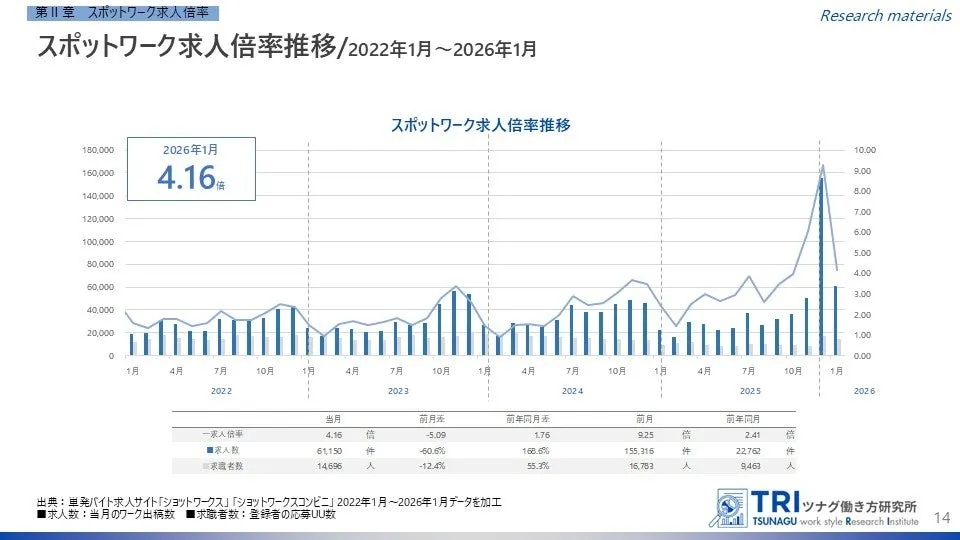
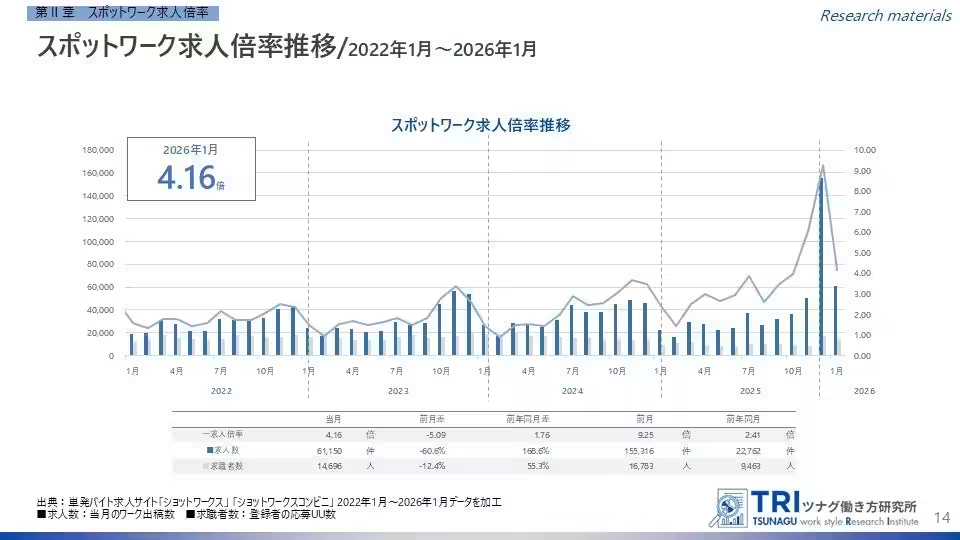
1. Job Availability Ratio: The job availability ratio for spot work has soared to 4.16, showing a 1.76-point increase compared to the same month last year. However, compared to the previous month, this figure represents a sharp decline of 5.09 points due to the conclusion of the year-end rush.
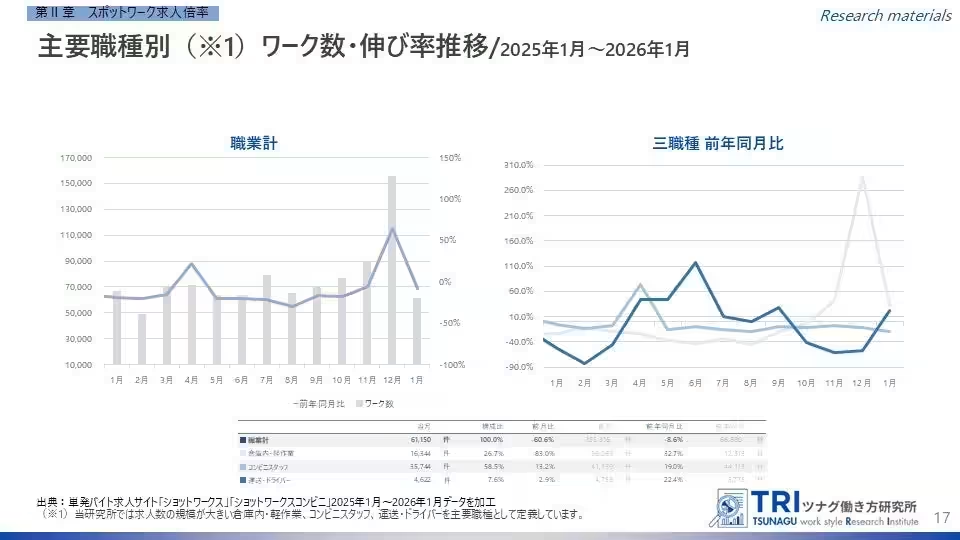
2. Work Volume Trends: The growth rate of work numbers dramatically decreased by 60.6% month-on-month. Yet, specific sectors, such as light labor and transportation, have shown significant gains compared to last year. For instance, jobs in the warehouse and light labor category grew by 32.7% year-on-year, while delivery drivers saw a 22.4% increase.
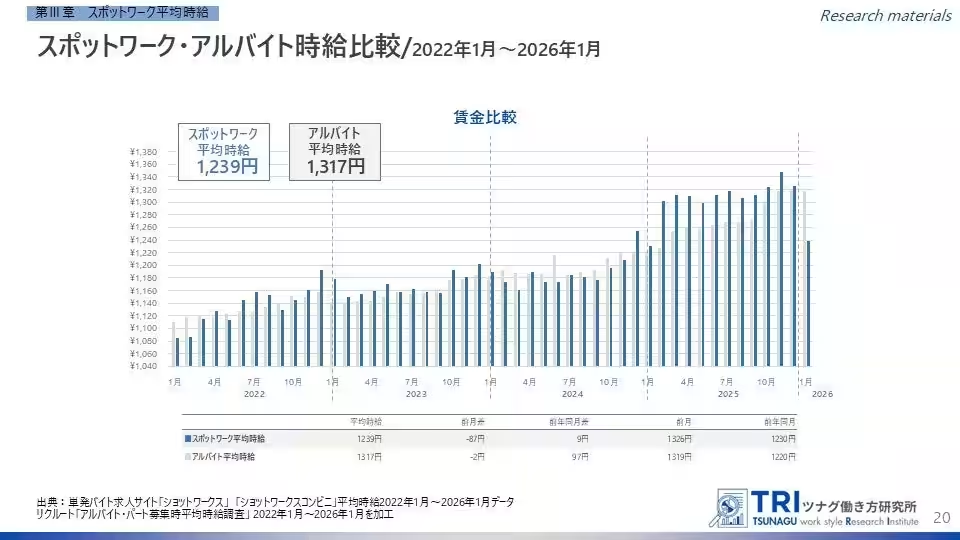
3. Average Hourly Wages: As of January 2026, the average hourly wage for spot work stands at 1,239 yen, indicating a decrease of 87 yen from the previous month but a slight increase of 9 yen from the same month last year. This figure is notably lower than the average hourly wage for regular part-time jobs, which is 1,317 yen, meaning spot work falls short by 78 yen.
Job Availability Analysis
The job availability ratio for spot workers achieved a noteworthy figure of 4.16. This increase reflects the growing demand for flexible job opportunities during the post-holiday period. The month of December often sees a spike in job postings due to seasonal demands, which typically leads to lower availability in January. Despite this seasonal trend, the year-on-year growth suggests that the spot work market has established a stable demand trajectory.
Sector-Specific Insights
While the overall growth rate of work numbers is down, specific sectors have exceeded expectations. The report indicates a stark contrast: while overall work numbers decreased by 8.6% year-on-year, jobs in the warehouse and light labor sector surged, showcasing a distinct recovery within certain industries. This indicates a shifting pattern in labor demand as employers increasingly rely on temporary staff to meet fluctuating needs.
Understanding Spot Work
Spot work encompasses various employment forms, including gig work, where individuals engage in short-term tasks through platforms like Uber Eats, and temporary positions that are contracted for limited periods. The rise in spot work correlates with changes in societal work dynamics, where workers are increasingly drawn to flexible arrangements due to lifestyle and economic pressures.
The Market's Evolution
Spot work emerged prominently during the COVID-19 pandemic as individuals sought supplementary income amidst economic uncertainty. This demand, combined with employers' need for a nimble workforce, has catalyzed the growth of this market. Future trends predict an even greater expansion, fueled by technology that supports on-demand worker matching.
Conclusion
The ongoing changes in the labor market, particularly with spot work, highlight significant shifts in employment norms. The report by Tuna Group Holdings serves as a vital snapshot of current trends, contributing to a broader understanding of the evolving gig economy. As businesses adapt to these changes, further monitoring will be essential to assess the long-term implications for both workers and the organizations that rely on them.

Topics Business Technology)




【About Using Articles】
You can freely use the title and article content by linking to the page where the article is posted.
※ Images cannot be used.
【About Links】
Links are free to use.