



Reduction in Genetic Mutations Linked to Polycystic Kidney Disease in Cats Observed
Reduction in Genetic Mutations Linked to Polycystic Kidney Disease in Cats Observed
A recent collaborative study led by Anicom Parfait Inc., alongside Anicom Advanced Medical Research Institute, Anicom Insurance Co., and Azabu University, has unveiled promising findings regarding the prevalence of the PKD1 gene mutation in cats. This mutation is associated with Polycystic Kidney Disease (PKD), a hereditary condition recognized as a significant health risk among felines. The researchers utilized extensive pet insurance data and large-scale genetic testing results to analyze the mutation's frequency across various cat breeds.
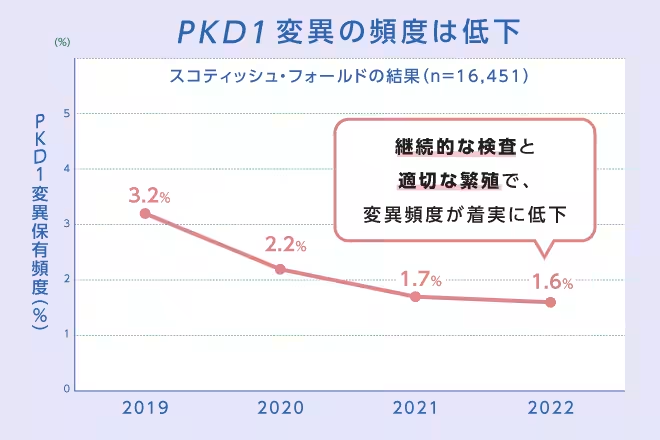
The analysis revealed a striking 42.6% decrease in the overall proportion of cats carrying the PKD1 mutation across 14 different breeds when comparing data pre- and post-introduction of straightforward genetic testing for kittens. Breeds such as the Scottish Fold, Persian, and Ragamuffin demonstrated significantly lowered mutation rates, suggesting a trend towards healthier breeding practices. Importantly, there was no corresponding increase in inbreeding levels, indicating proactive measures were likely taken to ensure genetic diversity.
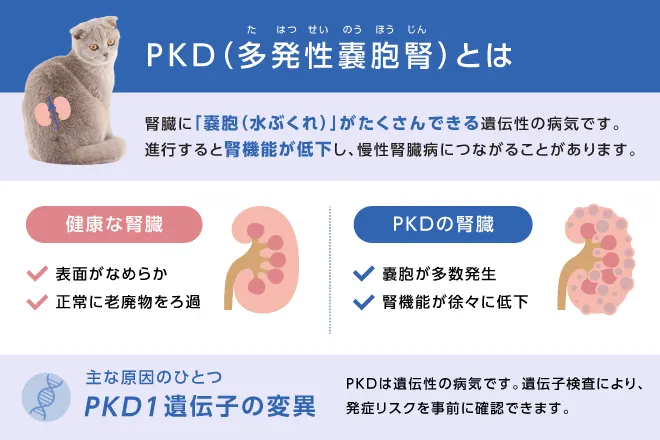
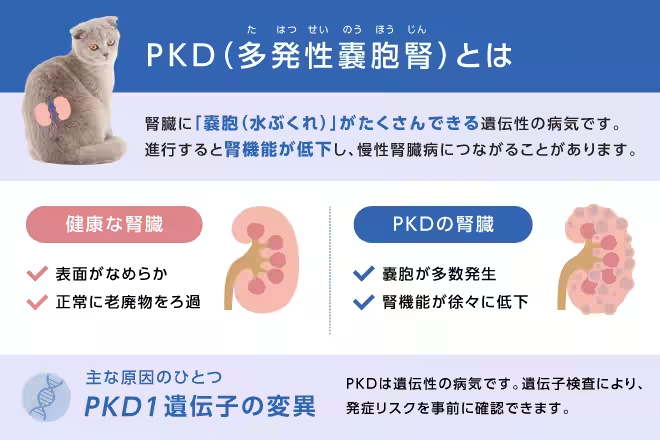
Background on Polycystic Kidney Disease (PKD)
Polycystic Kidney Disease (PKD) is characterized by the development of numerous cysts in the kidneys, which can eventually lead to a decline in kidney function and potentially kidney failure. This disease is notably prevalent in Persians and related breeds, with a specific mutation in the PKD1 gene identified as a primary cause. Due to its latent onset—often not presenting symptoms until later in life—PKD poses challenges for breeders who must navigate the risk without visible indicators.
The adoption of consumer-accessible genetic testing in recent years has changed the landscape, allowing breeders to conduct tests on both parental and younger cats, thus enhancing the ability to manage hereditary conditions.
Prior research on PKD focused predominantly on treated cats from veterinary clinics, leaving a knowledge gap regarding mutations in the general population. This new study aims to bridge that gap, using comprehensive data to analyze the frequency of the PKD1 mutation and its impact on the genetic structure of cat populations.
Research Findings
1. Analysis of PKD Incidence Through Insurance Data
The initial phase of the study involved examining pet insurance claims, targeting the frequency of PKD among 14 different breeds. Out of a sample of 12,589 cats with long-standing insurance policies, only 21 cases of PKD or related renal cyst diagnoses were reported, with a median age of first claim at five years old. Interestingly, analysis indicated that a significant proportion (77.8%) of these cases were tied to the known PKD1 gene mutation. This result reinforces earlier findings that a majority of PKD cases are linked to the PKD1 mutation.
Additionally, within the informed group from previous genetic testing data, researchers discovered eight new candidate mutations associated with PKD, suggesting that the condition may have complexities beyond the well-known PKD1 variant.
2. Mutation Frequency Analysis Using Genetic Testing Data
The study further explored genetic testing data from 61,968 cats to assess changes in the frequency of the PKD1 mutation. The results indicated noticeable variations in mutation prevalence among different breeds: Himalayan, Persian, and Scottish Fold cats exhibited the mutation, whereas Ragdolls, Maine Coons, and Russian Blues showed no evidence of the traditional PKD1 mutation within the sampled population. A critical finding was the 42.6% reduction in PKD1 mutations from data collected prior to the widespread testing of kittens compared to after.
Particularly significant decreases were observed in the Persian and Scottish Fold breeds, reinforcing the positive impact of proactive breeding practices integrated with genetic testing strategies.
3. Assessing the Relationship Between Mutation Reduction and Inbreeding
Following the observations of declining mutation frequencies, researchers analyzed inbreeding metrics to ascertain whether reducing the presence of PKD1-affected individuals would inadvertently lead to increased inbreeding. However, comparisons of genetic structures between populations in 2019 and 2022 exhibited no substantial changes or increases in inbreeding levels. Conversely, a dramatic reduction was noted in the effective population size of PKD1 carriers, indicating a successful decline in breeding opportunities for these affected cats.
Significance of the Study
The findings of this study are monumental in demonstrating that the reduction of the PKD1 mutation is occurring in several cat breeds, indicating that genetic testing implementation supports healthier breeding practices. Crucially, the lack of increased inbreeding levels alongside the declining mutation rates illustrates the potential for balanced breeding management that respects genetic diversity while minimizing the risk of hereditary diseases.
Nevertheless, some breeds, such as the British Shorthair and Munchkin, did not show a decrease in PKD1 mutations, highlighting areas that require further attention. Moving forward, it’s vital to expand the application of genetic testing for these breeds to enhance appropriate breeding management strategies.
Future Prospects
This research underscores the central role of the PKD1 gene mutation in the manifestation of PKD within cats, while also uncovering cases of renal disease in cats lacking this specific mutation. This suggests that additional unexplored genetic factors contribute to the disease, necessitating further research. Future investigations will likely focus on comprehensive genome analyses utilizing next-generation sequencing and integrating large-scale insurance and clinical data, paving the way for a deeper understanding of inherited diseases among cats.
References
- - Journal: BMC Genomics
- - Link to study: BMC Genomics Study Link
Authors: Hisashi Ukawa et al. from Anicom Parfait and collaborating institutions
Topics Health)
【About Using Articles】
You can freely use the title and article content by linking to the page where the article is posted.
※ Images cannot be used.
【About Links】
Links are free to use.