



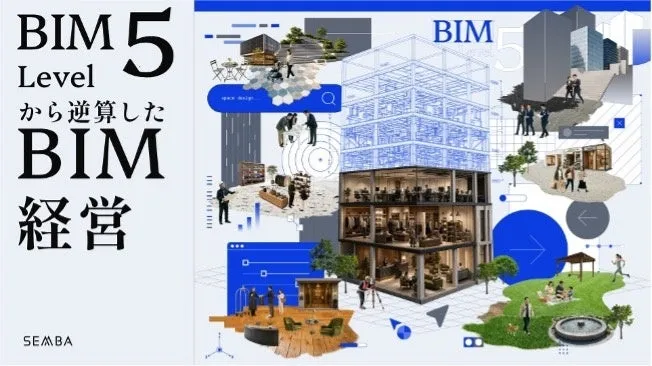
Exploring the Future of Space Creation with BIM Level 5 by Semba Co., Ltd.
The Next Evolution in Interior Design: BIM Level 5 by Semba Co., Ltd.
Semba Co., Ltd., headquartered in Minato, Tokyo, has unveiled a groundbreaking new phase in the use of Building Information Modeling (BIM) within the interior design and display industry—aptly named "BIM Level 5." This innovative definition represents a significant leap beyond traditional methods focused solely on improving efficiency in design and construction.
Introduction to BIM Level 5
BIM has increasingly gained traction in the interior and display sectors in recent years, primarily aimed at enhancing collaboration and streamlining workflows throughout the design and construction phases. However, with rapid advancements in digital technologies, especially artificial intelligence (AI), BIM is evolving into more than just an operational improvement tool. It is becoming a robust platform for insightful creative proposals and integration of diverse data sources.
Against this backdrop of change, Semba has crafted its own interpretation of BIM Level 5, aiming to revolutionize how data and human creativity intersect in the process of spatial design.
Key Insights on BIM Level 5
In the recently published report titled "Reverse Engineering BIM Management from BIM Level 5," Semba outlines the concept of BIM Level 5 and explores the promising future of spatial design through three main dimensions:
1. Intuitive Design for All
With the integration of AI, even those without expert knowledge can intuitively design their spaces. The AI listens to the clients' needs and suggests feasible designs based on an extensive repository of spatial data.
2. Simulating Experience Values
Before construction is finalized, AI can simulate indoor environments and user behaviors using BIM data. This approach allows designers and clients to evaluate the overall experience, not just aesthetics but also factors like light, sound, and movement patterns.
3. Automated Post-Completion Evaluation
Even after a project’s completion, AI continues to analyze usage data, proposing improvements based on seasonal trends, customer demographics, and revenue changes. This transforms BIM into a dynamic tool that continuously updates and enhances spatial parameters based on real-time data.
About the Report
The document released on June 23, 2026, titled "BIM Management Engineered from BIM Level 5," serves as a guideline influenced by the widely recognized BIM maturity model from the UK (spanning from Level 0 to Level 3). Semba has evolved this framework by defining its own Levels 4 and 5 to reflect its unique vision for the future of space design.
What is BIM?
At its core, Building Information Modeling (BIM) leverages digital models of spaces, enriched with detailed data about materials, specifications, and costs across the entire lifecycle from planning to design, construction, and maintenance.
Semba's Commitment to Ethical Design
Semba operates under the ethos of being a "Success Partner," seamlessly supporting various aspects of spatial creation, including research, planning, design, construction, and maintenance for sectors such as commercial facilities, offices, healthcare, and leisure spaces. Since 2021, the company has adopted the vision of being a "Good Ethical Company" with a mission centered around creating environmentally friendly spaces. Semba’s approach focuses on compassionate perspectives towards people, communities, and the natural environment, aiming to co-create spaces that nurture ethical design throughout its supply chain.
Final Thoughts
The introduction of BIM Level 5 by Semba Co., Ltd. is not merely an enhancement; it signifies a transformative approach to how we create spaces. The insights from this new phase promise to reshape the landscape of interior design projects, ultimately leading to environments that are not only functional but also deeply attuned to the needs and experiences of their users.
For more detailed insights, view the full report here.
Topics Consumer Products & Retail)
【About Using Articles】
You can freely use the title and article content by linking to the page where the article is posted.
※ Images cannot be used.
【About Links】
Links are free to use.