



Unlocking AI Coding: Real Insights from Engineers about Productivity and Tools
Real Insights from Engineers on AI Coding Tools
A recent survey conducted by KIKKAKE CREATION has shed light on the increasing reliance of IT engineers on AI coding assistants. With 437 IT professionals participating, the survey revealed significant insights into their experiences, highlighting both the productivity benefits and the challenges faced when using these tools.
Productivity Gains vs. Challenges
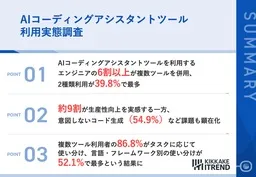
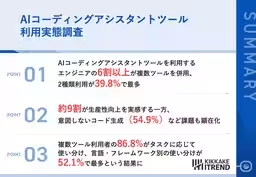
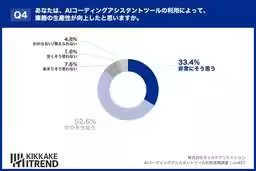
The survey indicates that approximately 86% of engineers have noticed a boost in their productivity when leveraging AI coding tools. However, a substantial portion, over 50%, reported issues such as unintended code generation, which poses questions about the reliability of these tools.
Tool Utilization Patterns
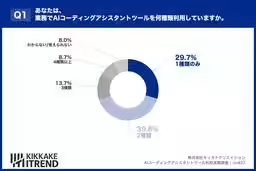
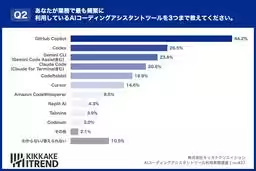
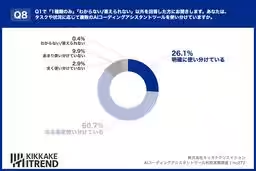
Interestingly, more than 60% of engineers are using multiple AI coding tools simultaneously, reflecting a shift in how coding assistants are integrated into everyday tasks. Among these, the most popular tool is GitHub Copilot, utilized by 44.2% of respondents, followed by Codex at 26.5%. Additionally, a significant 86.8% of users employing multiple tools reported they strategize their usage based on task requirements, primarily differentiating by programming language or framework.
Criteria for Tool Selection
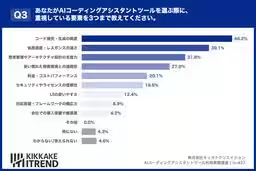
When choosing an AI coding assistant, engineers place great emphasis on the precision of code completion and generation, with nearly half considering this the most crucial factor. Other key attributes include processing speed and the tool's ability to assist with architecture decisions. The synergy of these factors greatly influences not just the user experience but also the overall effectiveness of the coding process.
Concrete Productivity Benefits
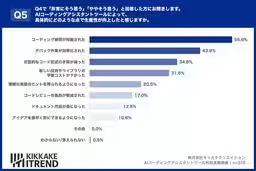
Those who acknowledged productivity improvements specified that their coding time has been reduced by 56.6%, whereas 43.9% noted enhancements in debugging efficiency. The emergence of AI tools has apparently enabled engineers to streamline repetitive tasks, although this has not come without difficulty; the unresolved safety and performance issues mean that many engineers are left feeling uncertain.
Identifying Problems with AI Tools
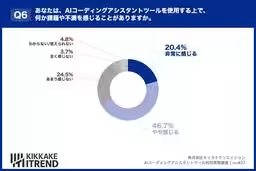
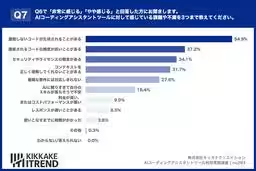
The survey also identified several persistent challenges. Approximately 67% of respondents indicated they experience some level of dissatisfaction or frustration with their AI coding tools. Key issues highlighted include the generation of unintended code (54.9%) and concerns regarding the precision of code suggestions (37.2%). These problems indicate potential gaps in the capabilities of current AI models and suggest that there is a need for ongoing refinement of these tools.
Strategic Tool Differentiation
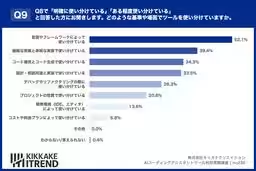
Furthermore, the survey revealed that 52.1% of engineers actively differentiate their usage of multiple tools based on the specific language or framework they are working with. This strategic approach exemplifies the nuances in coding tasks—what works in one context may not be as effective in another.
Conclusion
The survey's findings underscore the widespread adoption of AI coding assistants in professional environments, with a majority of engineers experiencing the benefits. However, the complexity and expectations surrounding these tools reveal a need for greater understanding and perhaps more training on effective use. As the capabilities of AI tools advance, engineers must adapt their skills to select the right tools for appropriate tasks effectively. This may bridge the gap between productivity increases and the challenges that AI tools currently present, setting a course for a more reliable integration of technology into the coding landscape.
For more detailed findings, you can check the original survey results here.



Topics Other)
【About Using Articles】
You can freely use the title and article content by linking to the page where the article is posted.
※ Images cannot be used.
【About Links】
Links are free to use.