



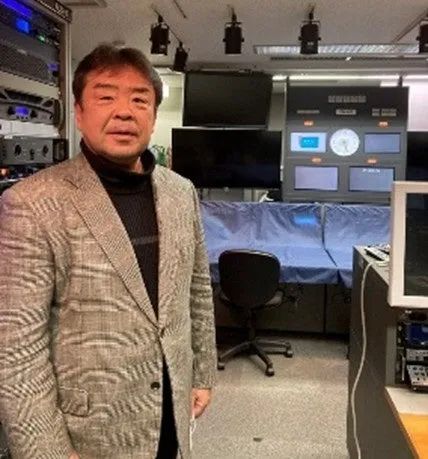
Relaunching Life in the Era of 100-Year Living: A TV Man Becomes a University Teacher
Relaunching Life in the Era of 100-Year Living
As people live longer, many are finding that retirement need not mean the end of their professional contributions. Rather, it can be an opportunity for a fresh start. This sentiment is perfectly embodied by Shinichiro Yamagata, a former television executive who made the leap to academia, determined to guide the next generation with his vast experience.
The Rise of Practitioners as University Educators
In recent years, more universities have begun to welcome seasoned professionals from various fields as part-time educators. Traditionally, academic faculty positions were not contingent on holding teaching certifications, meaning a wealth of knowledge and practical skills can qualify someone to teach at the university level. This transformation is supported by Japan's Ministry of Education, which is currently reviewing policies to expand the diverse roles of educators, promoting models like cross-appointments that allow faculty to work across multiple institutions. Thus, the demand for university practitioners is growing significantly and rapidly.
Meet Shinichiro Yamagata
After a distinguished career at TV Osaka where he held various positions including Head of Sports News and Chief Commentator, Yamagata spent most of his career in sports and news broadcasting, covering major events in professional baseball, J-League, golf, boxing, and motorsports. He completed the University Practitioner's Educator Training Course in December 2021 and is currently pursuing a Master’s degree in Urban Management at Osaka Metropolitan University, set to graduate in March 2025. In addition to his studies, Yamagata serves as an adjunct lecturer at Osaka University of Economics and Ashiya University, where he focuses on topics like sports, community revitalization, and media.
Insight on Becoming a Practitioner Educator
We had the opportunity to interview Yamagata about his motivations and aspirations as a practitioner educator.
- - On Becoming a Practitioner Educator:
- - Student Guidance and Challenges:
- - Leveraging Professional Experience in Academia:
- - Aiming High as a Practitioner Educator:
- - Reflections on the Training Course:
- - Lessons for Aspiring Practitioner Educators:
The Future of Practitioner Educator Training
The General Incorporated Foundation for University Educator Training acknowledges that there are relatively few practitioners with the necessary teaching skills to engage effectively in higher education in Japan. Surveys reveal that while practical experience is high among these educators, a lack of educational experience and training in developing theoretical lecture content is a significant issue. Starting 2025, those completing the practitioner education course will earn not just a certificate but also a Micro-credential through an Open Badge certification, marking their mastery of the essential knowledge and skills necessary to succeed in academia.
Those interested in the next cohort of the Practitioner Educator Training Course must apply by August 29, with sessions running from September 13 to December 6.
For more information, reach out to:
General Incorporated Foundation for University Educator Training,
2nd Floor, Tohgo Park Building, 4-2-12 Kudanminami, Chiyoda-ku, Tokyo 102-0074, Japan.
Phone: 03-5226-7288
E-mail: [email protected]

Topics Other)
【About Using Articles】
You can freely use the title and article content by linking to the page where the article is posted.
※ Images cannot be used.
【About Links】
Links are free to use.