



Mitsubishi Corporation Enhances Mill-Box for Efficient Mill Sheet Management
Introduction
Mitsubishi Corporation's Material Solutions Group has recently released an upgraded version of its innovative digital mill sheet management service, Mill-Box. This new enhancement focuses specifically on improving functionalities for fabricators in the steel industry.
Overview of Mill-Box
Mill-Box provides an electronic platform for managing mill sheets, which are essential documents certifying the quality of steel materials. The latest features enable users to centralize their mill sheet data, create aggregate and summary tables instantly, and thereby contribute to improving operational efficiency and reducing labor time in the highly demanding steel distribution sector.
Background
Challenges Faced by Fabricators
For fabricators handling steel structures, managing the vast array of mill sheet information related to various projects has long been a significant challenge. Traditionally, compiling this critical data into specified formats has been a labor-intensive process, often leading to errors from manual data entry and slowing down the overall workflow. These challenges not only add stress to quality control processes but also detract from time that could be better spent on core activities.
The previous iteration of Mill-Box lacked the necessary features for seamless compilation of management documents tailored to specific submission formats. Now, as general contractors have begun embracing Mill-Box to improve efficiencies related to rebar mill sheets, there is growing anticipation that fabricators will also follow suit, utilizing the system to facilitate smoother data connections within projects. This evolving need spurred the development of features to automate and enhance the document creation process.
Introduction of New Features
Tailored Functions for Fabricators
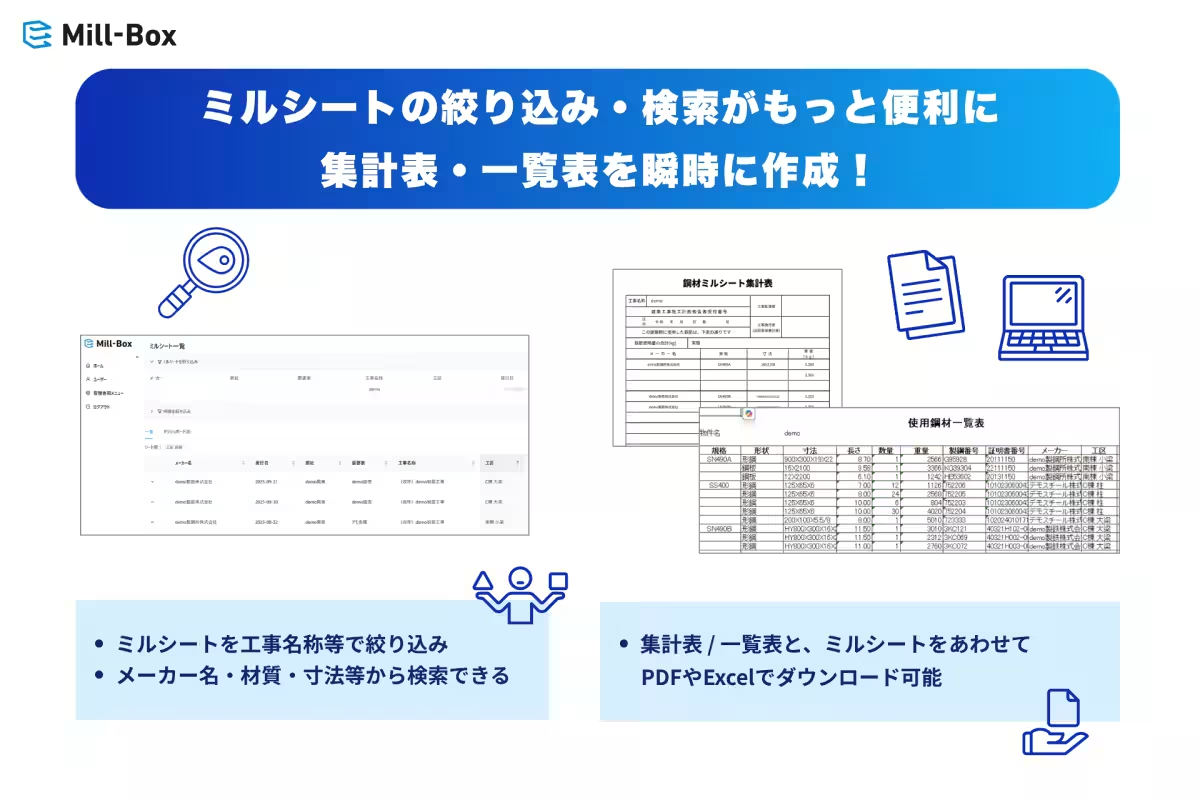
The newly launched features focus on alleviating the document management burdens faced by fabricators. With the capability to manage mill sheet data centrally, Mill-Box now allows users to create aggregate and summary tables instantaneously based on existing information. This improvement is expected to yield several significant advantages:
- - Reduction in Document Creation Time: By expediting the time required to create management documents, businesses can significantly decrease overall labor hours.
- - Enhancements in Quality Control: By reducing the need for manual entry, the risk of errors is diminished, leading to improved quality management.
- - Shift in Focus to Core Operations: As ancillary tasks are streamlined, teams can redirect their efforts to core business activities that drive value.
Distinct Features of Mill-Box
One of the standout features of Mill-Box is its electronic delivery capability for mill sheets, which contributes not just to internal efficiency but also helps reduce the operational burden on business partners. Through the effective streamlining of tasks such as receiving, confirming, storing, and searching for mill sheets, efficiencies are realized across corporate boundaries. This holistic approach has the potential to enhance operational efficiency across the entire steel distribution industry.
Currently, over 300 companies spanning manufacturers, trading firms, specialty dealers, processing companies, fabricators, and general contractors are leveraging Mill-Box. The adoption of metadata-driven management practices is rapidly gaining momentum, making it easier for businesses to connect and collaborate effectively. The initiative aims to establish a supportive environment where even more organizations can utilize this digital framework seamlessly, driving the digital transformation and operational efficiency of the entire sector.
Understanding Metadata
Metadata refers to structured electronic data associated with mill sheets which can be directly integrated into systems without being subject to the uncertainties of Optical Character Recognition (OCR) processes. This eliminates the need for verification tasks, thereby dramatically improving data entry efficiencies.
Future Prospects
Mill-Box places a strong emphasis on DX rooted in practical workplace applications, focusing on ongoing development and operational support. Future enhancements will incorporate continuous feedback from users in the field. Moreover, the aim is to foster an environment that encourages easy collaboration among stakeholders in the steel distribution industry, including construction companies, trading firms, manufacturers, and inspection bodies, ultimately contributing to productivity gains across the entire sector.
Conclusion
Mill-Box stands as the industry's sole platform to digitize the transfer of mill sheets across the entire steel distribution supply chain—from manufacturers to general contractors. By transitioning from traditional paper or PDF exchanges to an electronic management system, businesses can automate various processes, such as automatic disclosure to business partners and performing diverse searches and document management, greatly enhancing industry-wide efficiencies. This platform's user-friendly design, coupled with its integration of metadata and OCR technologies, aims to minimize labor and promote paperless operations, making significant strides in enhancing the steel distribution sector's digital transformation and productivity levels.
For more information about Mill-Box, visit Mill-Box Official Website.
Topics Consumer Technology)
【About Using Articles】
You can freely use the title and article content by linking to the page where the article is posted.
※ Images cannot be used.
【About Links】
Links are free to use.