



Insights from the 2025 Driver Behavior Survey Across Japan's Prefectures
Insights from the 2025 Driver Behavior Survey Across Japan's Prefectures
In a comprehensive survey conducted by AXA Direct Insurance Company, the 47 Prefectures Driver Behavior Survey 2025 sheds light on the driving habits, preferences, and safety practices of car owners in Japan. The survey targeted 4,700 participants aged 20 to 69 who own vehicles and drive at least once a month, gathering important insights about regional behaviors across different prefectures.
Key Findings of the Survey
1. Vehicle Ownership and Preferences
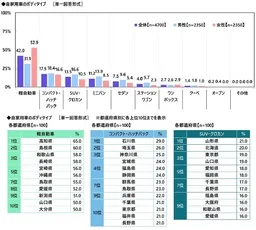
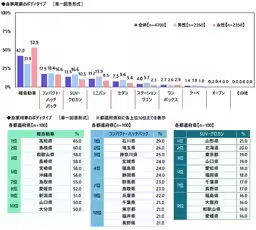
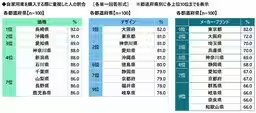
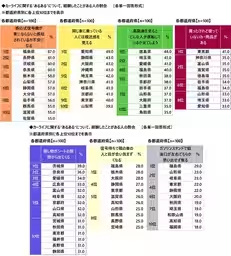
The survey revealed noteworthy statistics regarding vehicle ownership rates by prefecture. The highest ownership rates for light vehicles were found in Kochi (65.0%), followed by Shimane (60.0%) and both Wakayama and Nagasaki at 58.0%. Prefectures leading in compact hatchback ownership included Ishikawa, Saitama, and Kanagawa. Additionally, the most popular types of SUVs were found in Yamagata and Hokkaido.
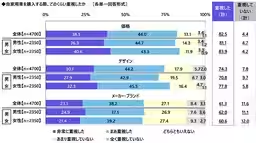
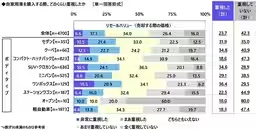
Participants were also asked about their key considerations when purchasing vehicles. In this regard, price emerged as the most crucial factor with 82.5% highlighting its importance. Design ranked second with 74.3%, and brand was important for 61.3% of respondents.
2. Safety Practices and Awareness
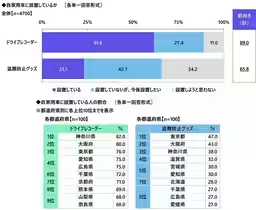
The survey notes that Kanagawa boasts the highest installation rate of dashboard cameras, reaching 82.0%. Other notable prefectures included Osaka with 80.0% and Tokyo at 76.0%. This suggests a strong awareness of safety measures among drivers in these areas.
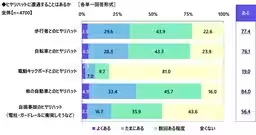
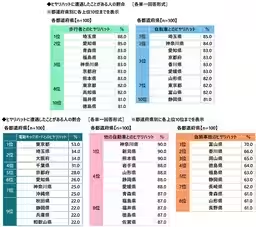
Furthermore, when examining near-miss experiences, Saitama reported a high encounter rate with pedestrians and bicycles, while Tokyo showed increased near-miss incidents involving electric scooters.
3. Monthly Expenses and Economic Practices
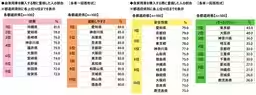
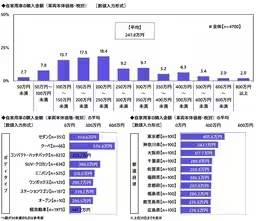
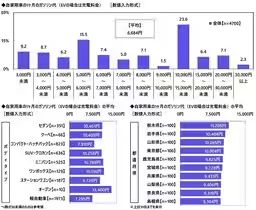
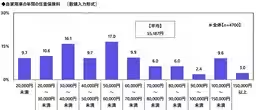
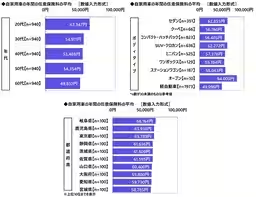
Respondents shared insights into their monthly gasoline expenses, with the average being 8,684 yen. Notably, Tochigi had the highest average expense, reaching 11,208 yen. Additionally, Gifu was reported to have the highest annual insurance costs averaging 66,164 yen, further illustrating regional financial behaviors associated with car ownership.
4. Driving Culture and Experiences
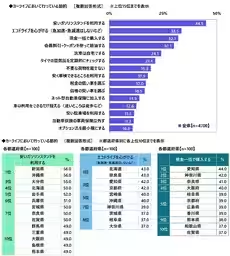
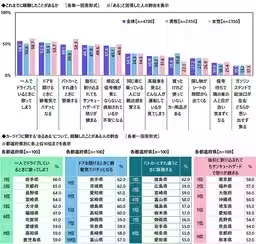
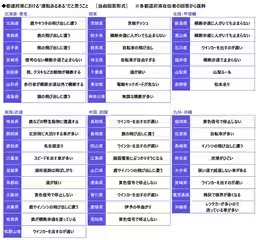
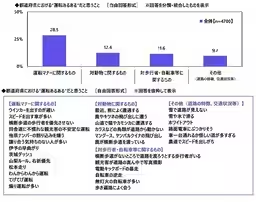
The survey also explored unique regional driving cultures, reflected in humorous “car life moments.” For instance, participants from Iwate frequently reported singing while driving alone. Other quirks included interactions with law enforcement as per Tokushima residents, who claimed to feel nervous when passing police cars.
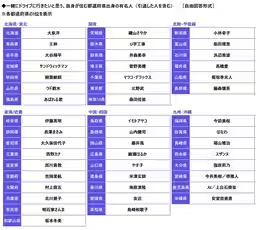
The desire to travel with celebrities from their own prefectures highlighted a keen interest in local culture, with participants opting for well-known personalities like Masaki Suda from Kyoto and Fukuyama Masaharu from Nagasaki.
Conclusion and Future Initiatives
AXA plans to utilize these findings to enhance its products and services, aligning with its mission to secure a better future for all individuals. The insights derived from this survey will foster greater understanding of varying preferences across different regions, informing better policies and customer engagement strategies.
For complete details on the survey and its findings, visit AXA Official Site.
Topics Consumer Products & Retail)
【About Using Articles】
You can freely use the title and article content by linking to the page where the article is posted.
※ Images cannot be used.
【About Links】
Links are free to use.