




Kanda Institute Collaborates with Yokohama Vivre on Youth Marketing Research Project
Kanda Institute of Languages and Yokohama Vivre Collaboration
The Kanda Institute of Languages, part of the Kanda Gakkou Group located in Chiyoda, Tokyo, has embarked on an exciting project in collaboration with Yokohama Vivre, managed by the OPA Group (part of the Aeon Group) in Chiba City. This initiative aims to delve into the intricacies of youth consumer behavior, specifically focusing on why high school students are drawn to Yokohama Vivre.
Project Overview
Beginning in the 2026 academic year, the project serves as a core component of the mandatory second-year course titled "Business Research Seminar" within the Business Communication Department. A total of nine students will engage in field research, posing questions that will lead them to analyze youth consumer motivations and behaviors. This project not only aims to understand youth interests but also seeks to generate concrete business recommendations on how to cultivate a loyal fan base among young consumers.
The collaboration can be traced back to June 2013 when the Kanda Gakkou Group and Aeon Group established a partnership aimed at enhancing industry-academia collaboration and contributing to local communities. The Kanda Institute is known for nurturing talents equipped with foreign language skills, business acumen, and cultural understanding—attributes necessary for thriving in today’s global environment.
Students in the Business Communication Department have continuously engaged in project-based learning and real-world internships, providing them with practical knowledge that aligns with the needs of various businesses. This upcoming project with Yokohama Vivre represents an exciting new chapter in that collaborative history.
Research Goals and Methodology
The primary theme of the research is understanding how to attract high school students as core fans of Yokohama Vivre. Under the guidance of instructor Masataka Ikeda, the course will run through both semesters of the 2026 academic year. Key milestones include:
- - August 5, 2026: Mid-term report presentation at Yokohama Vivre.
- - January 2027: Final business proposal presentation.
This hands-on approach emphasizes both qualitative and quantitative methods, ensuring a comprehensive understanding of the subject. Students will conduct interviews with high school visitors, analyzing their experiences and the psychological factors behind their purchasing decisions. Through these interviews, the students aim to uncover what makes Yokohama Vivre appealing to their peers.
Kickoff Meeting and Observations
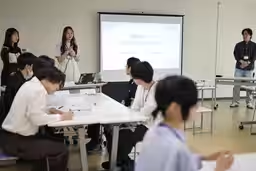
The project officially kicked off on May 20, 2026, with an initial meeting at Yokohama Vivre where OPA representatives provided an overview of the facility's challenges and opportunities. Students then toured the premises, observing the layout and visitor behaviors, gaining crucial insight into the space and its appeal to high school students.
Engaging the Youth: Practical Insights
With a focus on active engagement, the student researchers plan to not only gather data but also to understand the real voices of their target demographic. By conducting face-to-face interviews starting May 2026, they hope to develop a deeper understanding of why students choose to visit Yokohama Vivre over other venues. This qualitative research aspect aims to reveal the intrinsic values that resonate with youth, going beyond mere transactional analysis.
History of Collaborations
Kanda Institute has a rich history of engaging with various companies and municipalities, drawing from partnerships with organizations such as Aeon Fantasy, Honda Mobility, and McDonald's Japan. These collaborations have provided students with substantial opportunities to apply their classroom training in practical environments.
Conclusion
With its strong educational philosophy centered on bridging languages and cultures, the Kanda Institute of Languages continues to foster talent capable of succeeding in a multicultural world. This innovative project with Yokohama Vivre not only underscores the institute's commitment to real-world applications of business education but also emphasizes the importance of understanding youth as consumers in a rapidly evolving market.



Topics Consumer Products & Retail)
【About Using Articles】
You can freely use the title and article content by linking to the page where the article is posted.
※ Images cannot be used.
【About Links】
Links are free to use.