



Future Labor Shortage in the Construction Industry of Chubu Region: Projections for 2030 and 2040
Construction Labor Shortage Projections in the Chubu Region
A recent study conducted by Human Resocia, a comprehensive human resource service company based in Shinjuku, Tokyo, has unveiled alarming predictions regarding the future labor market in the Chubu region's construction industry. With anticipated shortfalls of 50,000 skilled workers by 2030 and a staggering 103,000 by 2040, the report highlights the urgency of addressing these challenges to ensure a stable workforce.
The assessment is grounded in human demand and supply forecasts initially released in June 2024, which comprehensively examined the nationwide needs for construction technicians and skilled workers. The findings have significant implications for the industry and policymakers alike.
Key Findings from the Report
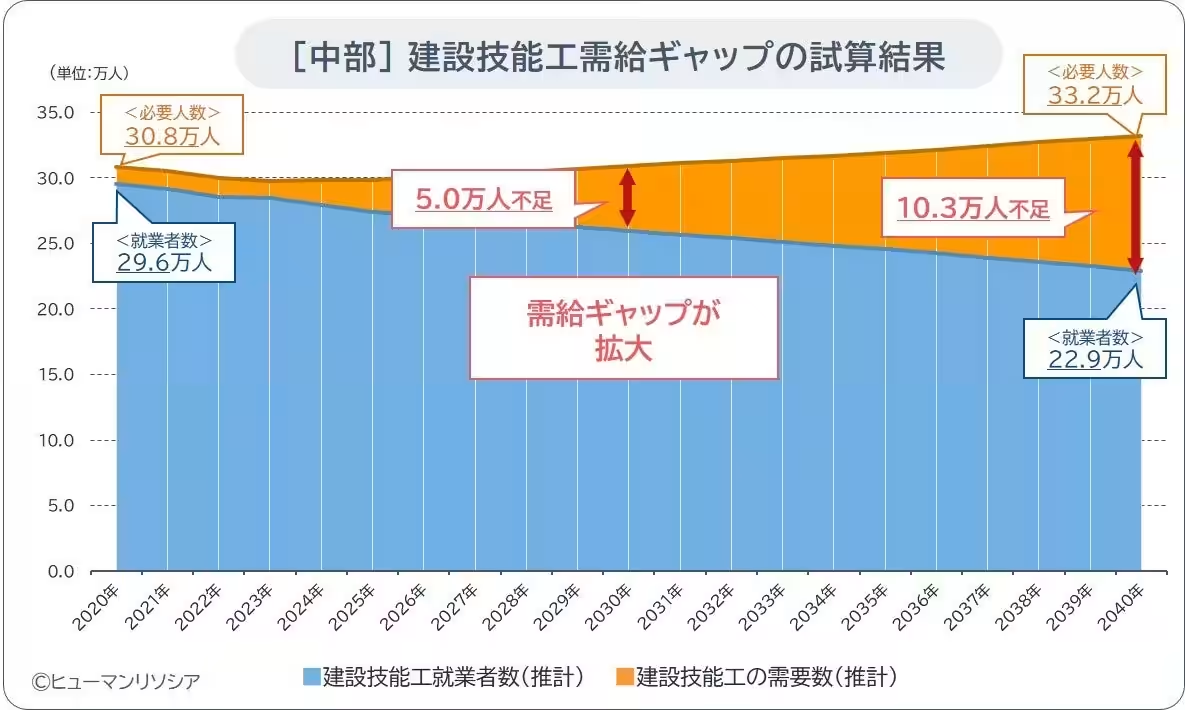
- - The number of skilled construction workers in Chubu is expected to face a substantial shortage, with predictions extending up to 2040.
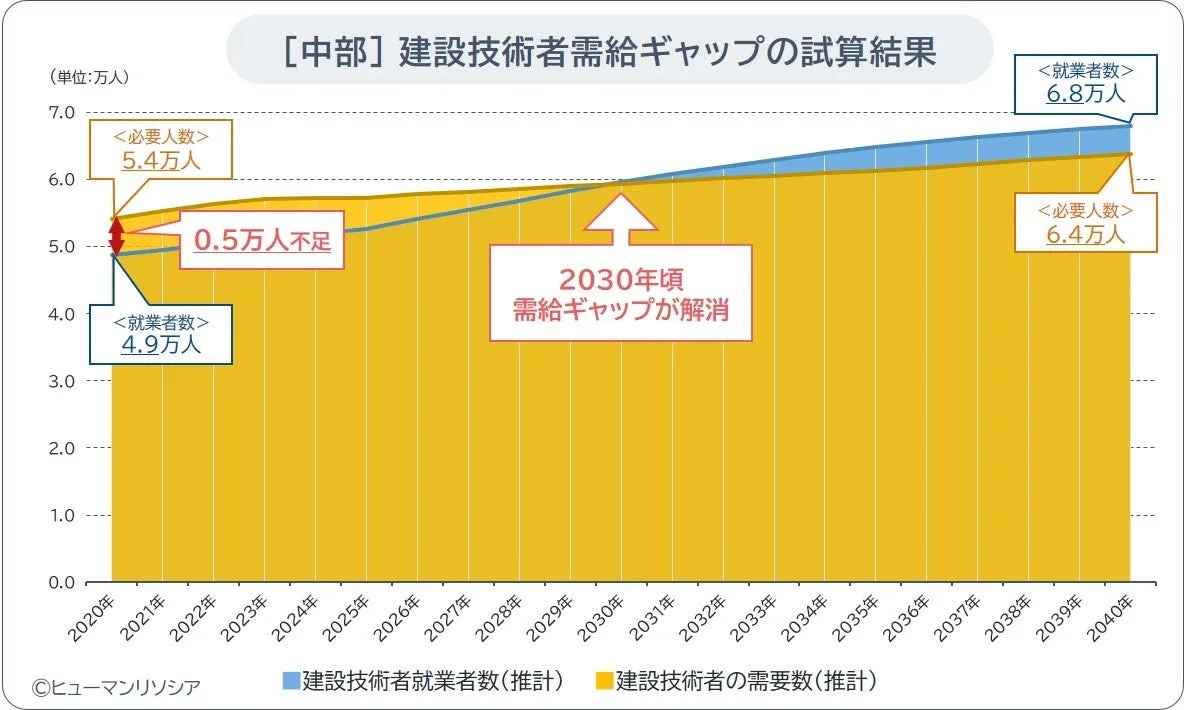
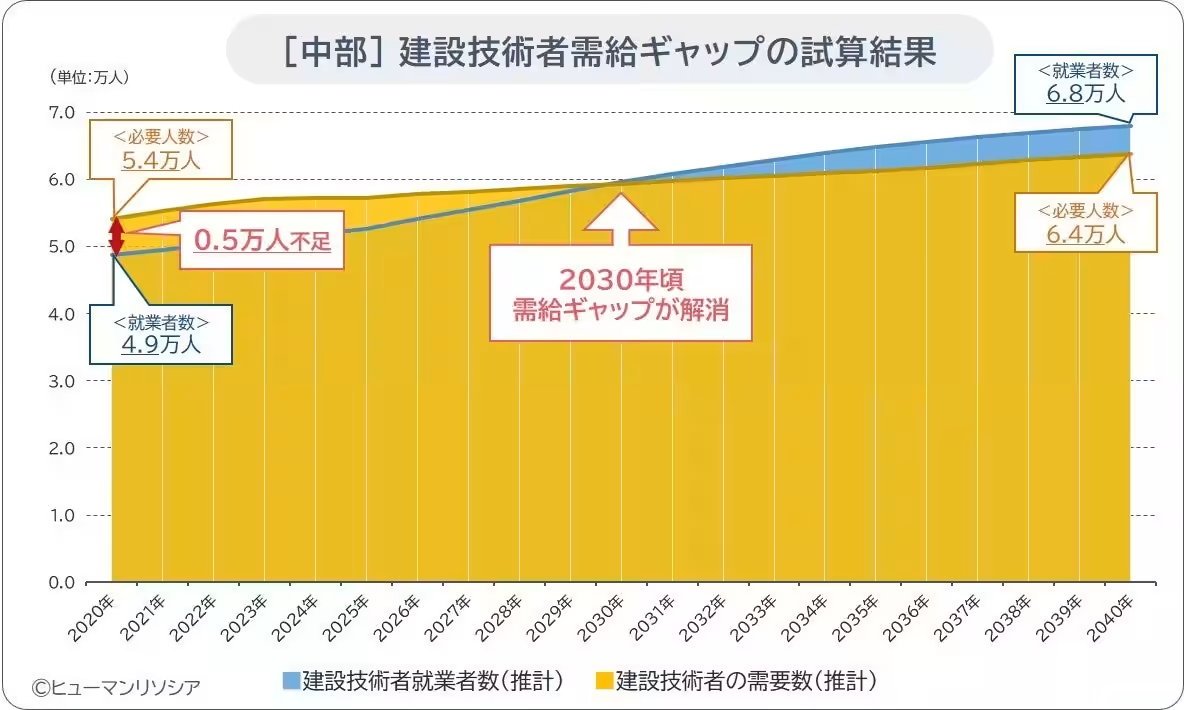
- - Conversely, the gap among technicians is expected to gradually decrease, reaching equilibrium around 2030.
- - The shortage of skilled workers is expected to worsen, necessitating urgent measures to attract and retain talent in the industry.
The study specifically defines the Chubu region as comprising Gifu, Shizuoka, Aichi, and Mie Prefectures, as indicated by the Ministry of Land, Infrastructure, Transport, and Tourism in their construction investment outlook. Skilled workers are categorized into construction technicians and builders, along with survey and exploration technicians.
Future Trends of Construction Technicians and Skilled Workers
According to the analysis, while the forecast for technicians reveals a potential for shortage resolution around 2030, the skilled labor sector is projected to experience a deeper crisis. The population of technicians is expected to rise gradually from 49,000 in 2020 to a predicted 60,000 by 2030, and 68,000 by 2040 – yielding a growth rate of 39.3% over two decades. Factors contributing to this growth include an influx of fresh graduates entering the market and relatively lower retirement rates among the older workforce in the region. However, demands are expected to increase gradually as well, from 54,000 in 2020 to 64,000 by 2040, resulting in a narrower demand-supply gap among technicians by 2030.
In stark contrast, skilled labor is anticipated to decline, with projections stating that their numbers will drop from 296,000 in 2020 to just 229,000 by 2040, a reduction of approximately 22.5%. Meanwhile, the demand for skilled labor is forecasted to rise from 308,000 to 332,000 over the same period, leading to significant anticipated shortfalls of 50,000 and 103,000 skilled workers by 2030 and 2040, respectively. These numbers reflect an alarming increase in shortage ratio, peaking at 31% by 2040, surpassing the shortfall ratios in other regions, such as Kanto and Kinki.
Implications for the Industry
The pressure to secure skilled labor in the construction sector is escalating, with over 60% of respondents from a survey conducted by Human Resocia expressing concerns over a potential increase in shortages of construction management professionals. Additionally, about 70% of those surveyed expect a widening gap in skilled labor. With the prospective workforce declining, there is an urgent need for the construction industry to enhance recruitment practices and improve working conditions to retain talent.
Furthermore, proactive engagement in recruiting international workers and implementing digital transformation initiatives to boost productivity will also be crucial in addressing the projected labor shortages.
Concluding Remarks
As the Chubu region braces for the impending labor challenges, the findings underscore the need for strategic planning and effective measures to ensure the availability of skilled construction workers in the coming decades. Responding promptly to these projections can mitigate the risk of failing to meet the regional construction demands effectively.

Topics Business Technology)
【About Using Articles】
You can freely use the title and article content by linking to the page where the article is posted.
※ Images cannot be used.
【About Links】
Links are free to use.