



Understanding Perceptions of Women Aspiring for Political Office in Japan
Exploring Political Aspirations of Women in Japan
In recent years, the conversation surrounding gender equality in politics has gained traction worldwide. In Japan, where women's representation in the legislature remains low compared to OECD countries, understanding the perceptions surrounding female candidates becomes crucial. A study conducted by researchers Yuya Endo and Yoshikuni Ono at Waseda University casts light on how voters perceive women aspiring to political office and the implications of these perceptions on their electoral success.
Key Findings
The researchers conducted an online survey experiment involving 3,000 Japanese voters to explore how the expression of political ambition influences evaluations based on candidate gender. Participants were presented with fictional profiles of candidates that varied by gender and perceived motivation for running — either a self-initiated ambition or an encouragement from others. The study aimed to measure the candidates based on two criteria: personal impression or likability, and perceived popularity among voters.
No Favoritism in Likability
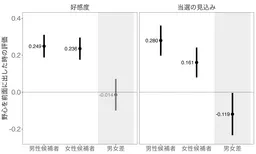
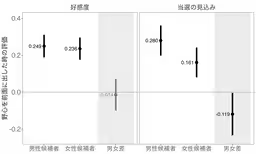
The results revealed that both male and female candidates who expressed their political ambitions received increased likability ratings. However, there was a marked difference in the perceived popularity of female candidates compared to their male counterparts. While declaring ambition improved likability for both genders, ambitious women often were not seen as likely to gain the same level of voter support as ambitious men.
Gender Bias and Perception
When assessing candidates, particularly among female voters, a tendency emerged where ambitious men were viewed as more appealing in terms of desirability for votes. This disparity does not appear to stem from expressed dislike toward ambitious women, but rather from a belief that others would be less supportive of them. This second-order belief indicates deep-seated gender biases influencing voter perceptions.
Implications for Women Candidates
These findings shed light on the hidden 'glass ceiling' faced by women in politics. Despite demonstrating ambition and capability, female candidates are at a disadvantage in voter popularity evaluations, which could impede their electoral viability. The results suggest that both the way women frame their ambition and the systemic support they receive are essential for closing the gender gap in political representation.
The Need for Change
Addressing the gender disparity in politics requires more than merely encouraging women to run for office; it necessitates altering voter perceptions about women candidates. The study highlights that shifting the narrative around ambitious women, enhancing party support for female candidates, and transforming media portrayals of women in leadership roles are vital to fostering a more inclusive political landscape.
Future Directions
The study presents a foundational framework for future research to explore mechanisms behind these perceptions and ways to challenge and change them. It underscores the urgency for educational campaigns targeting not only voters but also political parties to promote female candidates' viability.
In conclusion, as Japan and many other nations strive for greater gender equality in politics, it becomes essential to dissect and address the biases that hinder women's political ambitions. Only through collective consciousness and structural changes can we pave the way for a more balanced representation in political office.
- ---
The study is scheduled for publication on October 28, 2025, in Electoral Studies, under the title: "Emphasizing or Downplaying Political Ambitions: Exploring the Role of Candidate Gender in Shaping Voter Perceptions." This work is expected to contribute significantly to ongoing discussions about gender parity in political arenas and the practical steps needed to achieve it.
Topics Other)
【About Using Articles】
You can freely use the title and article content by linking to the page where the article is posted.
※ Images cannot be used.
【About Links】
Links are free to use.