



What Does the Ideal School Environment Look Like for Generation Z? Insights from Premaceed's Study
Understanding Generation Z's Ideal School Environment
Recently, Premaceed, a company managing the "Go Communication High School" portal site, conducted a comprehensive survey aimed at uncovering the educational aspirations and attitudes of Generation Z. This demographic includes individuals born between 1997 and 2012, with a focus on those aged 15 to 22, particularly those who have adapted to the unique challenges posed by the COVID-19 pandemic. The survey took place from August 8 to August 18, 2025, and sought to explore the ideal school image and interpersonal relationships among high school students.
Key Findings
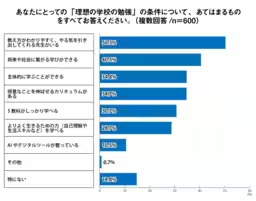
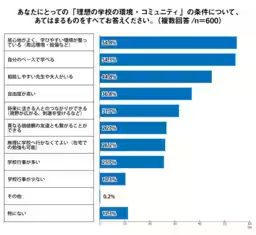
The results revealed fascinating insights into the preferences and priorities of the younger generation when it comes to their educational environments. One of the most prominent findings is that 54.8% of respondents identified a "comfortable and easy-to-learn environment" as essential for an ideal school. This was closely followed by 54.3% who expressed the need for the ability to learn at their own pace. Additionally, 44.8% valued the presence of approachable teachers and adults, while 36.8% favored high levels of freedom in their learning environments.
In terms of educational methodology, the survey asked participants to list the conditions they believe constitute ideal learning. The top response was the necessity of having teachers who can inspire and effectively communicate lessons, with 50.3% highlighting this point. Following closely was the importance of learning that connects to future and societal relevance, at 40.5%. 34.8% of respondents also appreciated the opportunity for self-directed learning, while 34.7% desired a curriculum that focuses on their strengths.
Insights from Premaceed's CEO
Akihito Iwata, the CEO of Premaceed, commented that the results of the survey indicate a clear desire among Generation Z to learn in a comfortable environment while also gaining knowledge that will benefit them in the future. However, he noted that despite their eagerness to learn independently, there remains a strong expectation for guidance from schools and teachers. This suggests the potential for project-based and inquiry-based learning methods to emerge, helping to empower this generation as they carve out their futures.
Motivation for Learning
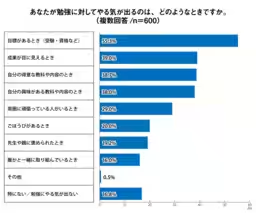
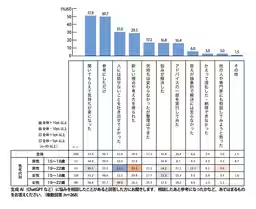
Another interesting aspect examined in the survey concerned instances that motivate students to engage in their studies. A staggering 55.3% revealed that having specific goals, such as exams or qualifications, was a primary motivator. This was followed by 39.0% who reported that visible results inspire them, while 38.7% stated that subjects in which they exceled prompted a keen interest.
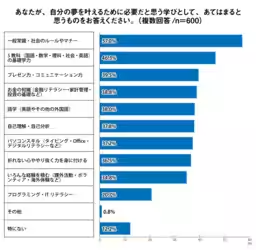
Interestingly, when the survey probed into what learning they believed was necessary to realize their dreams, 57.0% felt that understanding general knowledge, societal rules, and manners was crucial. The study also highlighted the demand for skills such as presentation and communication, with 39.5% reflecting its importance in their educational journey.
The Role of AI in Education
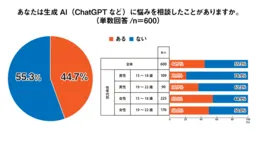
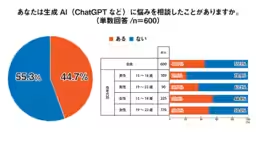
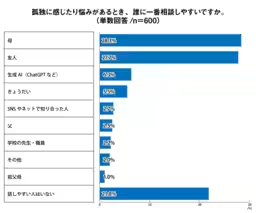
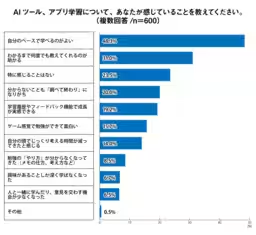
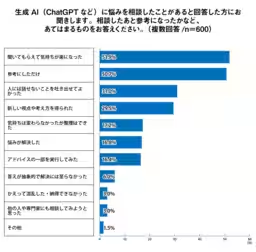
As technology continues to advance, the role of AI tools and learning applications has not gone unnoticed by this generation. Nearly 48.3% appreciated the flexibility that these digital learning tools provided. When discussing their experiences with generative AI, an impressive 44.7% had consulted AI for advice, displaying a growing trend in reliance on technology for academic and personal support.
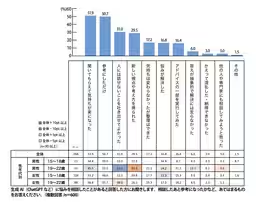
The survey results presented varying perspectives on gender and age regarding the use of AI for consultation. While females tend to utilize AI for emotional support, males often seek more analytical and solution-based responses. This divergence underscores the need for tailored approaches when incorporating AI tools into educational contexts.
Conclusion
In summary, Premaceed’s survey paints a vivid picture of Generation Z’s educational desires. With a clear emphasis on comfort, autonomy, and community, their input suggests that their ideal school must adapt to their needs for guidance and support while harnessing technology effectively. As communication high schools continue to evolve, they may very well embody the future aspirations of the younger generation. As Akihito Iwata concluded, this generational shift in educational values presents an opportunity for establishing learning environments that reflect the ideals of Generation Z, potentially leading to innovations in educational methodologies that align with their visions.


Topics Other)
【About Using Articles】
You can freely use the title and article content by linking to the page where the article is posted.
※ Images cannot be used.
【About Links】
Links are free to use.