




Haseko Corporation and NPO Team Up for Sustainable Bamboo Utilization in Kyoto
Haseko Corporation and NPO Team Up for Sustainable Bamboo Utilization in Kyoto
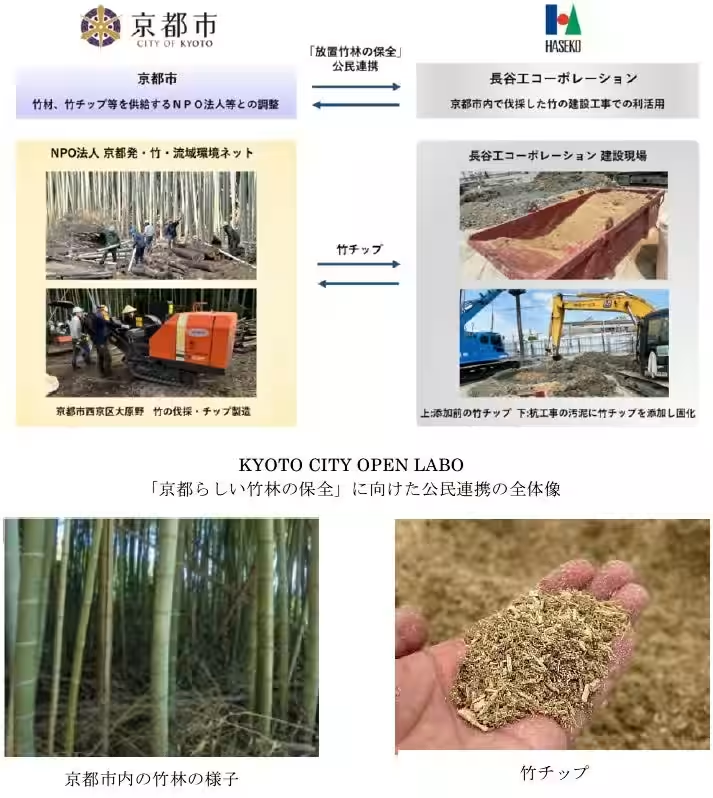
In a significant move towards sustainable urban development, Haseko Corporation, headquartered in Minato, Tokyo, has been selected as a participating business in Kyoto City's 'KYOTO CITY OPEN LABO' program. This initiative aims to enhance public services and create new market opportunities through public-private partnerships. The collaboration proposes the effective utilization of bamboo harvested within the city for construction projects, offering an innovative solution to address the region's environmental issues.
Kyoto is home to approximately 660 hectares of bamboo forest. However, due to declining bamboo farming and reduced demand for bamboo materials, about 40% of these forests are poorly managed, detracting from the city’s landscape. In response to these challenges, Haseko Corporation is collaborating with the NPO Kyoto Bamboo Network, based in Nishikyogoku, to implement a bamboo forest management program. This partnership focuses on the on-site chipping of harvested bamboo, which Haseko purchases at a set price.
Leveraging their collaborative innovation with Professor Kenichi Sato of Fukuoka University’s Faculty of Engineering, Haseko developed a patented technology for solidifying construction sludge using bamboo chips. This technology has already been utilized in various Haseko construction sites, demonstrating its effectiveness in reducing CO2 emissions while also addressing the problem of abandoned bamboo forests. By processing harvested bamboo into chips for reuse at construction sites, this initiative not only preserves the landscape but also significantly lowers environmental impact, thereby supporting decarbonization efforts.
One of the pressing challenges faced by the bamboo management initiative is the disposal of harvested bamboo. However, the decision to repurpose these materials into bamboo chips for construction projects offers a dual benefit—it helps maintain the visual appeal of the area and reduces environmental burden. Haseko is committed to exploring further applications of bamboo chips in its construction efforts moving forward.
Additionally, Haseko Corporation has set forth its 'HASEKO ZERO-Emission' climate change response policy, established in December 2021, which emphasizes promoting decarbonization in construction sites. Upholding its corporate philosophy of “creating an optimal living environment for urban residents and contributing to society,” the company is dedicated to addressing these challenges as part of its business operations. Haseko aims to enhance its corporate value while striving for a sustainable society.
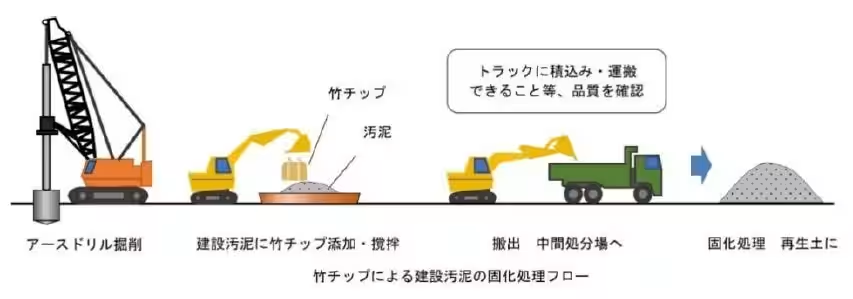
The process of solidifying construction sludge with bamboo chips follows several key steps:
1. Excavation works generate construction sludge during the pouring of concrete piles.
2. Bamboo chips are mixed into the construction sludge to facilitate solidification.
3. The solidification progress of the construction sludge is monitored.
4. The resulting mixture is transported from the construction site to an intermediate processing facility.
5. Further solidification is conducted at the processing facility, ensuring the quality of the recycled material for reuse as landfill material.
This pioneering collaboration between Haseko Corporation and the NPO Kyoto Bamboo Network exemplifies a commitment to sustainable practices and environmental stewardship, positioning Kyoto as a leader in innovative urban solutions.
For further details, visit the Haseko Corporation press release here and their climate change response policy information here.
Image: Left - Haseko President Sato Kumano, Right - Kyoto City Mayor Koji Matsui

Topics Other)
【About Using Articles】
You can freely use the title and article content by linking to the page where the article is posted.
※ Images cannot be used.
【About Links】
Links are free to use.