



CATL and Springer Nature Launch 'Watt' Journal to Bridge Science and Industry
Introducing 'Watt': A New Journal by CATL and Springer Nature
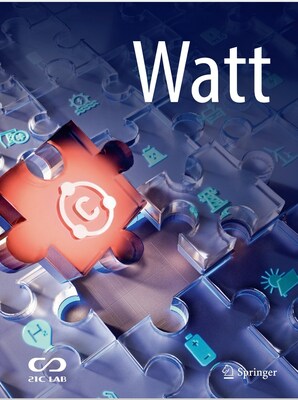
In an era where sustainable energy solutions are paramount, contemporary challenges demand cutting-edge responses. To address this, CATL’s innovative 21C Lab has joined forces with Springer Nature, a renowned scientific publisher, to unveil a pioneering journal titled 'Watt'. Scheduled for its inaugural issue in February 2026, 'Watt' aims to enhance the dialogue between scientific research and industrial application in the sectors of energy and CO2 neutrality.
Objective of Watt
Watt is designed to facilitate the transition to a sustainable energy system by promoting groundbreaking scientific findings focused on scalability, reproducibility, and real-world implications. Recognizing the urgent need for robust solutions in combating climate change, the journal targets important areas such as energy storage, conversion technologies, network optimization, carbon capture, and policy analysis.
Editorial Integrity and Scientific Standards
One of the distinguishing features of Watt is its commitment to high academic standards, which is upheld by a distinguished editorial board composed of leading scholars from the energy research community. The editorial team, led by Dr. Rose Zhu, Editor-in-Chief, includes notable figures like Professor Sir Peter Bruce from the University of Oxford and academic Huisheng Peng from Fudan University. This team ensures that the journal publishes high-quality research grounded in rigorous peer-review processes.
The editorial standards of Watt incorporate the innovative “Five Highs” concept, which guarantees:
- - High Quality: A stringent peer-review process ensures that only the most reliable research is published.
- - High Reproducibility: Key experiments undergo independent verification to build trust among industrial stakeholders.
- - High Practicality: Research with practical potential receives incubation support, bridging the gap between discovery and real-world application.
- - High Visibility: An open-access model maximizes the journal’s global impact, ensuring widespread outreach among policymakers, industry leaders, and the scientific community.
- - High Diversity: The journal embraces multiple disciplines and perspectives, creating an inclusive platform for a truly global dialogue.
Invitation to Contribute
Currently, Watt is open for submissions, inviting the global academic community to contribute groundbreaking research. Scholars are encouraged to submit their work or participate as reviewers to uphold the journal’s stringent academic standards. Collaboration is key, and Watt aims to redefine the role of scientific journals by serving as a bridge between transformative science and scalable technology.
Ambition and Future Goals
The journal endeavors to stimulate innovation crucial for realizing a sustainable net-zero future. Besides publishing research findings, Watt will also promote collaboration and knowledge sharing to accelerate the global energy transition. This aligns perfectly with the increasing urgency of addressing climate change challenges through scientific inquiry and technological advancement.
In conclusion, the establishment of 'Watt' marks a significant step towards promoting impactful scientific research and ensuring that pivotal energy innovations are brought to the forefront of industry practice. By fostering a greater understanding between academia and industry, 'Watt' is poised to play a vital role in the dialogue needed to navigate the complexities of sustainable energy solutions.
For those interested in contributing, please visit Watt Submission for more details.
Topics Other)
【About Using Articles】
You can freely use the title and article content by linking to the page where the article is posted.
※ Images cannot be used.
【About Links】
Links are free to use.