


New Insights into Lunar Crater Topography and Rock Distribution Through Integrated Analysis
Understanding Lunar Crater Dynamics: Insights from Flamsteed Crater
A recent study conducted by researchers from the National Institute of Advanced Industrial Science and Technology (AIST) has uncovered significant findings regarding the topography of the Flamsteed Crater on the Moon. By integrating analyses of microtopography with rock distribution patterns, the investigation indicates a clear correlation between the locations abundant in boulders and the presence of depressions within the crater's slopes.
Research Background
The Moon's surface presents a unique environment for geological study due to the absence of atmosphere and liquid water, coupled with a lack of tectonic activity. This allows for the preservation of ancient landscapes. Despite this, the Moon's surface is still subject to ongoing changes from meteorite impacts, moonquakes, and the dispersal of materials, highlighting how essential it is to understand these processes in order to reconstruct the Moon's geological history.
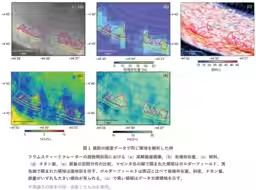
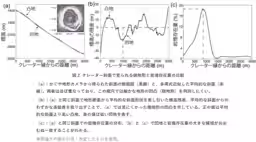
The research focused on the southwestern slope of the Flamsteed Crater, utilizing data collected from Japan’s Kaguya satellite and NASA’s Lunar Reconnaissance Orbiter (LRO). The team successfully identified that the areas where boulders are concentrated coincided with the locations of small-scale topographic depressions on the Moon's surface.
Findings from Integrated Analysis
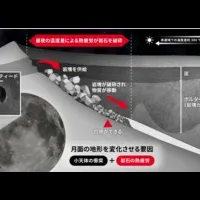
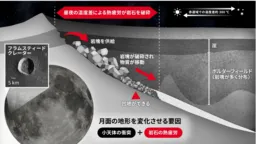
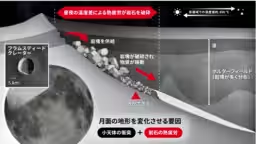
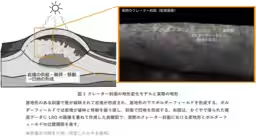
By merging previous separate studies of lunar microtopography and boulder distributions, the researchers proposed a model of surface change that takes into account the supply, fragmentation, and movement of boulders. Their model showed that the extent of boulder supply required to maintain current distributions could not be easily explained solely by meteorite impacts. This points towards the influence of thermal fatigue caused by significant temperature fluctuations between lunar day and night on the movement and degradation of boulders. The heat stress resulting from extreme temperature changes—up to 300°C—leads to the expansion and contraction of rocks, promoting fragmentation and subsequent motion of materials down the slopes of craters.
The detailed observations revealed that boulders accumulated between 200 m and 1 km down the slopes, forming uneven fields of rock below layered cliffs. Immediately beneath these cliffs, the concentration of iron and titanium was also notably higher, adding another layer of complexity to the understanding of lunar geology. Furthermore, the distribution of small craters formed after the primary crater formation showed a stark absence in boulder fields, suggesting that ongoing surface processes actively erase evidence of such impacts.
The researchers highlighted the significance of understanding these relationships as they provide keys to past geologic events and how the Moon is currently evolving. The dynamics between surface materials and microtopographic features represent crucial evidence of changes that continue to unfold even on ancient geological formations.
Broader Implications of Research
These findings do not only illuminate the processes involved in lunar topography but have broader implications for astronomical bodies that lack atmospheres, including asteroids. By applying similar analytical approaches to other craters and celestial bodies, researchers can gain insight into the surface evolution processes across the solar system.
The results of this investigation were attributed to collaborative efforts and were supported by various institutions contributing to the study of the Moon's geological characteristics. The integration of multiple high-resolution datasets allowed for a comprehensive understanding of the interconnections between topography and rock distribution, paving the way for future explorations and continued advancements in planetary science.
Conclusion
In conclusion, this study enhances our understanding of lunar geology and surface evolution, shedding light on the mechanisms driving changes in the Moon's landscape. With ongoing research and exploration missions on the horizon, the continued investigation into these processes remains critical for both lunar studies and the overarching study of celestial bodies in our solar system.
Published Research: For more in-depth information, the complete findings have been documented in the journal Planetary and Space Science, titled "Characterization of Microtopography of Lunar Crater Slopes Related to Rock Abundance: A Case Study at Flamsteed Crater" by Ayame Ikeda et al. DOI: 10.1016/j.pss.2026.106347.
Topics Other)


【About Using Articles】
You can freely use the title and article content by linking to the page where the article is posted.
※ Images cannot be used.
【About Links】
Links are free to use.