



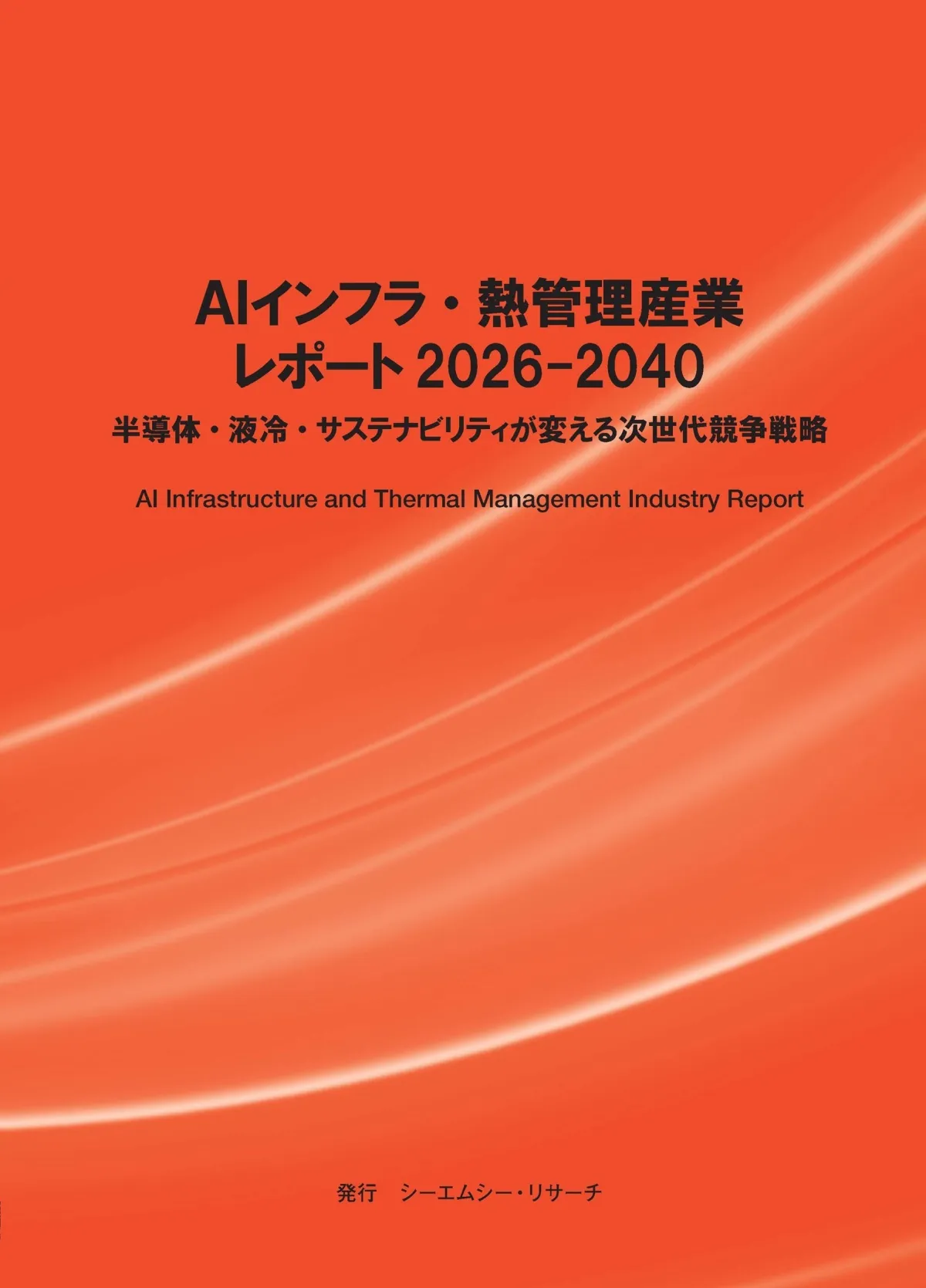
The AI Infrastructure and Thermal Management Industry Report 2026-2040: A Comprehensive Guide to Next-Generation Competitive Strategies
The Future of AI Infrastructure and Thermal Management
In the rapidly evolving landscape of AI technologies, the competition centers around thermal management as a decisive factor in the success of AI infrastructures. The new report from CMC Research titled AI Infrastructure and Thermal Management Industry Report 2026-2040 emphasizes that understanding and optimizing heat management is now more critical than ever for maintaining competitiveness in this dynamic field.
Key Insights and Features
The report elucidates the transformation in the AI industry as it transitions from a phase focused on surpassing semiconductor performance limits to one where holistic infrastructure control via thermal management becomes paramount. With AI applications increasing the power demands of GPUs dramatically—rising from hundreds of watts to a kilowatt or more—the intersection of heat control and operational efficiency emerges as a central theme.
Understanding Thermal Management
Thermal management has historically been viewed as a niche concern, primarily the responsibility of semiconductor designers and cooling technology manufacturers. However, advancements in AI are shifting this paradigm. The AI Infrastructure and Thermal Management Industry Report 2026-2040 is a comprehensive resource, capturing crucial elements such as:
- - AI semiconductors and advanced packaging
- - Next-generation cooling technologies, including liquid cooling and immersion cooling
- - The intricacies of AI data centers
- - Sustainability strategies concerning power and water usage
- - Market scale, key players, and supply chain dynamics
This report serves as both a strategic guide and a reference for practitioners in the AI infrastructure sector, integrating technical trends with market structures, competitive strategies, and investment decisions.
Sustainability as a Competitive Edge
One of the standout features of the report is its emphasis on sustainability, redefined as a design variable that enhances competitiveness rather than merely a compliance obligation. The Sustainability Control Plane framework proposed in the report advocates for a consolidated approach to managing heat, electricity, and carbon emissions—essentially transforming these considerations into strategic advantages.
Engaging with sustainability not just as a defense mechanism but as a core feature of AI infrastructure development reflects a significant shift in industrial priorities. The report outlines how companies that master thermal control will hold the key to dominating the infrastructure competition post-2040.
Detailed Structure of the Report
The report is structured in six comprehensive parts:
1. Thermal Design of AI Semiconductors and Packaging:
- Exploring thermal design paradigms and the physics of high-density implementations.
- Investigation into thermal management's role in maximizing performance through Power-Thermal Co-Design.
2. Next-Generation Cooling Architectures:
- Focus on the evolution of cooling strategies suitable for the anticipated demands of 1MW racks.
- Examination of liquid cooling infrastructure and its implications for operational reliability and efficiency.
3. Regional Infrastructure Constraints:
- Analysis of how local energy infrastructures create competitive advantages or pose challenges.
- The evolution of data center landscapes in regions such as North America, Europe, and Asia.
4. Market Dynamics and Supply Chains:
- Economic analyses and modeling of the thermal management market from 2026 to 2035.
- Resilience strategies in the AI thermal management supply chain, including dealing with certification and standardization challenges.
5. Sustainability and Management Impact:
- Investigating how various sustainability indicators interact with economic performance metrics.
- Proposing the Sustainability Control Plane as a new management strategy.
6. Corporate Strategies and Technological Roadmaps:
- Analyzing how AI infrastructure competitors are positioning themselves and charting their technological advancements.
Conclusion
The report guides businesses in navigating the complexities of AI infrastructure and the paramount importance of thermal management. By understanding and adopting these strategies, companies can anticipate the future of AI and gain a competitive edge. With the thermal dynamics now central to success, this report is an essential tool for executives, engineers, and investors alike. To explore further and purchase, refer to the links provided for detailed content and insights.
- ---
Publication Date: July 28, 2026
Format: A4 paperback, 244 pages
Price: Printed version - 275,000 Yen (including tax), Set price (book + PDF version on CD) - 330,000 Yen (including tax)
ISBN: 978-4-910581-97-2
Publisher: CMC Research
Topics Consumer Technology)
【About Using Articles】
You can freely use the title and article content by linking to the page where the article is posted.
※ Images cannot be used.
【About Links】
Links are free to use.