



Switching Between Work and Life: Insights From Remote Workers
An Insightful Study on Work-Life Balance in Remote Work
In a groundbreaking survey conducted by LASSIC, a Tokyo-based company that promotes location-independent work styles, significant insights into work-life balance amid the shift towards remote work have been unveiled. The study, which sampled 1,000 working individuals aged between 20 and 65 who have experience with telework, reveals fascinating trends regarding how people are managing their work and personal lives.
Key Findings
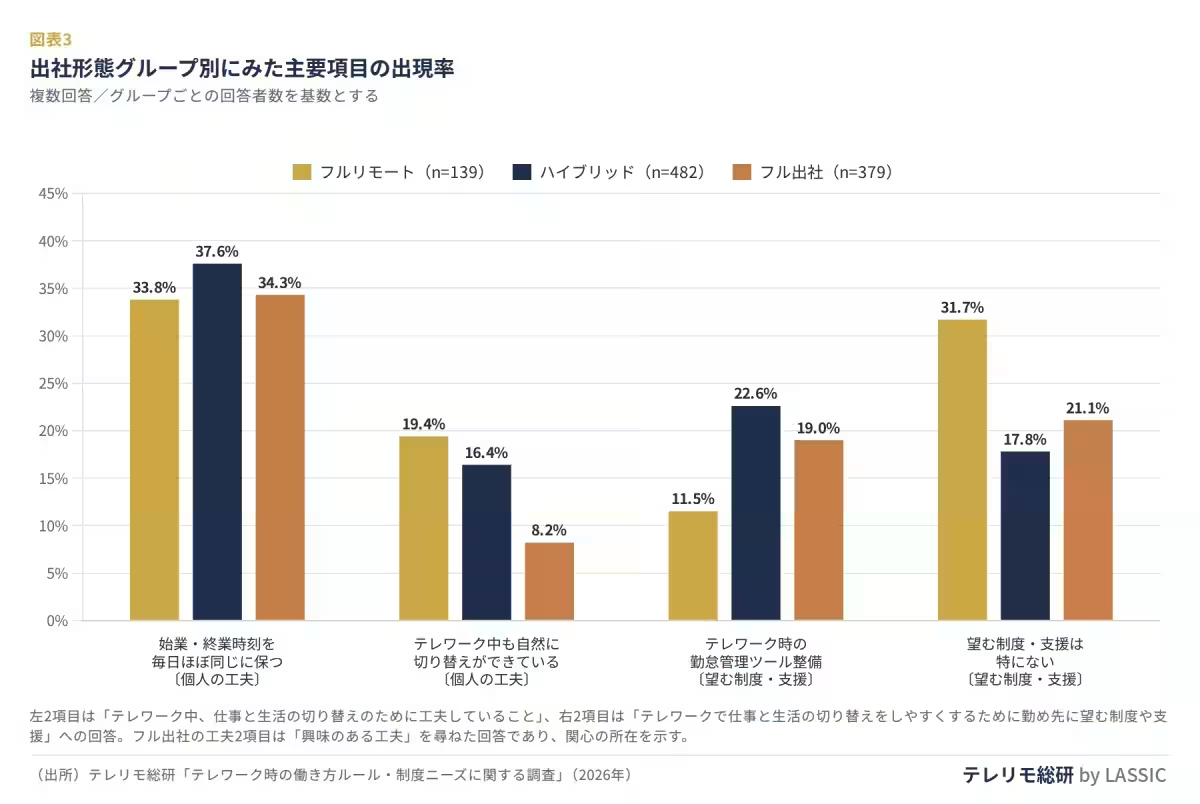
One of the most striking results indicates that 19.4% of full-time remote workers feel that they can naturally transition between work and personal life, compared to only 8.2% of those who work full-time in the office—a ratio of over two to one. This highlights how working arrangements significantly influence employees' experiences and perceptions of work-life balance.
Strategies for Transitioning Between Work and Life
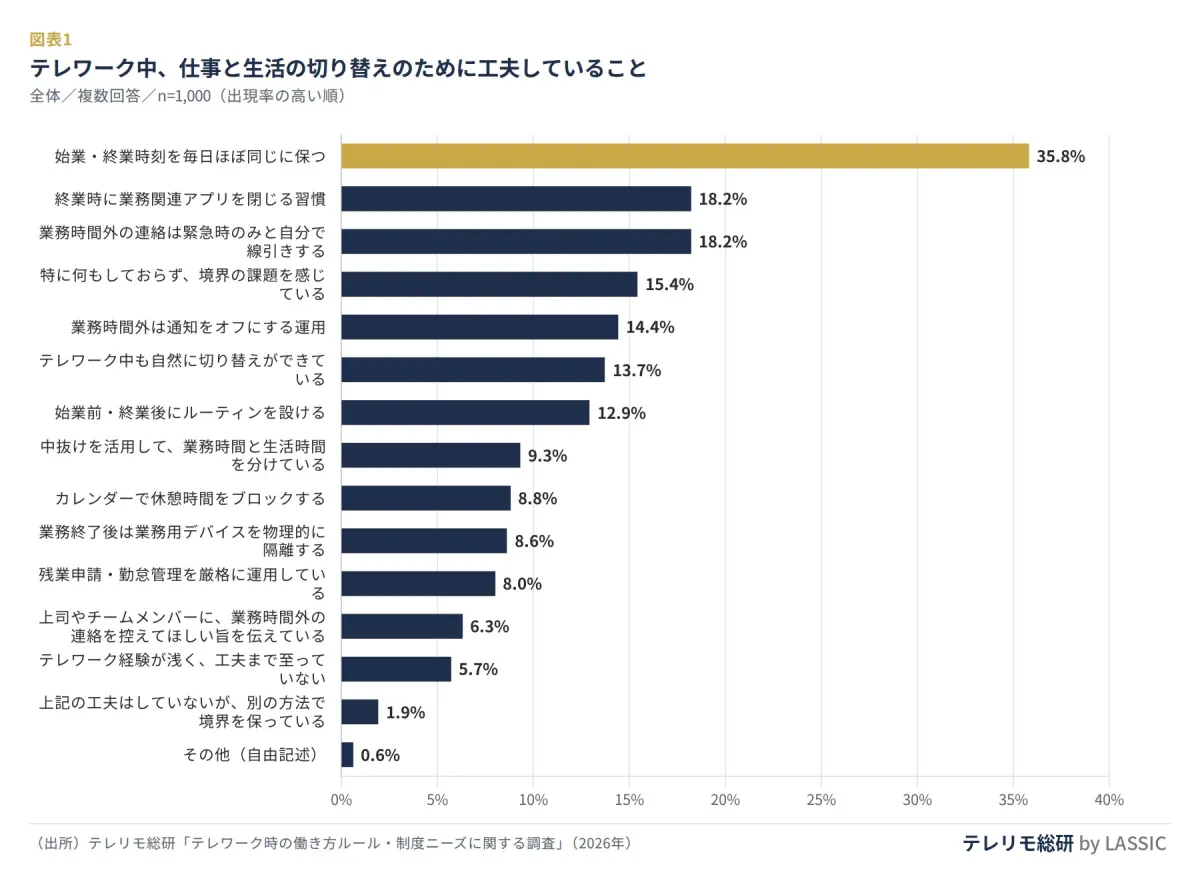
When asked about personal methods for managing the switch from work to personal life, the top response, cited by 35.8% of participants, was maintaining consistent start and end times for their workday. This practice is almost double the percentage for the second-most popular strategy, which was chosen by just 18.2% of respondents.
Other notable methods identified in the survey included closing work-related applications after hours and setting boundaries for after-hours communications, which also received a significant response of 18.2%. Interestingly, 15.4% of participants reported doing nothing in particular, feeling the pressures of balancing work and personal life.
Ideal Institutional Supports
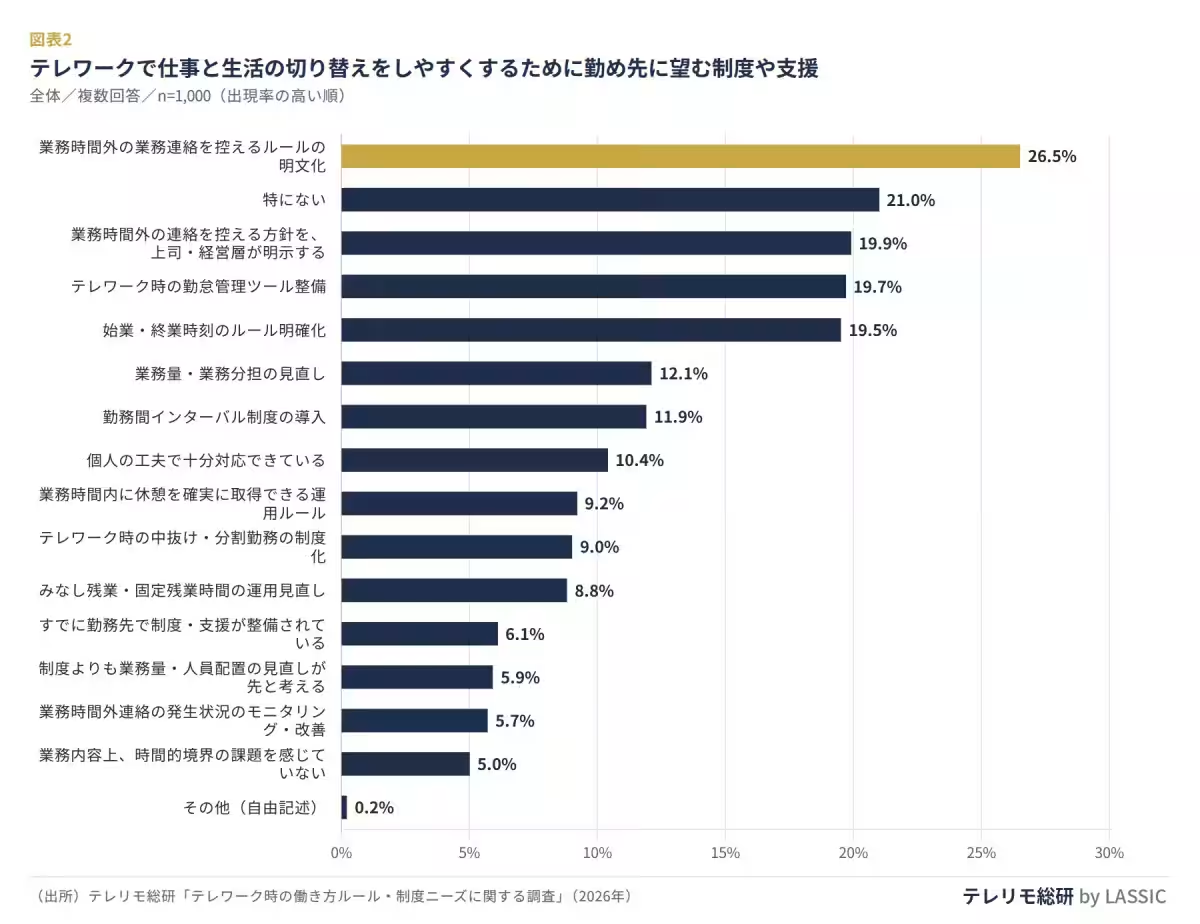
Participants also expressed their desires for specific company policies to facilitate better work-life balance. The most requested support, at 26.5%, was the formalization of rules to limit work communications outside of business hours. This need surpassed individual strategies where only 18.2% of respondents stated they self-imposed limits on after-hours communications. Other institutional wishes included clearer policies regarding work hours and support systems for managing telework attendance.
Differences in Experience by Work Arrangement
Diving deeper into the data revealed that responses varied significantly based on work arrangements. For instance, when it comes to natural transitions during remote work, full-time remote employees led the way with 19.4% reporting success in this area. In contrast, only 8.2% of full-time office workers felt the same, suggesting that the very nature of their work environment plays a crucial role in their ability to shift from professional to personal mindsets.
Different Demographics, Different Needs
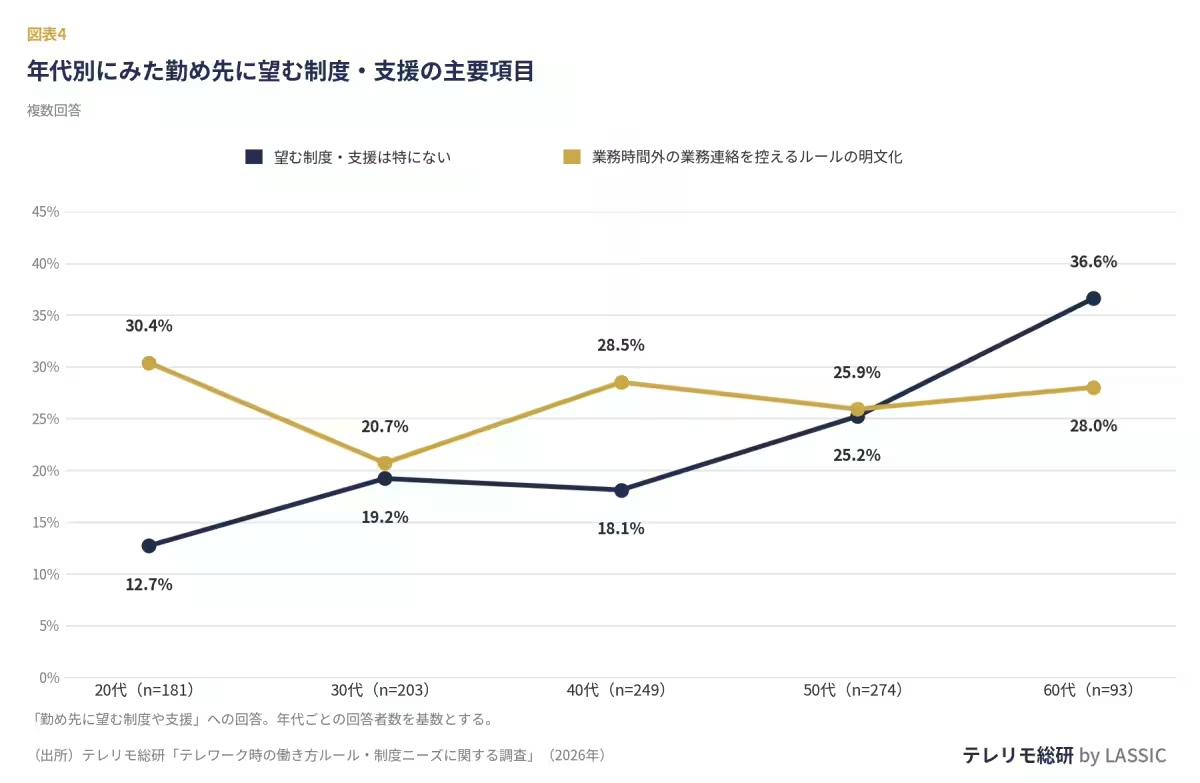
Examining the responses by age group unveiled further trends. Younger employees in their twenties were the least likely to state they had no particular needs for formal policies at 12.7%, while older employees aged sixty and above reported a significantly higher percentage at 36.6%. Despite varying needs for policy support, the desire for formal rules about after-hours communication remains a common concern across all age demographics, with all groups expressing interest in establishing clearer boundaries for after-hours communications.
Conclusion
The findings from LASSIC's study illustrate the ongoing challenges workers face in managing their professional and personal lives, particularly among those engaged in remote work. The clear disparity in experiences between those working from home and those in office settings emphasizes the need for better structures and supports to facilitate a more balanced lifestyle. As remote work continues to evolve, understanding these dynamics will be critical for employers and employees alike to create a healthier work environment.
For detailed insights and more information about this study, visit LASSIC's website at LASSIC.


Topics People & Culture)


【About Using Articles】
You can freely use the title and article content by linking to the page where the article is posted.
※ Images cannot be used.
【About Links】
Links are free to use.