




NEC Transforms Dai Nippon Dock's Operations with SaaS ERP Solution
Revolutionizing Operations: The Introduction of NECA's Construction Cloud
In a significant move towards modernizing its operations, NEC Corporation has successfully implemented its SaaS-based ERP solution, the Construction Cloud, at Dai Nippon Dock Co., Ltd. This landmark decision marks a pivotal shift from traditional customized systems to a standardized operational approach, aligning closely with contemporary business practices.
Founded in 1924, Dai Nippon Dock recently celebrated its 100th anniversary. However, it faced challenges with its legacy system—an outdated mainframe that had been in operation for over 50 years. The complexities arising from years of piecemeal updates had made the system increasingly cumbersome, leading to excessive costs and delays in adapting to changing regulatory environments. Notably, disparities arose across various regional offices, necessitating that staff relearn operational protocols with each relocation. The inefficiencies of duplicate data entry through paper forms further compounded the company’s challenges.
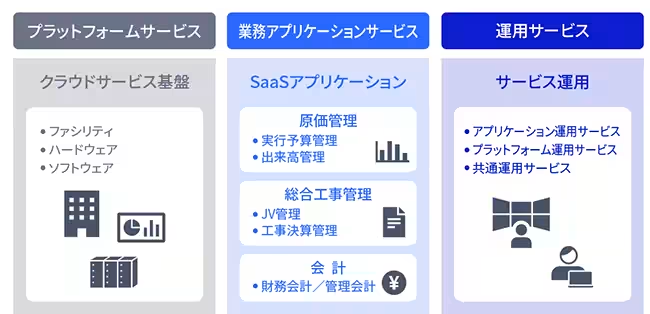
Recognizing these pressing issues, Dai Nippon Dock made the strategic decision to integrate the Construction Cloud into its operations. This specialized ERP solution focuses specifically on construction cost management and financial accounting, providing much-needed clarity and efficiency.
Achievements from the Introduction of Construction Cloud
The introduction of the Construction Cloud has yielded notable benefits for Dai Nippon Dock, demonstrating significant improvements across various operational facets:
1. Increased Adaptability to Environmental Changes: The decision to opt for a non-customized implementation enhances the company’s ability to adapt to future changes, such as updates in regulations and operational standards. By handling foundational upgrades and legal adjustments on the service side, operational burdens have dramatically decreased.
2. Improved Workforce Flexibility through Standardization: The Construction Cloud facilitated the adoption of standardized operating procedures, co-developed with four leading companies in the construction sector. This cooperation effectively mitigated operational discrepancies that had evolved over five decades due to organizational changes.
3. Enhanced Revenue Management and Significant Reduction in Closing Time: Revisiting the business workflows while incorporating real-time data management has allowed for a notable increase in revenue management accuracy. Not only has this led to greater operational effectiveness, but it has also slashed closing times by approximately 50% compared to the previous systems.
The Future of Construction Cloud and Expected Benefits
NEC’s successful implementation of the Construction Cloud has been particularly praised for its ability to align business processes with industry standards, facilitating a non-customized application that was previously considered difficult for the company's unique accounting methods. NEC’s thorough understanding of Dai Nippon Dock’s operations and its commitment throughout the implementation allowed the firm to achieve high satisfaction levels and confidence in the system.
Looking forward, expectations are high regarding the upcoming user group meetings where clients of the Construction Cloud can share experiences and address operational challenges together. Such forums are anticipated to provide vital support, especially concerning regulatory compliance and operational queries, fostering a community of collaboration within the construction industry.
NEC remains committed to supporting the continuous utilization and value creation from the Construction Cloud within the construction sector, contributing to a broader acceleration of digital transformation (DX) initiatives across the industry.

Topics Consumer Products & Retail)
【About Using Articles】
You can freely use the title and article content by linking to the page where the article is posted.
※ Images cannot be used.
【About Links】
Links are free to use.