



Significant Progress in Animal Welfare Policies Among Japanese Food Companies
Progress in Animal Welfare Policies
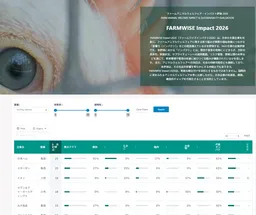
Recent research conducted by the Animal Rights Center (ARC) has revealed that over 30% of major Japanese food firms have now established animal welfare policies. This marks a remarkable shift, considering that just under a decade ago, almost none of these companies had formal policies in place. However, it should be noted that while the percentage of companies with policies has risen to 31.2%, overall effectiveness, as indicated by median scores among the firms, remains low at just 3 out of a possible higher score.
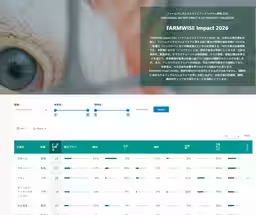
The FARMWISE Impact 2026 report focused on 107 of the most influential companies in the livestock sector in Japan. Although corporate awareness of animal welfare has increased significantly, the transition from ideals to actionable systems still shows varying levels of development. For instance, the average score for the fast-food industry is only 2.23, indicating substantial gaps in the commitment to animal welfare across different sectors.
Sector-Specific Insights
When diving into specific animal types, significant disparities emerged. The breakdown shows only 3.7% of chicken meat producers have established animal welfare policies, while egg producers have been more proactive at 22.4%. In contrast, the seafood and pork industries lag behind with 9.3% and 8.4%, respectively. These discrepancies highlight a concerning trend in animal welfare practices within Japan’s food industry, particularly in the poultry sector, which is seen as lagging significantly behind others.
Evaluating Implementation
The FARMWISE Impact assessment doesn’t merely check for the existence of animal welfare policies but also evaluates how effectively these policies are being integrated into company operations. Key metrics include implementation frameworks, risk management practices, and public transparency levels. While animal welfare is increasingly recognized as a critical corporate issue, the actual establishment of actionable frameworks remains limited. This poses a challenge for many companies, especially in a global context where international standards for animal welfare are rapidly evolving.
Cross-Industry Disparities
A further analysis of scores by industry reveals that disparity is not just in policy existence but also in the depth of commitment. For instance:
- - Retail: Average score of 5.28 (median of 4)
- - Manufacturing: Average score of 5.15 (median of 3)
- - Wholesale: Average score of 2.77 (median of 2)
- - Fast Food: Average score of 2.23 (median of 1)
These numbers indicate that while retail and manufacturing sectors are making strides, the wholesale and fast-food sectors need to catch up significantly. Moreover, the engagement in animal welfare practices appears particularly stunted in wholesale, which serves as a crucial connector in the supply chain.
Expectations for Future Commitment
The need for sustainable food systems is echoed internationally and is gaining traction in Japanese government policies. Animal welfare is seen as one of the key components of this. Experts argue that sustainable animal husbandry and improvements in farming practices are directly linked to food security and risk management. The FARMWISE Impact framework aims to visualize how effectively corporate commitments are feeding into sustainable production and procurement structures.
Professors Takeshi Ito and Shigeru Oki from Osaka University share optimism about an increased focus on animal welfare through buyer, investor, and employee engagement. There is hope that this could foster a positive cycle where companies commit more deeply to these initiatives, resulting in sustainable societal shifts.
The Path Ahead
The past decade has seen a dramatic shift in how Japanese companies acknowledge animal welfare. Yet, compared to international benchmarks, Japanese companies are still in the early stages of operationalizing these principles, having yet to set goals or effectively implement systems on a broad scale. The next steps are clear:
- - Expand company-wide policy implementation
- - Set time-bound commitments
- - Broaden application across the supply chain
- - Increase transparency in progress
The ongoing challenge will be converting increased awareness into concrete, effective policies. This transition from rhetoric to robust practice is critical for the future of animal welfare in Japan’s food industry.
For more details on the FARMWISE Impact 2026 report, visit ARC website for comprehensive insights on the study and findings.
Topics Consumer Products & Retail)
【About Using Articles】
You can freely use the title and article content by linking to the page where the article is posted.
※ Images cannot be used.
【About Links】
Links are free to use.