



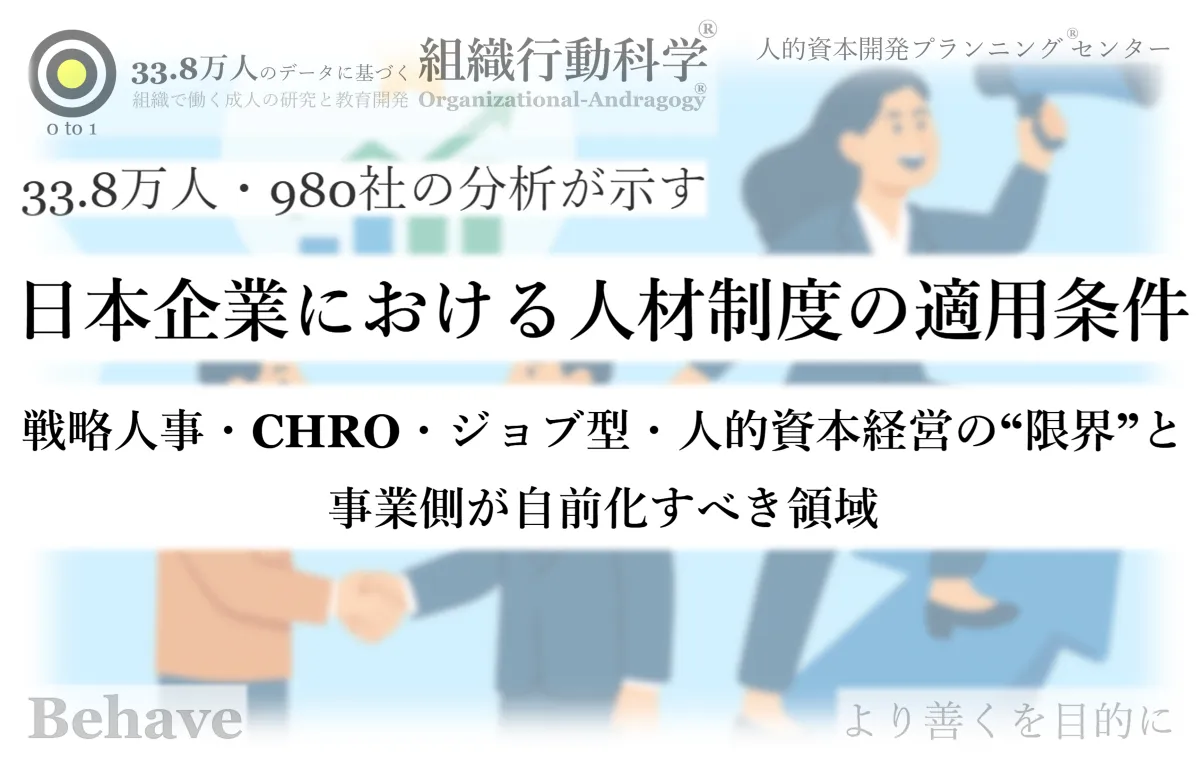
New Insights into Conditions for HR Systems in Japanese Companies Revealed by Request Inc.
New Insights into HR Systems in Japanese Companies
Request Inc., led by CEO Tomoyasu Kohata and located in Shinjuku, Tokyo, has released a groundbreaking report titled Conditions for the Application of Human Resource Systems in Japanese Companies. This report is based on behavior analysis conducted across 338,000 workers and 980 companies, highlighting critical structural reasons why traditional HR systems such as strategic HR, CHRO roles, job-based systems, and human capital management have struggled to achieve their expected outcomes within Japanese firms.
Understanding the Discrepancies
According to this research, the primary issue is not the design of the HR systems themselves but rather a misalignment between the intended value-creation structures and the prevalent collaborative models in Japanese businesses, which often emphasize external partnerships over internal completion. This discrepancy is critical to understanding why many organizations are failing to realize the full potential of their HR investments.
The report dives deep into various industry sectors to demonstrate that most traditional HR frameworks assume an internal completion model, which runs contrary to the more common external collaborative model found in many Japanese organizations. The results indicate that the effectiveness of these HR systems does not rely on their technical sophistication but rather on their compatibility with the prevailing value-creation structures of the business.
Key Points from the Report
1. HR Systems and Organizational Models: Many systems assume an internal engagement approach that contradicts the common practices of external collaboration.
2. Realignment of KPIs: The performance indicators of these systems need a complete redesign to encompass external perspectives rather than just internal metrics.
3. Industry-Specific Challenges: The report outlines industries where strategic HR initiatives have succeeded, such as consumer goods and technology, as opposed to sectors like construction that struggle with HR systems due to their inherently external value chains.
4. Necessity for Redesign: Areas where HR systems fail to reach expected outcomes may require a redesign of business operations rather than mere adjustments in HR approaches.
Common Questions Addressed
The report responds to pivotal questions surrounding human capital management, such as:
- - Why doesn't human capital management yield expected results?
- - What makes job-based roles difficult to implement effectively?
- - Why do implementations of CHRO and strategic HR fail to translate to business performance?
- - What are the indicators for necessary redesign instead of merely adjusting existing systems?
The Structural Reasons Behind the Findings
Significantly, the report emphasizes that much of the discussion surrounds the HR systems themselves when, in fact, the root issues lie in differing foundational conditions for value creation. Improving the systems without addressing the structural mismatches will likely lead to continued underperformance.
Download the Full Report
For those interested in delving deeper into the findings and recommendations, the full 26-page report is available for free download via Request Inc.’s website.
The information contained in this report will be invaluable for leaders in Japanese businesses seeking to enhance their HR initiatives and align them with the actual operational models prevalent in their industries. This research importantly argues that the distinction between success and failure is not about the sophistication of the HR systems but rather about compatibility with the existing organizational structures.
Request Inc. aims to provide organizations with data-driven insights through organizational behavior science, ensuring they understand the 'whys' behind workplace behavior, ultimately leading to more effective strategies and improved outcomes.
For more information and to download the report, visit Request Inc..

Topics Business Technology)
【About Using Articles】
You can freely use the title and article content by linking to the page where the article is posted.
※ Images cannot be used.
【About Links】
Links are free to use.