



Survey Results on Success Factors for Small Business Consultants from AspiraTech
Survey Insights on Small Business Consultants
Recently, AspiraTech Co., Ltd. conducted a comprehensive survey targeting individuals who successfully passed the Small Business Consultant examination. Hosted in their informative column, the survey aimed to uncover key insights into the experiences of these newly certified professionals.
Overview of the Survey
The survey was conducted from September 25 to October 8, 2025, involving 127 participants who had passed the Small Business Consultant exam. The methodology employed was internet-based research, allowing for a diverse participant pool.
Key Questions Explored
The survey delved into several crucial aspects:
- - Duration taken to pass the exam
- - Number of attempts made before passing
- - Costs incurred during the study process
- - Changes experienced after certification
- - Perceptions on studying independently versus with assistance
Duration to Pass the Exam
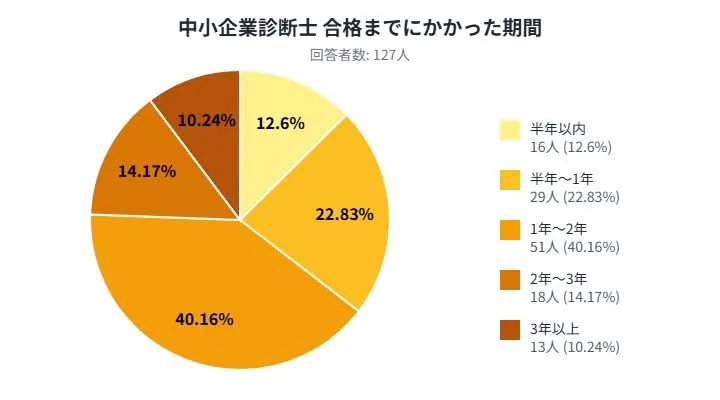
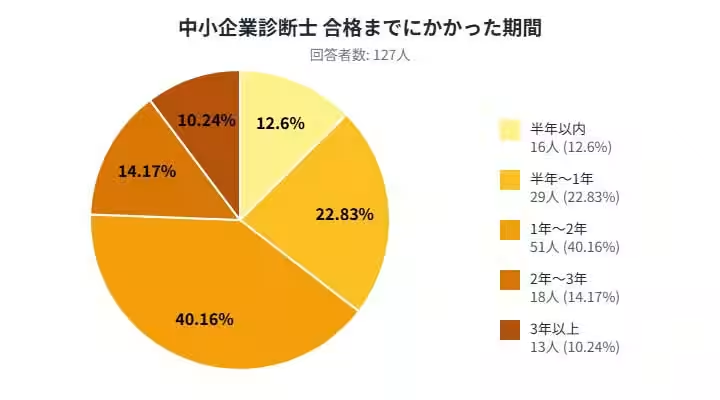
In examining how long it took participants to succeed in the exam, results indicated that over half managed to achieve certification within two years. This suggests that most individuals had a focused approach, setting short-term goals for their exam preparation rather than extending their study period. Hence, a significant number of candidates were able to strategize effectively to complete their studies and pass within this timeframe.
Number of Attempts
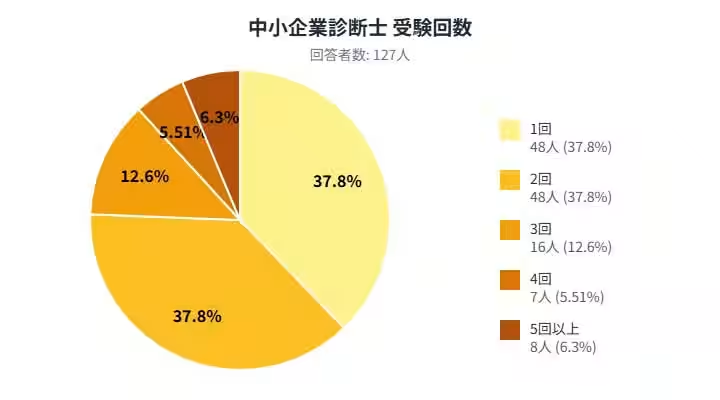
When queried about the number of times participants attempted the exam, the following results emerged:
- - 1 attempt: 48 participants
- - 2 attempts: 48 participants
- - 3 attempts: 16 participants
- - 4 attempts: 7 participants
- - 5 or more attempts: 8 participants
Remarkably, over 70% of respondents passed within two attempts. With the exam offered just once a year, this finding further corroborates the trend that many candidates are indeed passing within a two-year window. Additionally, approximately 37% were successful on their first try, indicating a significant number mastered the material through effective preparation techniques.
Costs Incurred in the Certification Process
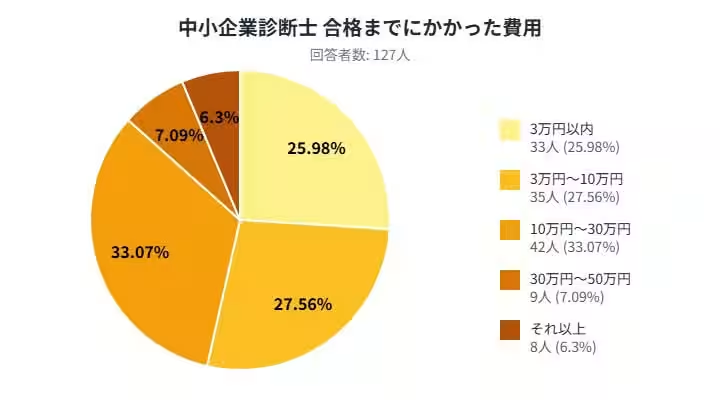
A closer look at the expenses related to obtaining certification revealed:
- - Under ¥30,000: 33 participants
- - ¥30,000 to ¥100,000: 35 participants
- - ¥100,000 to ¥300,000: 42 participants
- - ¥300,000 to ¥500,000: 9 participants
- - Over ¥500,000: 8 participants
An impressive 80% of participants spent less than ¥300,000 to complete their studies. Notably, about 25% managed to keep their costs under ¥30,000, suggesting that it is feasible to succeed through self-study or minimal-cost options. Conversely, more than half incurred costs falling within the ¥30,000 to ¥300,000 range, indicating that many may have utilized formal education offerings such as online courses or preparatory schools.
Changes Experienced After Certification
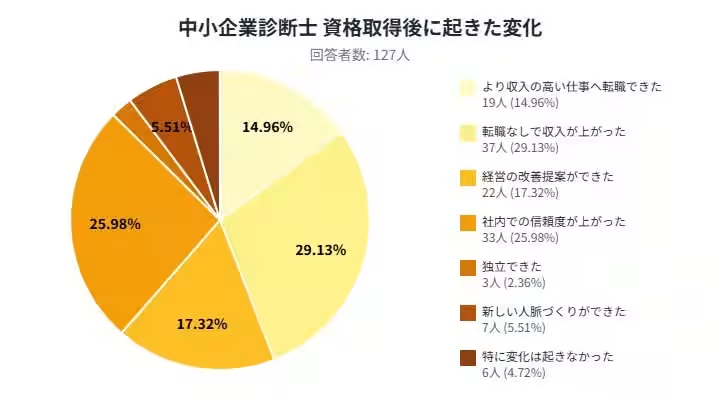
Participants were also asked about the changes they experienced after passing the exam:
- - Transitioned to higher-paying jobs: 19 respondents
- - Income increased without a job change: 37 respondents
- - Provided better proposals for management improvement: 22 respondents
- - Increased trust within their organization: 33 respondents
- - Established independence: 3 respondents
- - Built new professional networks: 7 respondents
- - No noticeable changes: 6 respondents
The most notable finding was that the majority reported an increase in income without changing jobs. Additionally, many individuals felt a boost in credibility and trust within their organizations, highlighting the perceived value of the certification for both career advancement and professional development within current roles.
Perception of Self-Study Validity
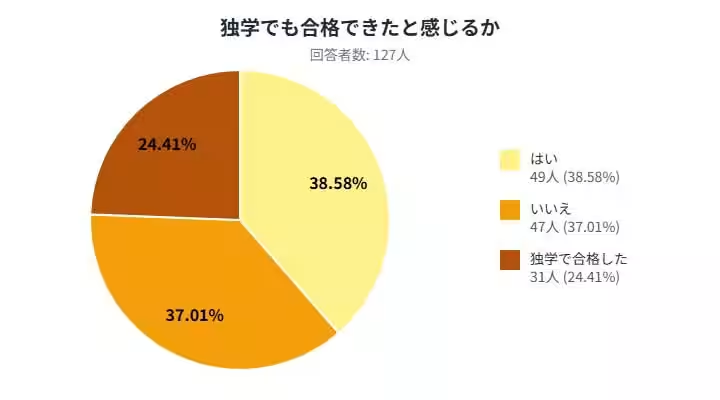
Lastly, regarding the question of whether participants felt they could have successfully passed through self-study, results showed:
- - Believed they could pass independently: 49 individuals
- - Felt independent study was insufficient: 47 individuals
- - Successfully passed via self-study: 31 individuals
The responses indicated a division in perception regarding the effectiveness of self-study. This suggests that while there is potential for independent study facilitated by established exam resources and knowledge, many still believe that conventional education or preparatory courses could provide a more advantageous route to success.
Conclusion
Overall, the survey conducted by AspiraTech provides valuable insights into the experiences and outcomes of new Small Business Consultants in Japan. The findings suggest increasing accessibility and support within the field is warranted, helping future candidates better prepare for the challenges of the certification process. For those interested in further details, please refer to the full content available on the official AspiraTech website.
Topics Business Technology)
【About Using Articles】
You can freely use the title and article content by linking to the page where the article is posted.
※ Images cannot be used.
【About Links】
Links are free to use.