



ManpowerGroup Unveils Future of Work Trends Impacting Labor Market
ManpowerGroup Report Unveils Key Trends Shaping Future of Work
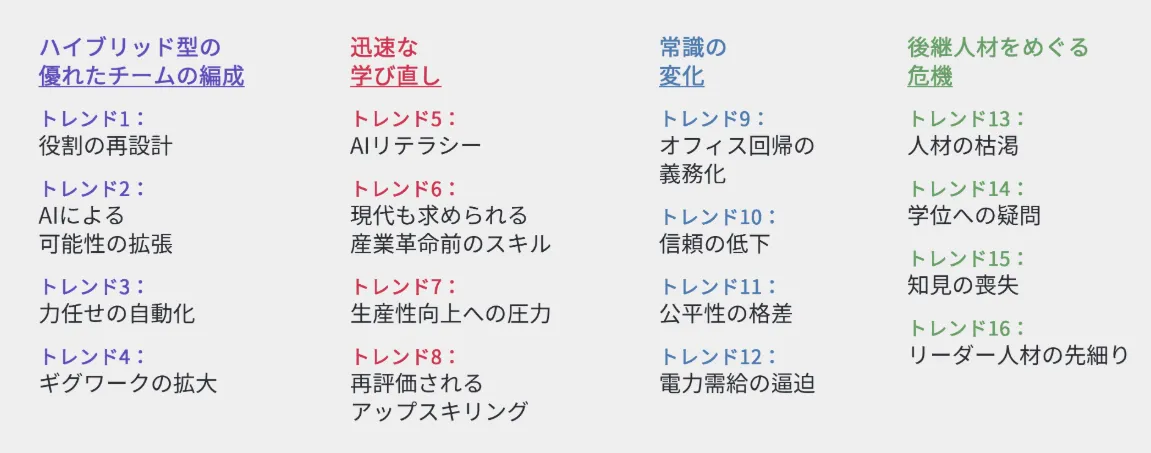
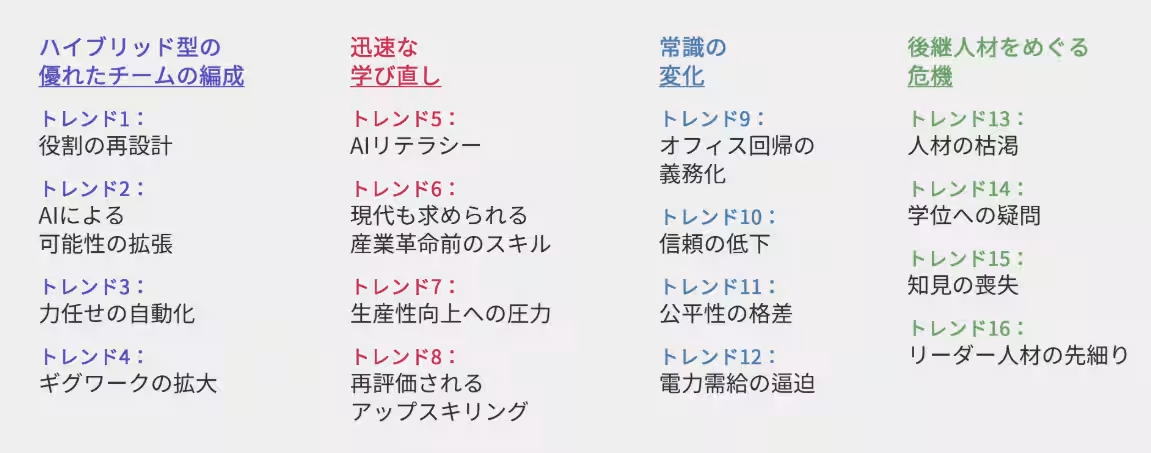
ManpowerGroup, a leading workforce solutions company based in Tokyo, has released a comprehensive report titled "The Human Advantage: Trends Shaping Future Work." This report identifies four principal trends influencing the labor market: the formation of hybrid teams, rapid reskilling, changes in conventional wisdom, and a looming crisis in succession planning.
Understanding the Trends
Informed by their Market Labor Trends report, ManpowerGroup emphasizes the evolving landscape of work that will impact companies and organizations, particularly through 2026. Key among the challenges identified is the increasing difficulty employers face in hiring individuals with specific hard skills, notably in AI development and application. In a survey conducted on global employers, 20% noted the challenge of recruiting AI model developers, while 19% highlighted the struggle to find employees with AI literacy. This indicates a substantial requirement for skilled individuals capable of leveraging AI to optimize productivity in traditional roles.
Trend 1: Redesigning Roles
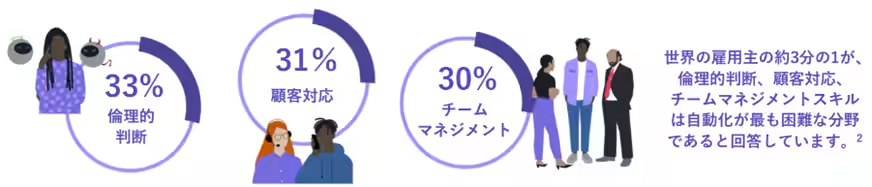
The first major trend revolves around the redesign of job roles. According to ManpowerGroup’s Employment Outlook Survey, many employers recognize the complexity involved in automating tasks that require ethical judgment (33%), customer interaction (31%), and team management (30%). In the coming years, organizations must capitalize on the strengths of both human employees and AI to reshape roles in a way that balances efficiency with interpersonal elements.
Implications for Workforce Management: It is essential for management to work collaboratively with employees, fostering a shared sense of purpose as they approach the process of redesigning jobs. This involves clearly defining who performs what within functions that can be split between humans and AI-driven efforts.
Trend 2: Rapid Reskilling
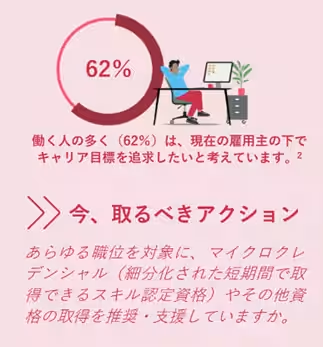
Another critical insight from the report highlights the necessity of rapid reskilling, particularly for current employees. Findings from the Global Talent Barometer indicate that 62% of workers wish to pursue their career goals within their current companies. Employers are increasingly establishing various avenues for upskilling, such as job training programs and financial support for obtaining qualifications through educational partnerships.
Workforce Recommendations: Full-time employees benefit from advanced learning management systems that guide them in improving their skills, while part-time workers and freelancers often lack these opportunities. To bridge this gap, institutional support and infrastructural changes from the government are crucial.
Trend 3: Changing Conventional Wisdom
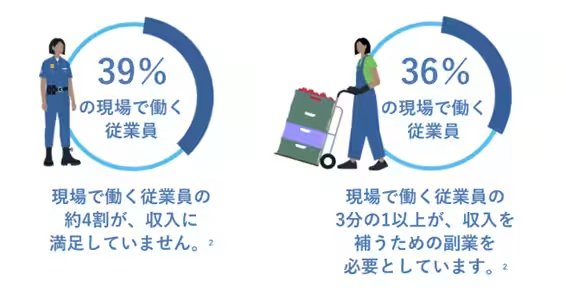
The report also discusses shifts in social norms, particularly concerning equity gaps. The 2025 UN report points out progress in poverty reduction yet notes that many individuals live in precarious circumstances even after income increases. Economic shocks and chronic inflation contribute to widespread anxiety and instability in various contexts.
Management Actions: Leadership must ensure that strategies around compensation equity and transparency are effectively executed, guaranteeing fair treatment across all job roles. Moreover, companies should be committed to providing comprehensive and sustainable employee benefits to navigate these challenges.
Trend 4: Succession Planning Crisis
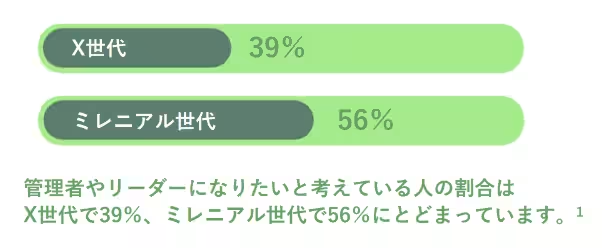
Lastly, the looming crisis regarding succession planning emphasizes the need for leaders who can adeptly integrate technology into their operations. The limited number of Generation X candidates ready to step into executive roles creates a pinch, while millennial middle managers often face conflicts between work and personal life priorities.
Future Workforce Dynamics: As we approach the years from 2026 to 2030, companies can expect a surge in demand for senior management with insights into emerging technologies. These leaders must maintain robust knowledge and skills, particularly in AI, underscoring the ongoing need for reskilling and personal development.
Conclusion
ManpowerGroup's report, emphasizing the human advantages in modern workforce dynamics, serves as a pivotal tool for organizations charting their future workforce strategies. The detailed analysis of the 16 key trends not only identifies challenges but also offers strategic guidance for businesses to harness human expertise effectively amidst technological advancements.
For further insights into ManpowerGroup’s Trends Report, visit: ManpowerGroup Report
About ManpowerGroup
ManpowerGroup® has been a leader in workforce solutions for nearly 75 years, providing staffing, evaluation, training, and management services across 70 countries under brands such as Manpower®, Experis®, and Talent Solutions®. Celebrated for best practices in diversity and inclusion, ManpowerGroup was recognized as one of the "World's Most Ethical Companies" for the 17th time in 2026. For more information, visit ManpowerGroup Global.
Topics Business Technology)
【About Using Articles】
You can freely use the title and article content by linking to the page where the article is posted.
※ Images cannot be used.
【About Links】
Links are free to use.