



Innovative AI and Robotics for Assessing Corrosion in Sewage Systems
Innovative Use of AI and Robotics in Assessing Sewage System Corrosion
In a groundbreaking initiative, NTT Docomo Solutions, in collaboration with the Kyoto Prefectural Sewerage Office and Temsack Co., Ltd., has embarked on a significant project aimed at enhancing inspection procedures for sewage pipeline systems across Kyoto Prefecture. This unique endeavor, set to take place from April to December 2025, seeks to leverage the power of artificial intelligence (AI) and mobile robotics to quantitatively evaluate corrosion and monitor deterioration in sewage pipelines.
Detailed Overview of the Project
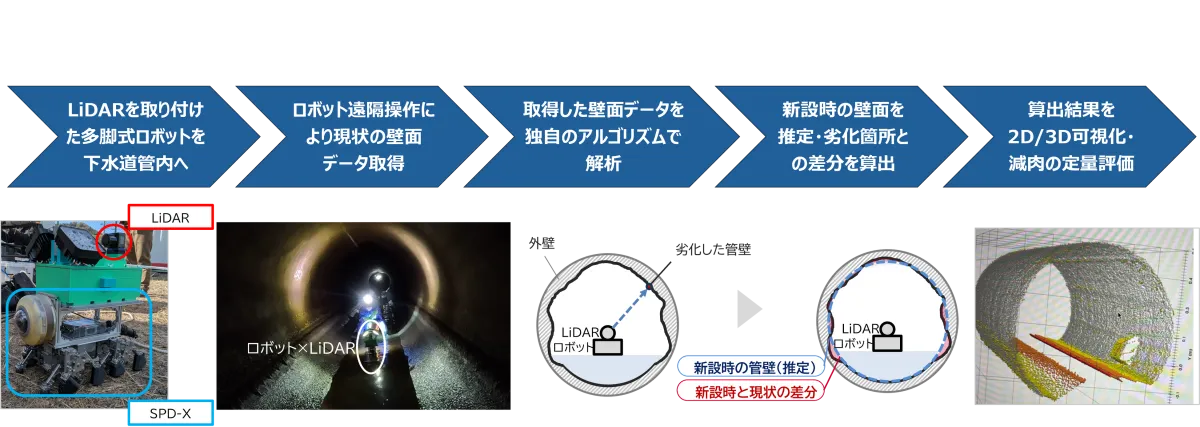
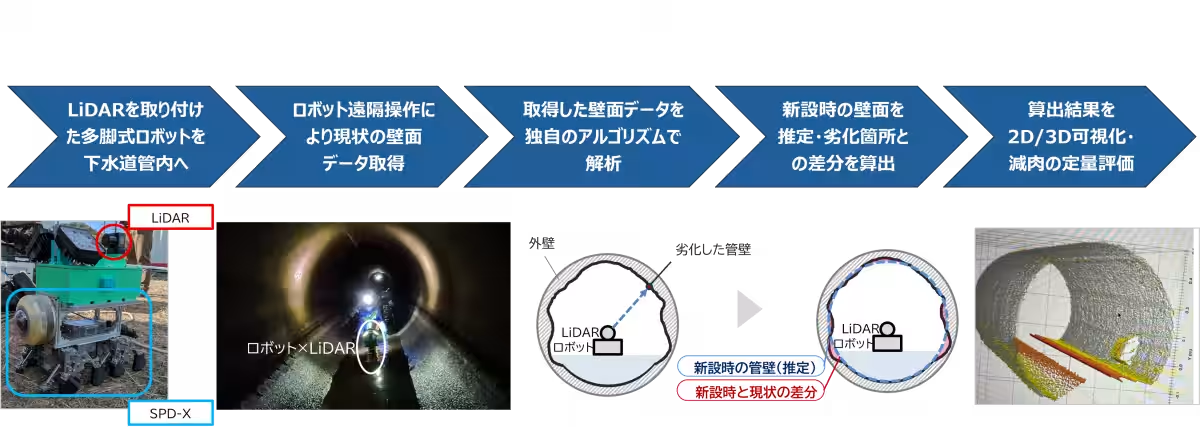
The core of this project revolves around the integration of a multi-legged robot developed by Temsack, equipped with LiDAR technology for data collection inside sewage pipes. NTT Docomo Solutions has applied its proprietary AI technology, which is currently undergoing patent application, to estimate the original wall shape of the pipelines at the time of installation. The AI technology is then utilized to compare the current wall shape of the pipes, enabling accurate differential analysis.
The outcome of this verification initiative revealed that significant adjustments can be made to visualize and quantify the depth and extent of corrosion in specific sections of the sewage pipeline. This represents a noteworthy advancement in the ability to assess structural integrity, which is often understated in traditional assessment methods that rely solely on visual inspection.
Importance of the Initiative
Sewage systems in Japan typically have a standard lifespan of 50 years. However, statistics from 2022 indicate that approximately 7% of the sewage pipelines nationwide have already surpassed their expected lifespan, a figure projected to rise to around 42% by 2043. This alarming trend amplifies the urgent need for municipalities to address the inspection and renewal of aging infrastructure, a challenge compounded by both financial constraints and technical expertise.
Given the alarming increase in roadway collapses attributed to aging sewage systems, the Ministry of Land, Infrastructure, Transport and Tourism has initiated a reform of inspection guidelines, demanding increased frequency and comprehensive quantitative evaluation of the inspection process. This places significant pressure on sewage management authorities to effectively prioritize repairs across extensive networks.
Addressing the Challenges with Technology
Traditional inspection techniques fall short when it comes to accurately gauging the severity and scope of corrosion damage. Therefore, NTT Docomo Solutions, along with the Kyoto Prefectural Sewerage Office and Temsack, recognized the need for advanced methodologies to tackle these issues.
Key Objectives of the Study
The principal goals of this verification include:
1. Quantitative Assessment of Corrosion: Early detection of wall thinning due to corrosion is vital for ensuring public safety and preventing infrastructural disasters. The project aims to utilize LiDAR technology to gather point cloud data for the precise quantification of wall thinning within underground pipelines.
2. Application of Deterioration Prediction Models: By analyzing historical data from previous inspections, NTT Docomo Solutions has assessed the applicability of their mixed Markov deterioration prediction models—traditionally used in road and bridge maintenance—to the sewage sector. This will enable efficient estimation of sections at higher risk for deterioration and inform proactive strategies for maintenance.
Achievements and Findings
The project's preliminary results indicate successful quantitative measures of wall thinning:
- - The use of point cloud data to estimate original wall shapes and detect discrepancies with current dimensions, achieving an accuracy margin of approximately 1 cm.
- - Validation that the depth and range of corrosion can be documented quantitatively, which is crucial for prioritizing repairs.
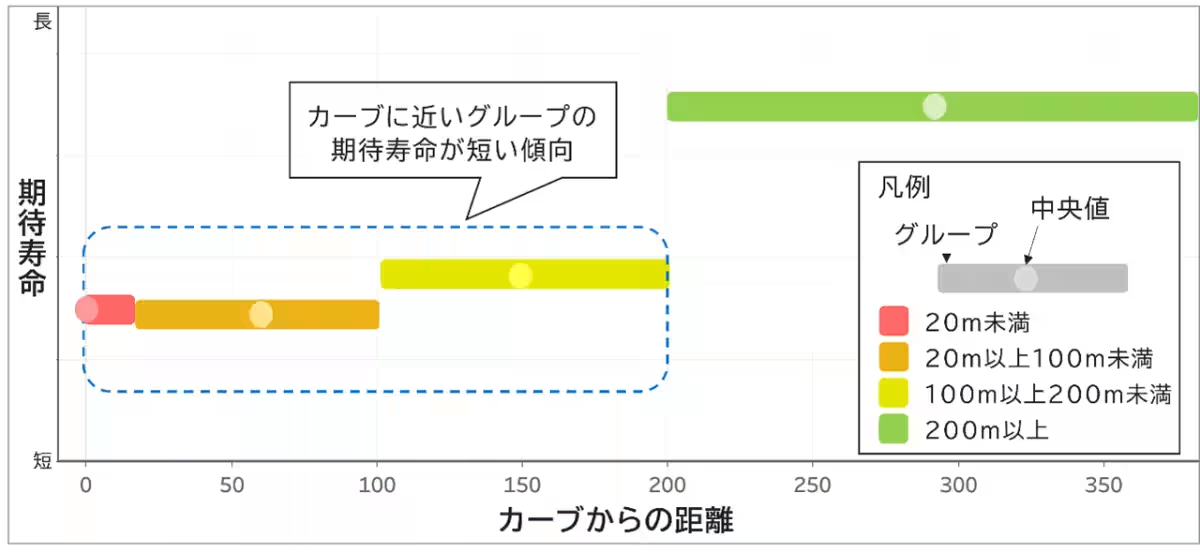
- - Identification of relationship trends between pipeline curvature and deterioration, aligning with municipal insight.
Future Perspectives and Applications
The insight gleaned from this verification project opens the door for various practical applications, including:
- - Streamlining the measurement processes for wall thickness and corrugation levels.
- - Enhancing decision-making regarding repair locations based on quantitative data.
- - Implementing preventative maintenance strategies informed by ongoing monitoring of corrosion progression.
NTT Docomo Solutions plans to continue refining their verifications with data derived from this initiative, in collaboration with partners from both the NTT Group and local government agencies, reinforcing the focus on innovative sewage management approaches across Japan.
- ---
Topics General Business)
【About Using Articles】
You can freely use the title and article content by linking to the page where the article is posted.
※ Images cannot be used.
【About Links】
Links are free to use.