



Large Accounting Firms in Japan: Growth Amidst Technological Transformation
Large Accounting Firms in Japan: Growth Amidst Technological Transformation
The Japan Accounting Firm Collaboration Association (also known as “Accounting Ren”) has recently released a comprehensive report shedding light on the status of large accounting firms in Japan. Conducted between April and May of 2025, this study focused on 17 member firms and has revealed pivotal insights about their operations, growth, and the industry landscape.
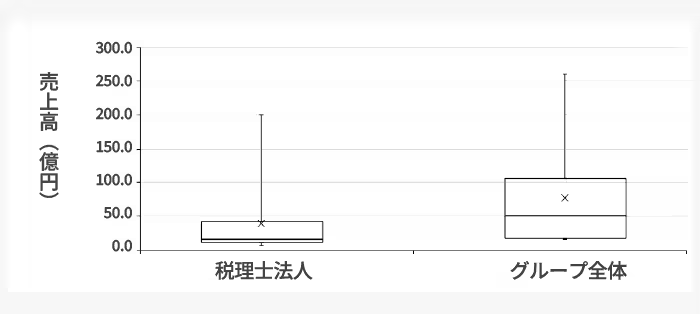
One of the standout statistics from the report is that the average revenue for these large firms has reached an impressive 38.4 billion yen, comparable to publicly listed companies on the Tokyo Stock Exchange. This growth can largely be attributed to a diversification of services driven by the evolving needs of clients.
Survey Summary
1. Business Scale and Revenue
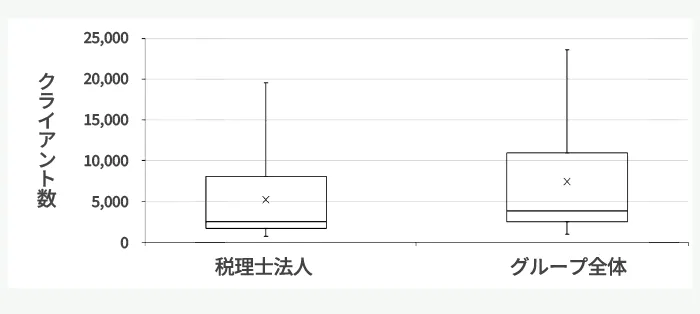
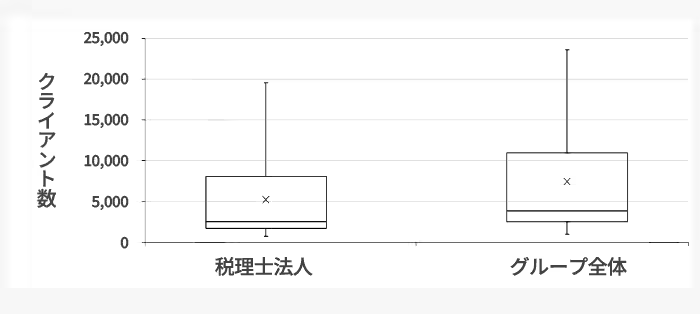
The demand for accounting services has expanded, leading to a significant increase in client numbers. The report indicates that the average client base across the surveyed firms is 5,204, with notable firms serving over 10,000 clients. This population growth has intensified as firms are increasingly merging their operations to offer a wider array of expertise, thereby catering to diverse client needs. This expansion has seen firms combining various legal and professional services, enhancing their appeal and reaching a larger customer base.
The revenue figures paint a similar picture. The firms reported a range from 7.4 billion yen to an astounding 200 billion yen in revenue, with an average of 38.4 billion yen. When examining group revenues, the average reaches approximately 76 billion yen, which showcases a marked increase stemming from collaborative efforts. This indicates that firms are successfully broadening their service offerings beyond tax and accounting to include business consulting and other areas of professional services, aligning closely with emerging client demands.
2. Service Diversification
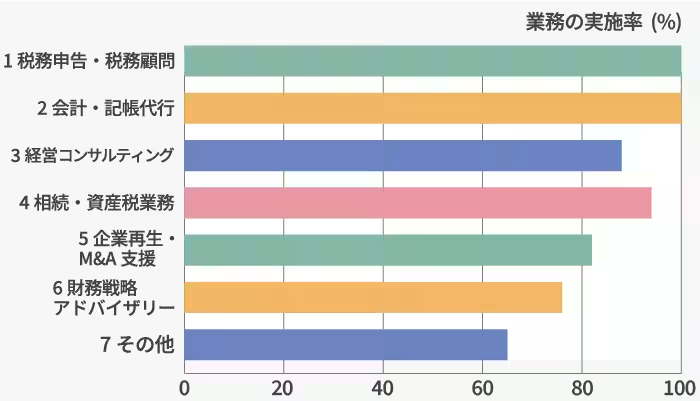
In response to evolving market needs, 88% of firms have engaged in management consulting, while 82% have ventured into business restructuring and M&A support, with 76% offering strategic financial advisory services. With the widening scope of client requirements, accounting firms are no longer just processing numbers—they are now vital partners in business strategy and growth. The sectors pointing towards higher engagement include administrative assistance, IT consultancy, and even virtual office operations, which clearly show the breadth of current service provision.
3. Career Opportunities within Firms
A noteworthy trend is the increased potential for career advancement within these firms, even for those without formal qualifications as tax accountants. The study indicates that 59% believe there is no significant disparity in treatment between qualified and non-qualified staff. This inclusivity enhances skill development pathways, reflected in the report where every participating firm affirmed a clear career path available for all employees. The developing corporate structure of these firms favors equal opportunities for ascendancy, driven by merit rather than mere qualification.
4. The Future of Accounting Firms: Embracing AI and DX
A significant transition marked in the report is the shift towards more advanced services due to the integration of AI and digital transformation (DX). By utilizing AI, firms can streamline operations, transitioning from basic tasks such as bookkeeping to providing high-value consultancy services. The collaboration with technology is viewed positively, as firms recognize the potential for new service models that emphasize client engagement, drive relationship enhancement, and support strategic business decisions.
Firms are not viewing the advent of AI as a threat, but rather as an opportunity to recalibrate their business strategies. The dialogue around providing meaningful relationships and consultation to clients is seen as paramount, where human interactions are irreplaceable despite technological advancements. An overall sense of optimism emerges as many firms envision expanding their roles in the business ecosystem as trusted partners, thereby advocating for economic growth and sustainability.
Comments from Industry Leaders
Kohiro Hongo, the chairman of the Japan Accounting Firm Collaboration Association, emphasized that large accounting firms are transitioning from merely processing figures to becoming integral partners in business management. He noted the vast opportunities that AI and digital tools create, particularly in nurturing young talent, irrespective of their qualifications. Similarly, Shinichiro Nakamura, a representative from a prominent tax accounting firm, confirmed that the industry is evolving swiftly—from traditional accounting to providing impactful insights into management.
Conclusion
The findings from the 2025 report on large accounting firms illustrate a critical evolution in the industry. These firms are evidently positioning themselves as key players within the business community, shifting their focus to deliver strategic, high-value services that synergize well with technological innovations. As the sector adapts to current economic conditions and emerging technology, the future looks promising for accounting firms aiming to enhance their value and influence. To explore further details about the report, please visit Japan Accounting Firm Collaboration Association.
Topics Business Technology)

【About Using Articles】
You can freely use the title and article content by linking to the page where the article is posted.
※ Images cannot be used.
【About Links】
Links are free to use.