



Discovering the Unique Differences in Japanese Tea: Insights from SuQ Cha
Understanding the Differences in Tea
Do you know that green tea, black tea, and oolong tea are all derived from the same plant, Camellia sinensis? Surprisingly, nearly 40% of tea drinkers are completely unaware of this fact! To delve deeper into this topic, Sakulas Co., Ltd., based in Chuo, Tokyo, conducted a survey targeting men and women aged between 20 to 60 who regularly consume tea.
Survey Overview
Sakulas Co., Ltd. operates SuQ Cha, a retailer specializing in Japanese black tea. They aimed to gauge the awareness of tea drinkers concerning the differences between various types of tea. Here are some interesting findings:
- - About 70% of respondents are aware that tea has varieties.
- - Approximately 40% do not know that the flavor, aroma, and color of Japanese black tea vary based on the variety, cultivation region, and harvest time.
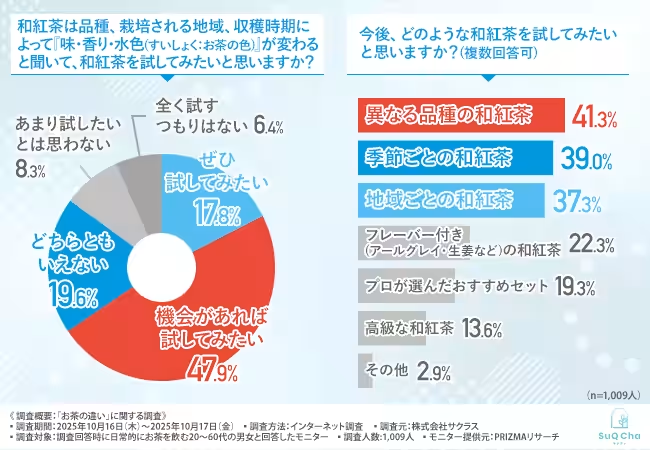
- - Around 70% expressed a desire to try Japanese black tea after learning how these factors affect taste and aroma.
The full survey results can be found through this link.
Misconceptions About Tea
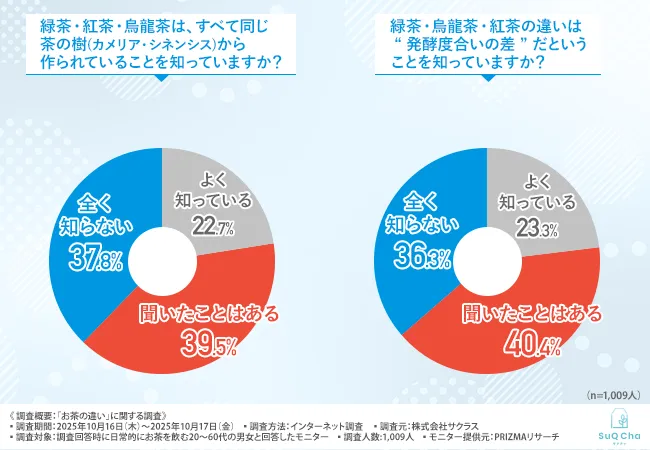
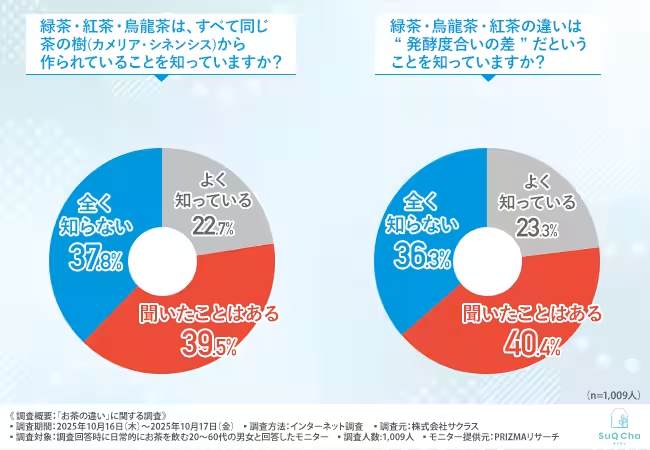
Initially, the survey checked how well participants understood the origins of the teas they drink daily. When asked if they knew that green, black, and oolong teas all come from the same tea tree, responses were enlightening:
- - Well aware (22.7%)
- - Heard of it (39.5%)
- - Unaware (37.8%)
The results show significant misconceptions about the shared origins of these teas.
When asked about the difference between green, oolong, and black teas related to fermentation levels, only a small percentage—23.3%—indicated they were well-informed. The majority (over 76%) either heard of it or were totally unaware. This highlights an unexplored depth in tea-making processes that consumers have not yet fully recognized.
Understanding Varieties of Tea
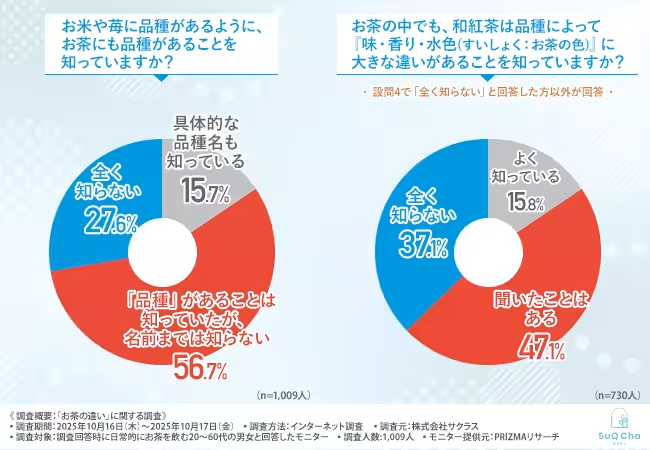
What about the knowledge of tea varieties? The survey probed participants on whether they knew that, like strawberries or rice, tea has its own varieties. The answers showed:
- - Know specific variety names (15.7%)
- - Aware of varieties but not specific names (56.7%)
- - Unaware (27.6%)
Only about 10% of participants could name specific tea varieties, indicating that the unique characteristics of different teas are often overlooked, despite the significant impact variety has on flavor.
Interest in Japanese Black Tea
Moving on to Japanese black tea (Wakoucha), which is produced locally, the survey sought to understand how many knew about the flavor differences resulting from various cultivation regions and harvest times.
Among those who were not completely unaware of tea varieties, responses revealed:
- - Well aware (15.8%)
- - Heard of it (47.1%)
- - Unaware (37.1%)
Nearly half had heard that Japanese black tea could vary significantly in flavor based on variety, yet many were still not entirely knowledgeable about these differences.
The Impact of Region and Harvest Time
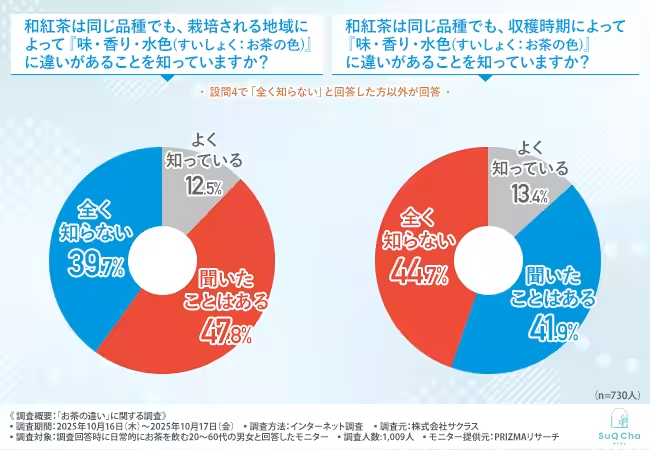
Recognition of how regional differences can affect tea flavor is still gaining traction. When asked if they knew that flavor can vary depending on cultivation areas, the feedback was:
- - Well aware (12.5%)
- - Heard of it (47.8%)
- - Unaware (39.7%)
The lack of awareness about geographical flavor differences shows ample room for growth in understanding Japanese tea culture.
Again, when asked about harvest time differences, where flavor can shift due to climatic changes, the responses were:
- - Well aware (13.4%)
- - Heard of it (41.9%)
- - Unaware (44.7%)
Understanding how seasonal variations affect tea is still in a developmental stage among consumers. Thus, it’s vital for tea producers to convey the distinct experiences associated with each season, as these nuances can greatly enhance appreciation for Japanese black teas.
Excitement for Tasting Japanese Black Tea
Despite a general lack of awareness, when participants were asked if they would like to try Japanese black teas after learning about the differences that variety, region, and harvest time make, about 70% responded positively:
- - Definitely want to try (17.8%)
- - Would try if given the opportunity (47.9%)
This suggests that there’s a budding interest among consumers who may not have previously engaged with Japanese black tea, spurred by the narrative of how flavors can evolve based on their cultivation journey.
Conclusion: The Future of Japanese Tea
This survey indicates that while many may not yet fully understand the distinctions afforded by varieties, regions, and harvests, interest in experiencing these differences is beginning to bloom. Promoting knowledge of Japanese black tea could lead to a broadening appreciation and create new opportunities for experiencing tea culture uniquely.
For information on Japanese black tea, you can visit SuQ Cha. They bring together the finest selections of Japanese black tea from across the country, highlighting the artisans and traditions that shape this beloved beverage.

Topics Consumer Products & Retail)
【About Using Articles】
You can freely use the title and article content by linking to the page where the article is posted.
※ Images cannot be used.
【About Links】
Links are free to use.