



Okayama University Workshop Focuses on CO₂ Emission Visibility and Carbon Footprint Calculation
Workshop on CO₂ Emission Visualization at Okayama University
On November 10, 2025, Okayama University hosted the second workshop aimed at visualizing CO₂ emissions, in collaboration with the Okayama Prefecture Chamber of Commerce. This initiative brings together students and local businesses to work on carbon neutrality through hands-on educational activities. The project is part of an agreement established last year between the university and local businesses to support their carbon neutrality ambitions.
In a prior field visit, students observed various agricultural businesses, including the Shibamura Group's blueberry farm and processing facility, as well as the 'Michi-no-Eki Kayou'. This experience highlighted the significance of local businesses in sustaining community infrastructures. Students expressed a desire to understand the CO₂ emission mechanisms involved in the production and distribution of local products, including blueberry juice and agricultural processed goods.
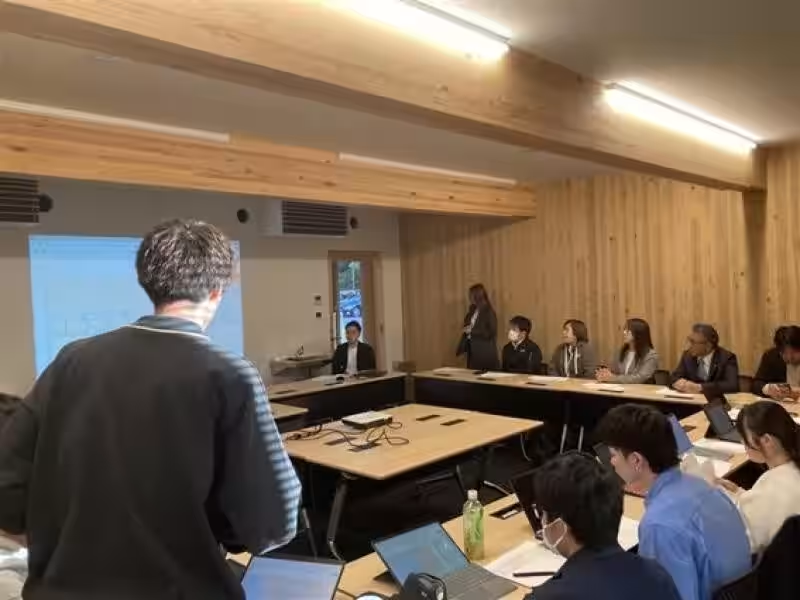
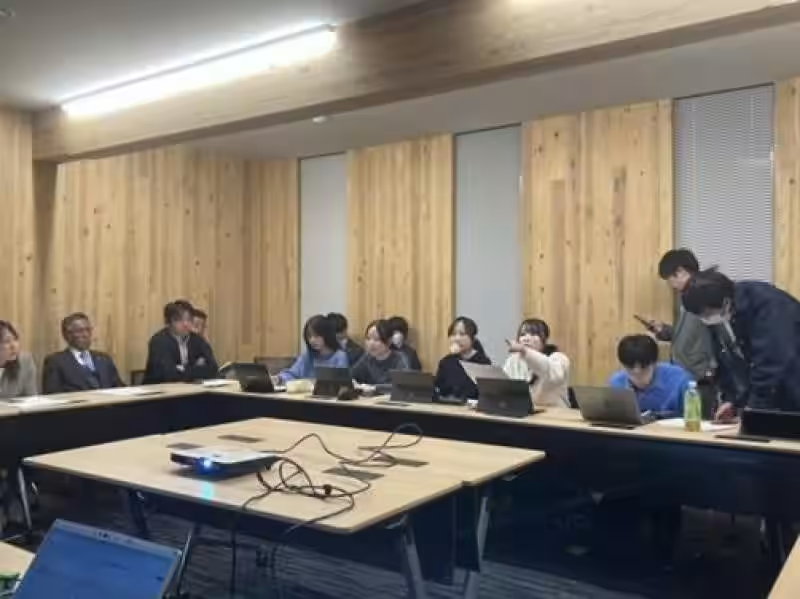
Building on these observations, the recent workshop involved six representatives from the Shibamura Group, including President Keizo Shibamura, alongside eleven students from Associate Professor Tatsuaki Tennoji's seminar at the Graduate School of Humanities and Social Sciences. Additional participants included Takao Funakura, Vice Head of the Research and Innovation Co-Creation Organization, and four economic advisors from the Okayama Prefecture Chamber of Commerce. Together, they worked on calculating the carbon footprint (CFP) of actual products, focusing on hands-on learning from basic principles to practical application.
Professor Tennoji opened the workshop by reviewing insights from the previous site visit, emphasizing the importance of visualizing CO₂ emissions in business management and the vital role of quantitative assessment in achieving emissions reductions across supply chains. Participants carefully organized the lifecycle flow encompassing the procurement of raw materials through production, distribution, consumption, and disposal of products, specifically focusing on Shibamura Group’s blueberry juice and puffed rice products.
Students actively engaged with Shibamura Group employees, asking detailed questions related to agricultural and logistics operations, such as the use of pesticides, types of vehicles used for transportation, load capacities, and distances to sales outlets. In terms of the puffed rice, discussions delved into whether to start calculations from rice cultivation and explored the fertilizers, pesticides, and machinery required for rice farming in depth.
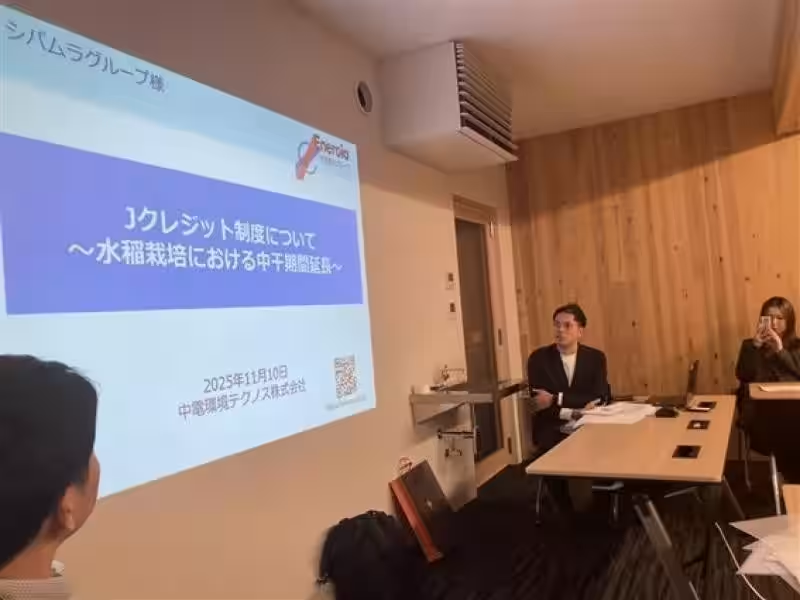
As the workshop concluded, each group shared their proposed data collection strategies based on the lifecycle flows they had developed. Additionally, Takada from Chuden Environmental Technos Co. provided an overview of the J-Credit system, discussing the potential for future carbon offsetting and credit generation from the calculated results.
Students reflected on their hands-on experiences, realizing that understanding precise processes through direct dialogue with industry professionals is crucial for accurate calculations. They expressed gratitude for the opportunity to deepen their learning through practical engagement.
Moving forward, data collection based on the discussions held during the workshop will be prioritized, with plans to complete the carbon footprint calculations for both products within the year. A report session is scheduled for January 19, 2026, where students will present their findings alongside business and regional stakeholders.
This initiative is part of a larger effort that began last fiscal year when the university was selected for a model project to support decarbonization management by the Ministry of the Environment. It also aligns with the establishment of the Carbon Footprint Nexus Working Group (CFP Nexus WG) launched in May this year.
Okayama University is committed to continuous challenges aimed at fostering value creation through the visualization of CO₂ emissions, uniting students, local businesses, and supporting organizations for a sustainable future. Stay tuned for further innovations from Okayama University, a unique research institution at the heart of its community and committed to research excellence.
Carbon Footprint Defined
The carbon footprint represents the total greenhouse gas emissions (GHG) throughout the lifecycle of a product or service, from raw material procurement to disposal and recycling. This measurement translates to CO₂ equivalent emissions displayed on products or through designated systems. Source: Carbon Footprint Guidelines (Ministry of Economy, Trade and Industry, Ministry of the Environment).
About Shibamura Group
Based in Kibi-Chuo Town, Okayama Prefecture, the Shibamura Group operates various community-centric businesses, including ceremonial gifts, tourism linked to agriculture, and lifestyle support services. Visit Shibamura Group

Topics Other)
【About Using Articles】
You can freely use the title and article content by linking to the page where the article is posted.
※ Images cannot be used.
【About Links】
Links are free to use.