



Key Challenges and Budget Trends in Generative AI Adoption Uncovered by Ragate's Latest Survey
Exploring Ragate's Latest Insights on Generative AI Adoption
As the presence of generative AI technology grows across various industries, Ragate Inc. has recently conducted a comprehensive survey focusing on the decision-makers involved in this critical transition. This survey, which includes feedback from 505 professionals from information systems and digital transformation (DX) departments, aims to uncover the main challenges and approaches companies are taking in the realm of generative AI. The results of this research were compiled into a report titled, "Addressing Challenges in Generative AI Implementation and Budget Trends for 2025," which has now been publicly released.
Background of the Survey
In light of the rapid adoption of generative AI, many decision-makers are often left uncertain about how to proceed. Questions such as, "Where should we begin?" and "What are the common challenges faced by others?" were prevalent among respondents. To address these uncertainties, Ragate has conducted an exclusive survey that sheds light on the hurdles and barriers that decision-makers encounter in the generative AI adoption process.
Key Findings from the Survey
The survey results provide insightful data about the obstacles faced by decision-makers and highlight future budgetary trends in businesses:
1. Major Challenges in Implementation
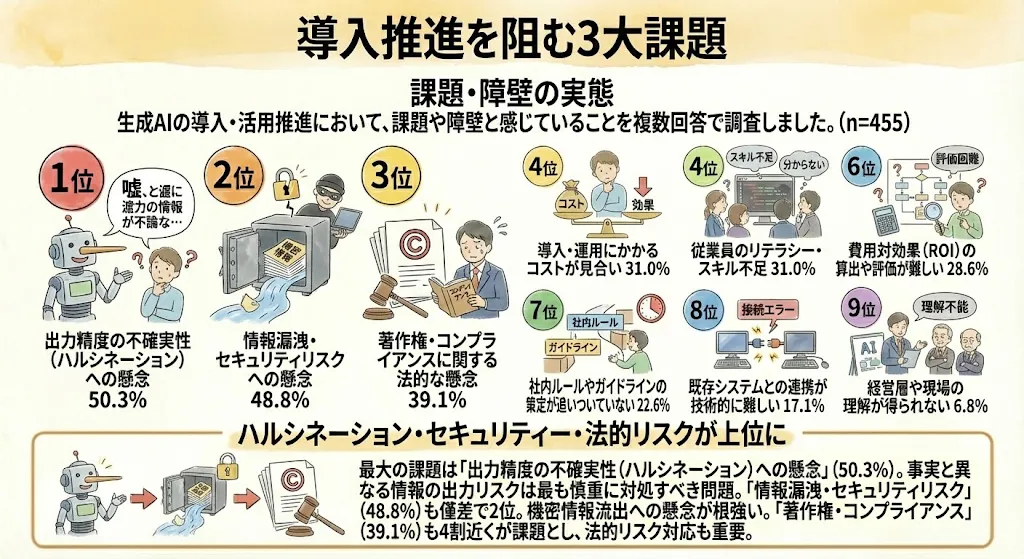
The survey identified three primary challenges that hinder the adoption of generative AI:
| Rank | Challenge | Response Rate |
|---|---|---|
| -- | --------- | ----- |
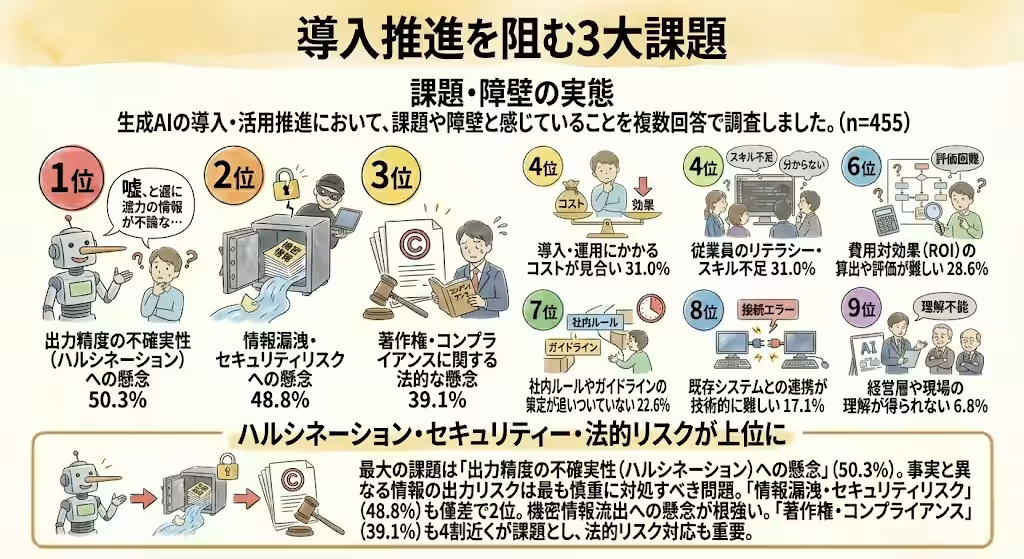
| 1 | Concerns about output accuracy (hallucination) | 50.3% |
| 2 | Worries regarding information leakage and security risks | 48.8% |
| 3 | Legal concerns about copyright and compliance | 39.1% |
The most significant challenge identified was the risk of hallucination, where generative AI might output information that deviates from factual data. This concern poses the largest barrier to effectively implementing AI into business operations. Coupled with security and legal risks, these findings underscore the necessity for both technical and organizational responses.
2. Budget Forecasts Indicate Growth
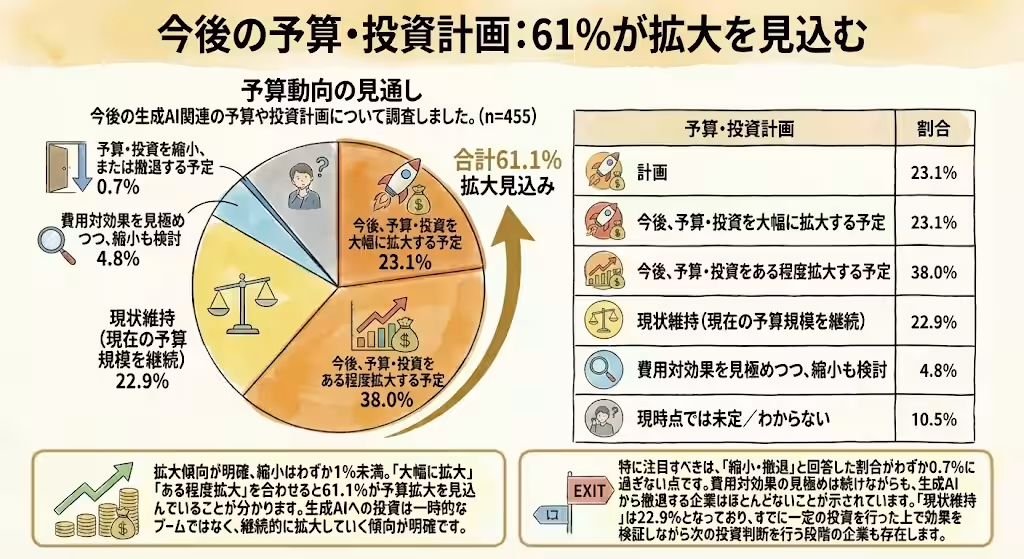
The survey revealed an optimistic outlook regarding budget expansions:
| Investment Plan | Percentage |
|---|---|
| ---------- | ----- |
| Significant expansion + Moderate expansion | 61.1% |
| Maintain current spending | 22.9% |
| Budget cuts or withdrawal | 0.7% |
A significant 61% of companies plan to increase their budgets for generative AI, with only a minuscule 0.7% considering cuts. This signals that generative AI investments are evolving from a temporary trend to a sustained strategic investment.
3. Areas of Application
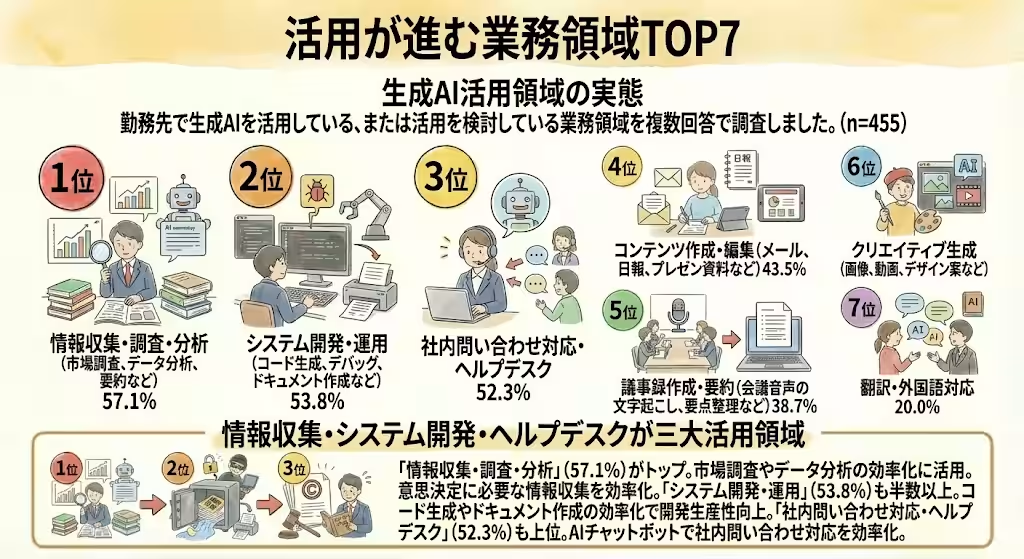
The survey also highlighted the primary areas where generative AI is being implemented:
| Rank | Application Area | Response Rate |
|---|---|---|
| -- | --------- | ----- |
| 1 | Information gathering, research, and analysis | 57.1% |
| 2 | System development and operations | 53.8% |
| 3 | Internal inquiry response and helpdesk | 52.3% |
4. Leading Tools in the Market
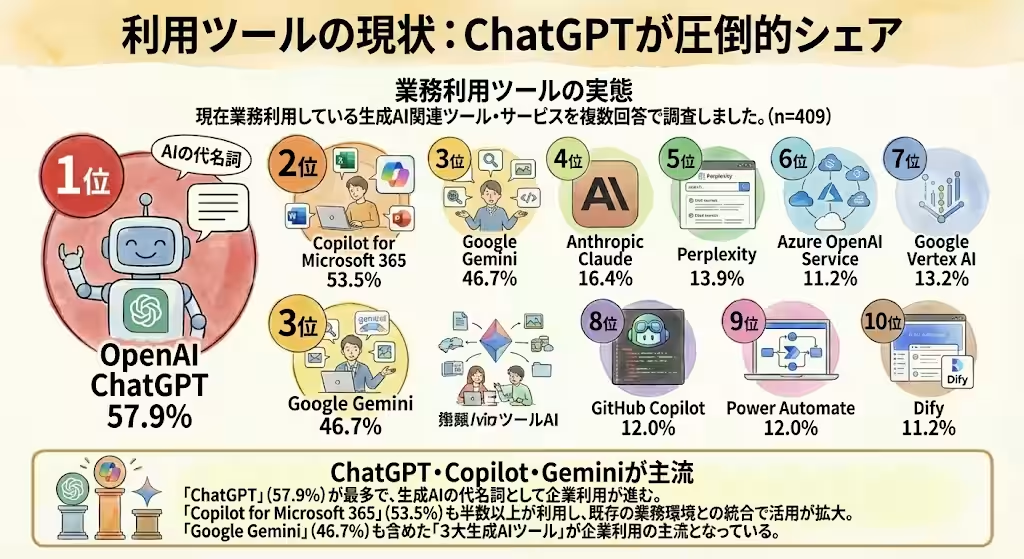
According to the survey, the most popular tools utilized in the business environment are:
| Rank | Tool/Service | Response Rate |
|---|---|---|
| -- | ------- | --- |
| 1 | OpenAI ChatGPT | 57.9% |
| 2 | Copilot for Microsoft 365 | 53.5% |
| 3 | Google Gemini | 46.7% |
Beyond the highlights mentioned, the research report provides a complete ranking of challenges, utilization areas, and tools employed in generative AI.
Conclusion from Ragate
The findings emphasize that, while 61% foresee budget increases, addressing security and guideline establishment challenges remains critical. Notably, the minimal percentage of companies considering budget cuts suggests that, with appropriate use cases in place, generative AI can undeniably transform business operations. However, adopting a "wait-and-see" approach may expose companies to risks of losing competitive advantages in a rapidly evolving technological landscape. Ragate is committed to offering comprehensive support, from establishing guidelines to enhancing skills and building an ROI evaluation framework.
Supporting Companies in AI Adoption
Ragate Inc. employs a specialized AWS FTR-certified team dedicated to providing streamlined support for generative AI utilization. Key aspects of our service offerings include:
- - Development of generative AI utilization guidelines
- - Prompt engineering training
- - Construction of no-code development environments through Dify
- - Establishment of execution environments based on AWS serverless infrastructures
- - Ongoing reskilling and organizational embedding
We aim to assist information systems and DX departments in overcoming the major challenges identified in our study while helping visualize ROI to support budget expansion for generative AI initiatives.
Topics Business Technology)
【About Using Articles】
You can freely use the title and article content by linking to the page where the article is posted.
※ Images cannot be used.
【About Links】
Links are free to use.