


Launch of the Japanese Version of Climate Action Guide for Urban Planners by Community Jameel and C40
Launch of the Japanese Version of Climate Action Guide for Urban Planners
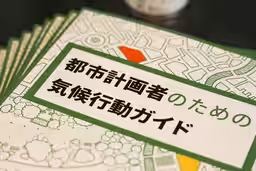
On October 27, 2026, Community Jameel and C40 (the C40 Cities Climate Leadership Group) announced the launch of the Japanese version of the "Climate Action Guide for Urban Planners." Developed by the Jameel C40 Urban Planning Climate Labs in collaboration with UrbanShift, this guide aims to assist in integrating climate change mitigation strategies into urban development policies across Japan.
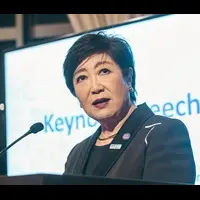
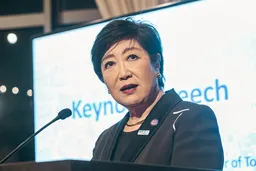
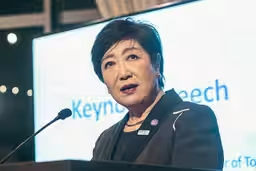
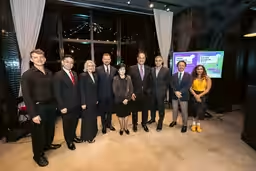
The announcement took place at an event in Tokyo, co-hosted by Community Jameel and C40, featuring a keynote speech by Governor Yuriko Koike of Tokyo. Mohamed Jameel KBE, the founder of Community Jameel, was also present. The event started with welcoming remarks by George Richards, the Director of Community Jameel. Following that, Muralidhar Ram, the C40 Director for East, Southeast Asia, and Oceania, engaged in a dialogue with Brigitte Smys, the City Architect and Design Director of Sydney.
The "Climate Action Guide for Urban Planners" serves as a practical resource that outlines how to incorporate climate change considerations throughout the urban planning process. It details the typical flow of urban planning from initial planning, data collection, policy formulation, implementation, monitoring, and evaluation, breaking it down into ten essential stages.
The guide highlights key areas where urban planning policies can enhance climate change actions, such as tackling floods, extreme heat and drought, preserving natural environments, addressing unregulated settlements, and promoting compact, polycentric urban development. It also emphasizes the importance of proximity in living areas, shifts in transportation methods, and transit-oriented development (TOD) along with sustainable building practices.
Targeted at local government urban planning teams, the guide supports planners in embedding climate considerations into strategic spatial planning, master plans, land use planning, and related policies, regardless of whether formal climate action plans exist.
The Japanese version features a new preface by Governor Koike and George Richards, as well as case studies showcasing Tokyo's initiatives. This work aims to secure sustainable development amid significant societal shifts such as declining population and an aging society, utilizing a dense railway network to promote walkable urban environments. It also illustrates how these efforts can contribute to reducing transport-related CO2 emissions and fostering environmentally friendly urban development.
Governor Yuriko Koike stated, "It is our duty to promote urban resilience and decarbonization to protect the lives and livelihoods of Tokyo residents. We are enhancing our preparedness against increasingly severe natural disasters, including flood control measures such as massive underground tunnels that temporarily store river water and rainwater. Tokyo, with a population of 14 million, is also a major consumer of energy. We aim to actively adopt innovative technologies, such as the next-generation solar panels developed in Japan, 'Air Solar,' and introduce gigawatt-class floating offshore wind power systems, contributing to global decarbonization."
Richards expressed, "Urban planning plays a crucial role in determining how cities respond to climate change, from how communities grow to the means of transportation, development locations, and protection from climate risks. The new Japanese version of the 'Climate Action Guide for Urban Planners' is expected to deliver this practical guide to a broader audience, aiding cities across Japan in aligning their urban development goals with climate change considerations."
Mark Watts, the Executive Director of C40, emphasized the need for actionable and site-specific tools for urban planners to transition climate goals into everyday spatial policies. "The Japanese version of the 'Climate Action Guide for Urban Planners' provides this framework. Under Governor Koike's leadership, Tokyo continues to exhibit exemplary efforts through its zero-emission strategy and climate adaptation measures. We are proud to collaborate with the Tokyo Metropolitan Government and Community Jameel to support cities across Japan in building safer and more sustainable low-carbon futures."
The release of the Japanese version is timely as cities throughout Japan are responding to the pressing pressures of climate change. Tokyo's initiatives, including its climate change adaptation strategies, are designed to address risks associated with rising temperatures, extreme heat, heavy rainfall, and flooding, thereby enhancing the city's resilience. Additionally, Tokyo is making significant strides toward drastically reducing emissions through the 'Zero Emission Tokyo Strategy,' targeting net-zero emissions by 2050 and aiming to cut greenhouse gas emissions by at least 60% compared to 2000 levels by 2035.
Tokyo is among the 33 cities participating in the Urban Planning Accelerator, a collaborative effort between C40 and UN-Habitat, which supports cities in embedding equitable planning principles responsive to climate change into master plans and land-use regulations by 2035. This global initiative was presented at the Local Leaders Forum held in Rio de Janeiro ahead of COP30 in Brazil. The Urban Planning Accelerator brings together cities committed to enhancing the role of urban planning in reducing emissions, protecting communities from climate risks, restoring ecosystems, and fostering more inclusive and livable urban environments.
Grounded in the partnership between C40 and Community Jameel, the Jameel C40 Urban Planning Climate Labs have previously contributed to climate-responsive urban planning in cities like Amman, Jordan, and Chennai, India, impacting approximately 4.5 million people directly. These labs have developed practical methods and tools to help cities integrate climate change actions into urban planning, including climate risk mapping, emissions modeling, land use reform templates, and more.
Going forward, these approaches will continue to support the cities involved in the Urban Planning Accelerator in incorporating their climate commitments into planning policies, regulations, and development management. The 'Climate Action Guide for Urban Planners' will be an invaluable resource for planners as they work to align climate goals with urban development decisions.

Topics Environment)


【About Using Articles】
You can freely use the title and article content by linking to the page where the article is posted.
※ Images cannot be used.
【About Links】
Links are free to use.