



Projected Shortage of Construction Workers in Kinki Region by 2040
Projected Shortage of Construction Workers in Kinki by 2040
A recent analysis conducted by Human Resocia Co., a leading comprehensive human resource services provider based in Shinjuku, Tokyo, forecasts a severe shortage of construction workers in the Kinki region over the coming decades. This assessment focuses on the future supply and demand gap for construction technicians and skilled workers up to 2040, estimating a shortfall of 50,000 by 2030 and as high as 103,000 by 2040. The report is based on national projections published by the company in 2024, aiming to shed light on the human resource gaps specific to the Kinki area.
Key Findings
1. The analysis highlights a significant future gap in the demand and supply of construction technicians and skilled workers in the Kinki region.
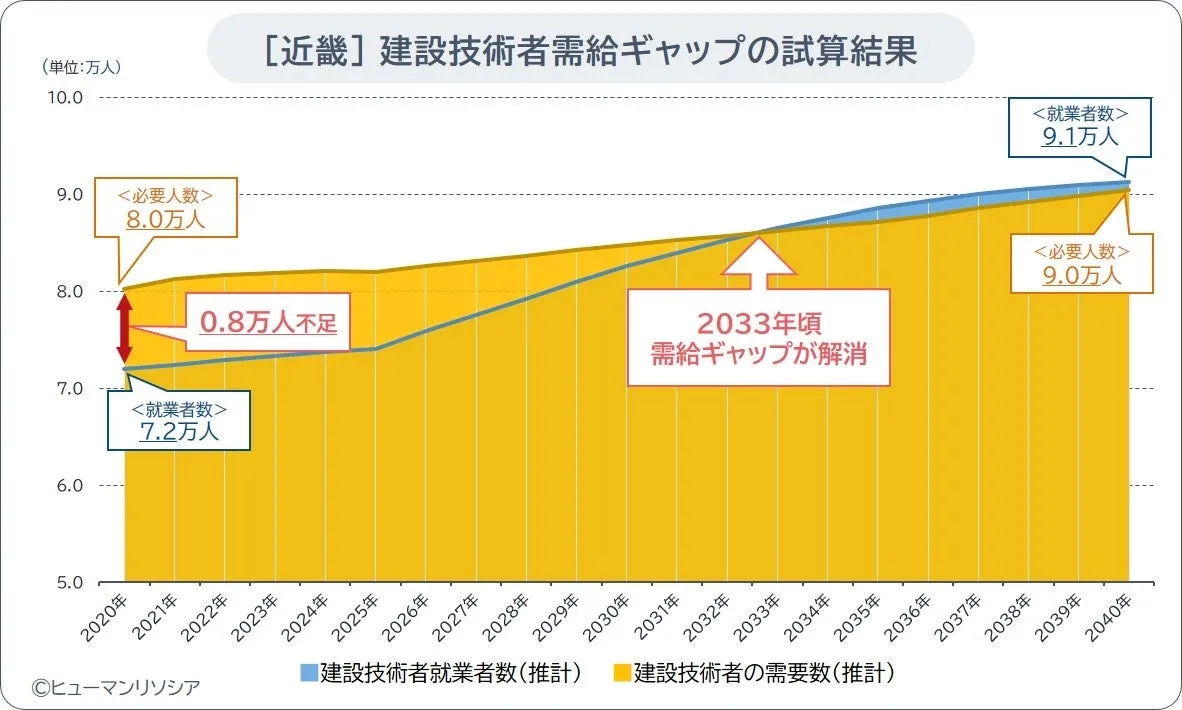
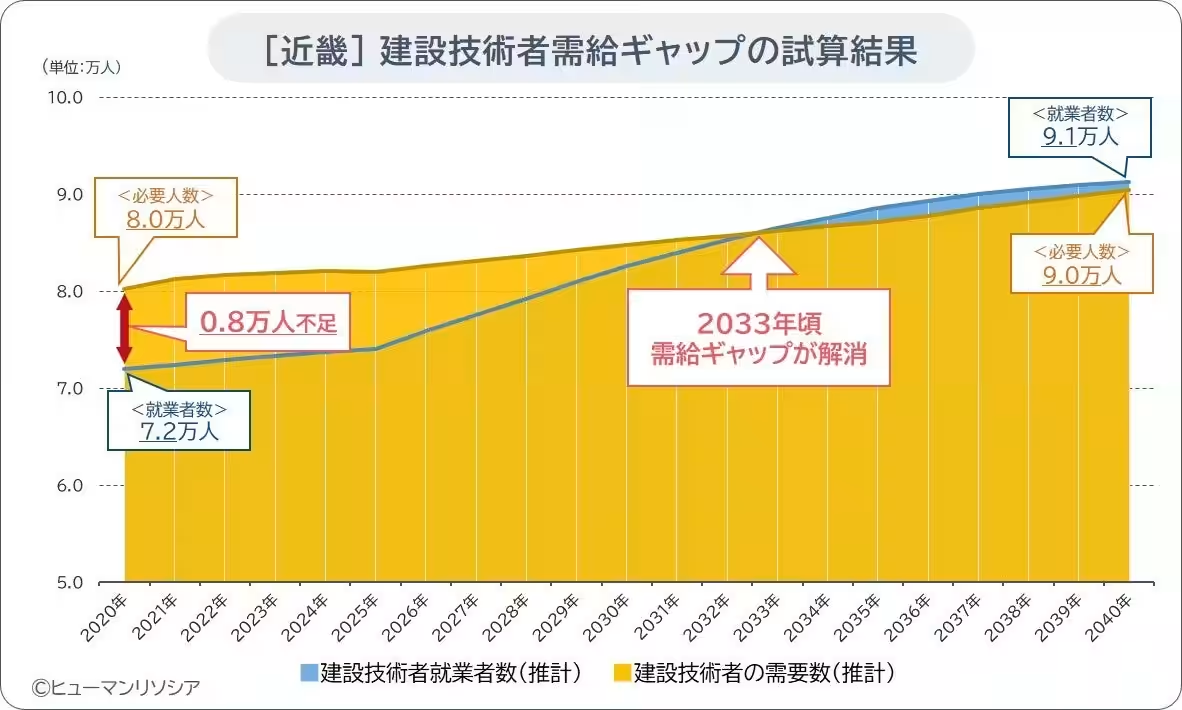
2. The projected shortage of construction technicians is expected to be resolved around 2033. However, the demand-supply balance remains precarious, and there's a high risk of reverting to a shortage.
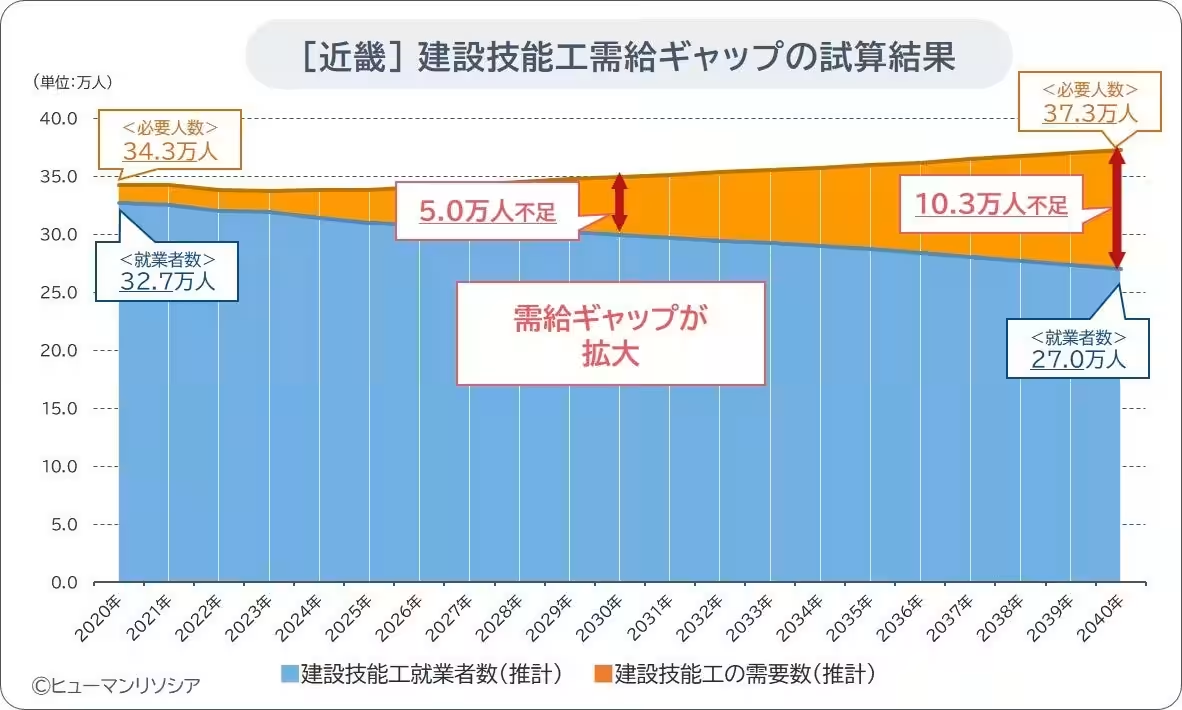
3. The deficit for skilled workers is widening significantly, with shortfalls of 50,000 workers expected in 2030 and maximum shortages of up to 103,000 by 2040.
The Kinki region, which includes Shiga, Kyoto, Osaka, Hyogo, Nara, and Wakayama prefectures, faces increasing challenges in attracting construction talent. While the total number of construction technicians is projected to increase from 72,000 in 2020 to 91,000 by 2040, this increase is contingent on the successful recruitment of new graduates and young workers. There remains uncertainty over whether companies will manage to maintain a consistent influx of new employees, potentially resulting in a downwards revision of this supply forecast.
On the flip side, the demand for construction technicians is projected to rise from 80,000 in 2020 to 90,000 in 2040. Therefore, the supply-demand gap is expected to narrow over time, with an anticipated closure around 2033. Nonetheless, any slight dip in supply or marginal upturn in construction investment could easily tilt this balance back toward a shortage.
Skilled Worker Shortages
The situation is markedly worse for skilled workers, with the total supply forecast to plummet from 327,000 in 2020 to just 270,000 by 2040—a decline rate of about 17.5%. In contrast, the demand for skilled workers is expected to increase by 8.9% over the same period, reaching a total of 373,000 in 2040. Consequently, by 2030, the Kinki region will see a shortage of 50,000 skilled workers, escalating to potentially 103,000 by 2040. Reports indicate that the shortage rate could peak at 27.7% by 2040, raising alarms for the future of the construction industry in the area.
The results underline a critical need for strategies to bolster recruitment and retention within the construction sector. Human Resocia's surveys indicate widespread recognition of this imminent challenge, with around 60% of respondents predicting that the shortage of construction management personnel will 'expand' in the future, alongside a similar sentiment from nearly 70% concerning the skilled worker gap.
As the workforce continues to decline, it emphasizes the urgency for firms to enhance recruitment efforts and improve working conditions to retain talent. A multipronged approach is needed, potentially including proactive hiring of overseas talent and utilizing digital transformation (DX) to boost productivity across the industry.
Conclusion
While projections show that the shortage of construction technicians in the Kinki region may level off around 2033, the currently minimal surplus leaves little room for error. Any fluctuations in labor supply or changes in construction investments could trigger significant shortages once more. The building industry must adapt and innovate to navigate this crucial period ahead, ensuring skilled human resources are available to meet future construction demands.
Topics Other)
【About Using Articles】
You can freely use the title and article content by linking to the page where the article is posted.
※ Images cannot be used.
【About Links】
Links are free to use.