



Survey Reveals Mixed Satisfaction Among Companies Utilizing Generative AI
Survey Results on Generative AI Work Utilization Satisfaction
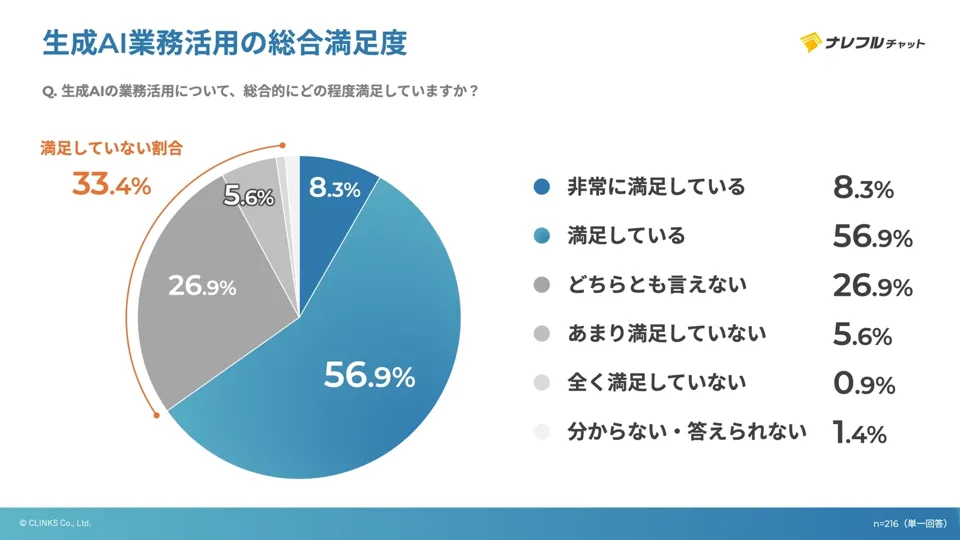
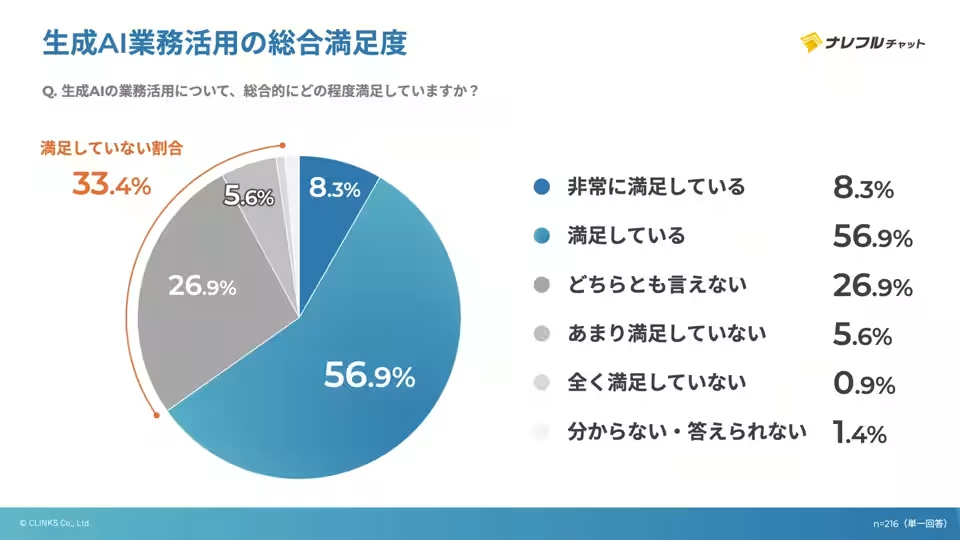
In a recent study conducted by CLINKS, a Tokyo-based company specializing in AI services and systems development, it was found that out of 216 employees utilizing generative AI in their daily work, approximately 65.2% expressed satisfaction. However, alarmingly, about one in three respondents reported feeling inadequate results from their AI implementations. This disparity sheds light on the challenges that organizations face while integrating and utilizing generative AI in their everyday workflows.
The study, which took place between March 3 and 4, 2026, explored the satisfaction levels of employees using generative AI and was executed through an internet survey by "c-slide lab." The primary focus was to determine where companies stand regarding the implementation and operationalization of AI technology in their business processes.
Key Findings
1. Satisfaction Levels: While a significant majority (65.2%) mentioned being "satisfied" or "very satisfied" with generative AI applications in their work, a notable 26.9% were neutral, and nearly 7% were dissatisfied. This indicates a significant variance in experiences among users even when utilizing the same technology.
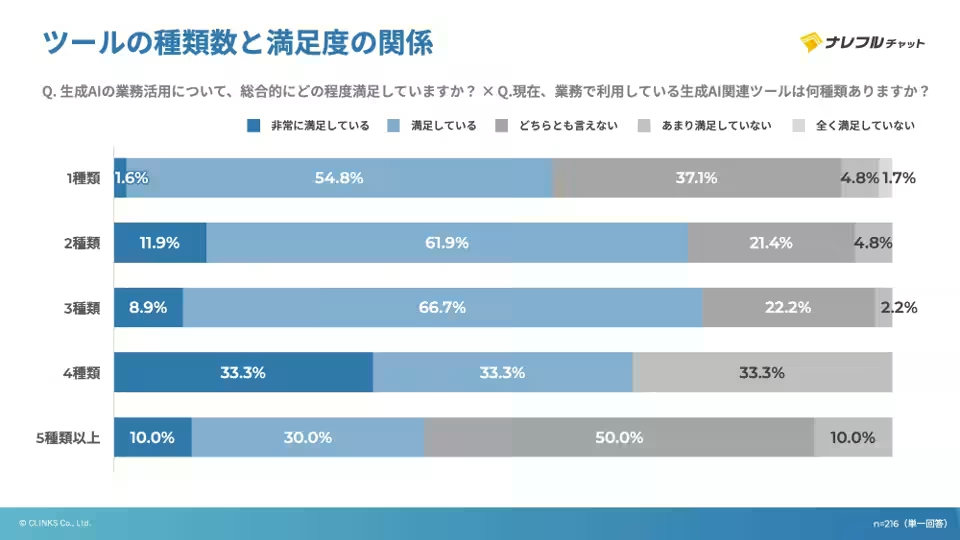
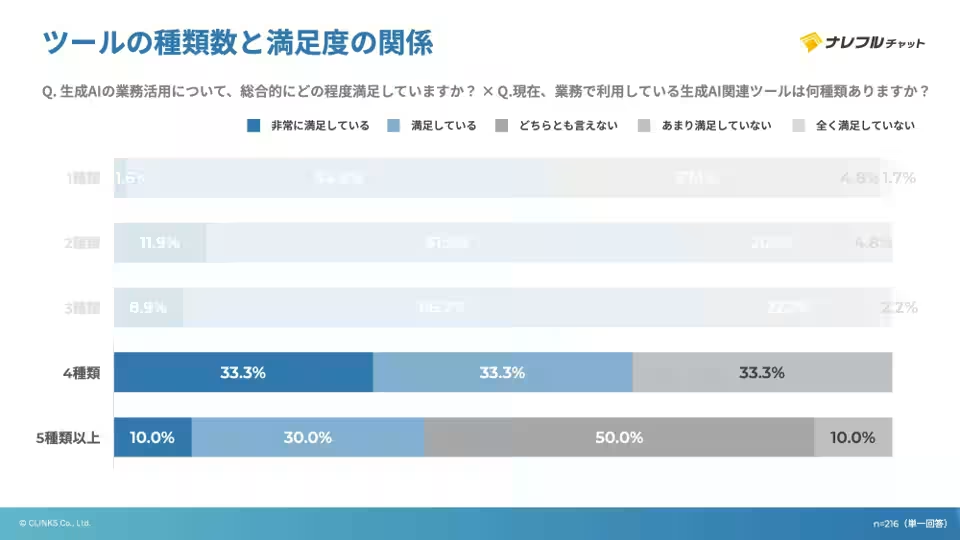
2. Impact of Tool Variety on Satisfaction: Interestingly, the relationship between the number of tools used and satisfaction levels was analyzed. Employees utilizing just one AI tool reported a satisfaction rate of only 56.5%. In contrast, those using two tools showed a marked increase at 73.8%, and three tools further raised the satisfaction to 75.6%. However, using more than three tools reversed this trend, leading to a surge in dissatisfaction, emphasizing the need for a balanced approach in tool usage.
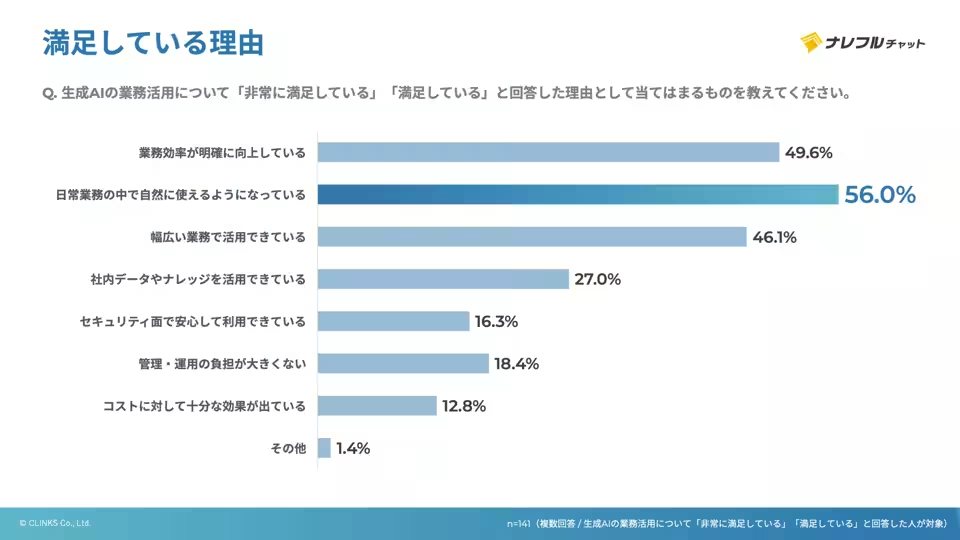
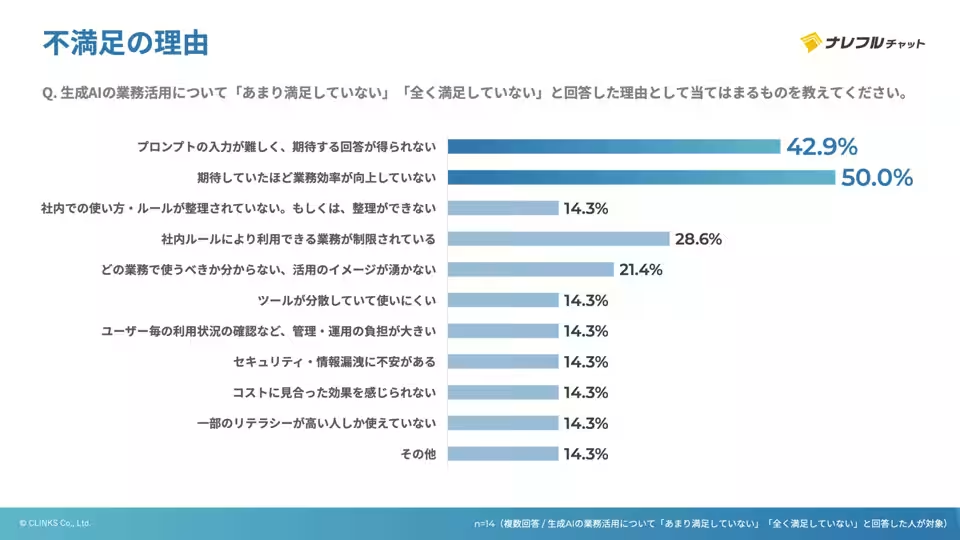
3. Reasons Behind Satisfaction and Dissatisfaction: The prime reason for satisfaction, cited by 56% of participants, was the ability to seamlessly integrate AI into daily tasks, while 49.6% appreciated the visible increase in operational efficiency. Conversely, the leading dissatisfaction stemmed from unmet expectations regarding efficiency improvements (50%) and challenges related to prompt input (42.9%).
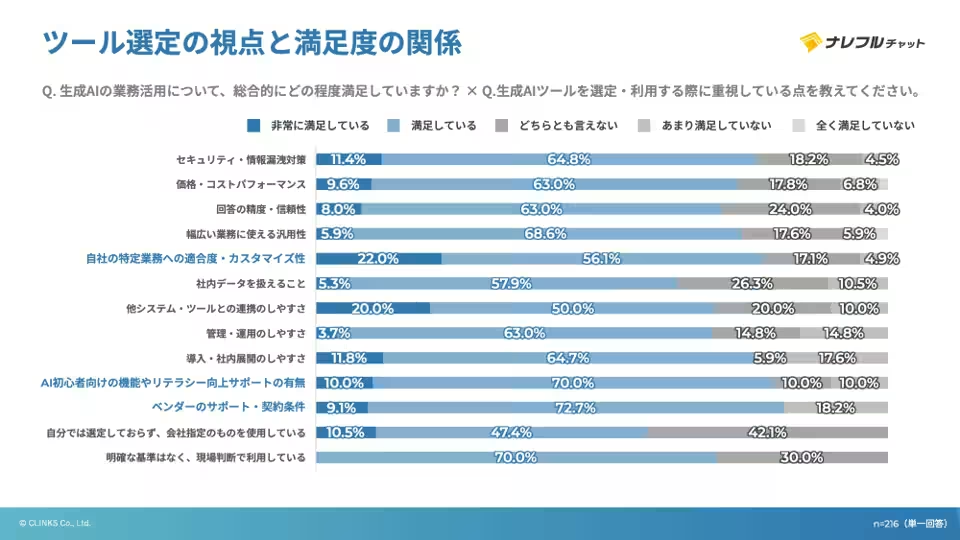
4. Tool Selection and Support: The criteria for selecting AI tools played a significant role in influencing satisfaction levels. Those who prioritized vendor support and favorable contract conditions saw satisfaction levels soar to 81.8%, while groups focusing on boosting AI literacy for beginners scored 80.0%. Participants who emphasized customization for specific business needs showed a 22% rate of high satisfaction, notably higher than the overall average of 8.3%.
From these insights, it's clear that the satisfaction derived from generative AI is closely linked to effective deployment strategies that prioritize integration and usability.
Conclusion
The study underscores two essential conditions for maximizing satisfaction with generative AI at work:
1. Vendor Support and Literacy Initiatives: Selecting tools with robust vendor support and educational resources for beginners greatly enhances satisfaction. Companies must focus on how to embed AI tools in their operations effectively to realize actual benefits.
2. Creating an Environment for Effective Use: Organizations that provide 2-3 well-suited tools and cultivate an environment where staff can utilize them effectively tend to report higher satisfaction levels. Addressing common grievances such as complex prompt formulations and efficiency perceptions will play a crucial role in improving user experiences.
This summary provides a glimpse into the broader data regarding workplace AI adoption and its efficacy. For more detailed insights about internal usage patterns and tools' challenges, the complete survey report is available for download through CLINKS' official website.
About CLINKS
CLINKS is a leader in AI chat services, providing "Nareful Chat," a powerful generative AI tool that meets the requirements highlighted in the study. With multi-model integration, users can effortlessly switch between different AI technologies, backed by continuous vendor support and a framework that promotes efficient usage across organizations. Interested parties can explore a free trial of these services, enabling a zero-cost entry into generating AI-driven workflows.

Topics Business Technology)
【About Using Articles】
You can freely use the title and article content by linking to the page where the article is posted.
※ Images cannot be used.
【About Links】
Links are free to use.