



Transforming Construction Estimation: AI Application Revolutionizes Workflows in Shizuoka
Transforming Construction Estimation with AI
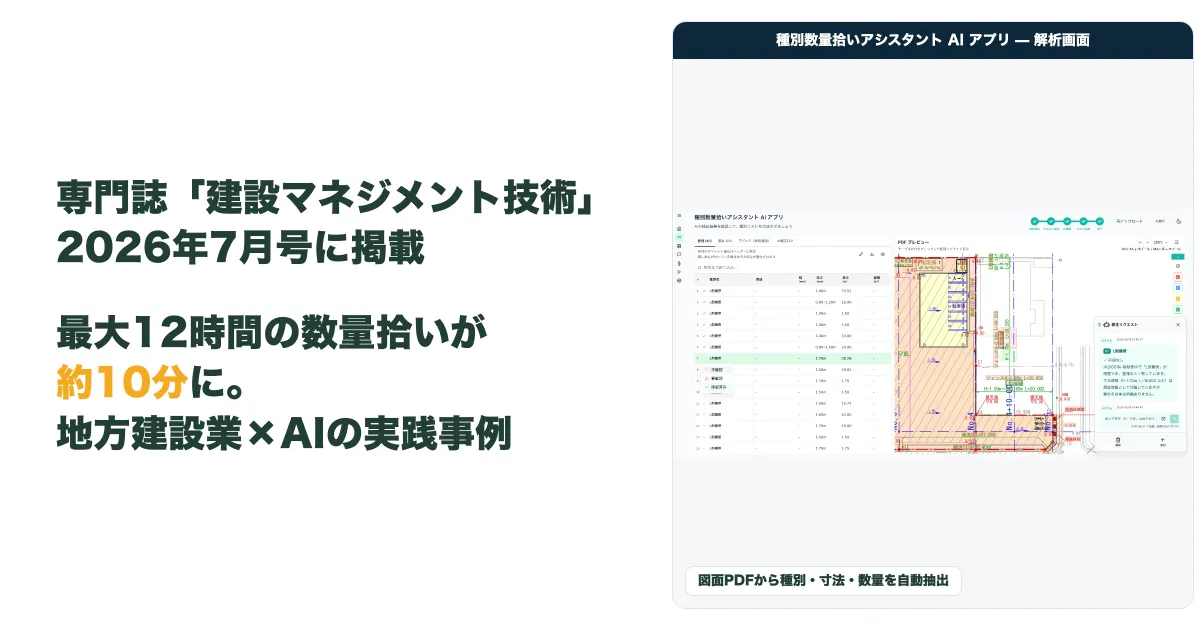
In the face of a looming labor shortage in the construction industry, innovative technology is stepping in to bridge the gap. Renue, a Tokyo-based AI consulting firm, has collaborated with Marubeni, a civil engineering and construction company based in Shizuoka Prefecture, to create an AI application that streamlines the estimation process for construction projects. This breakthrough was highlighted in a recent article published in the July 2026 issue of Construction Management Techniques, a renowned industry magazine specializing in efficient public works execution and management technologies.
The Escalating Labor Crisis
The construction sector is experiencing a crisis as experienced workers retire in large numbers, particularly with the expected turnover arising from the '2025 Problem,' where a significant portion of the workforce will be 75 years or older. Estimates indicate a drop in construction employment from 5.07 million in 2014 to approximately 4.77 million in 2024, while the demand for infrastructure maintenance remains high. This presents a daunting challenge characterized by rising demand coupled with a decreasing supply of skilled labor.
The Collaboration
Founded in 1986, Marubeni plays a crucial role in Shizuoka’s infrastructure, participating in significant projects like the renovations of highways and bridges. However, with an aging workforce and challenges in hiring young talent, the company sought a solution to enhance efficiency. Enter Renue, established in 2021, and known for providing end-to-end support for AI integration.
In August 2025, the two companies embarked on a joint project that sought to revolutionize the tedious estimation process by leveraging AI technologies. Traditional quantity takeoff—reading and calculating measurements from design drawings—had long been the domain of seasoned professionals, often taking anywhere from 2 to 15 hours per project.
Overhauling Traditional Processes
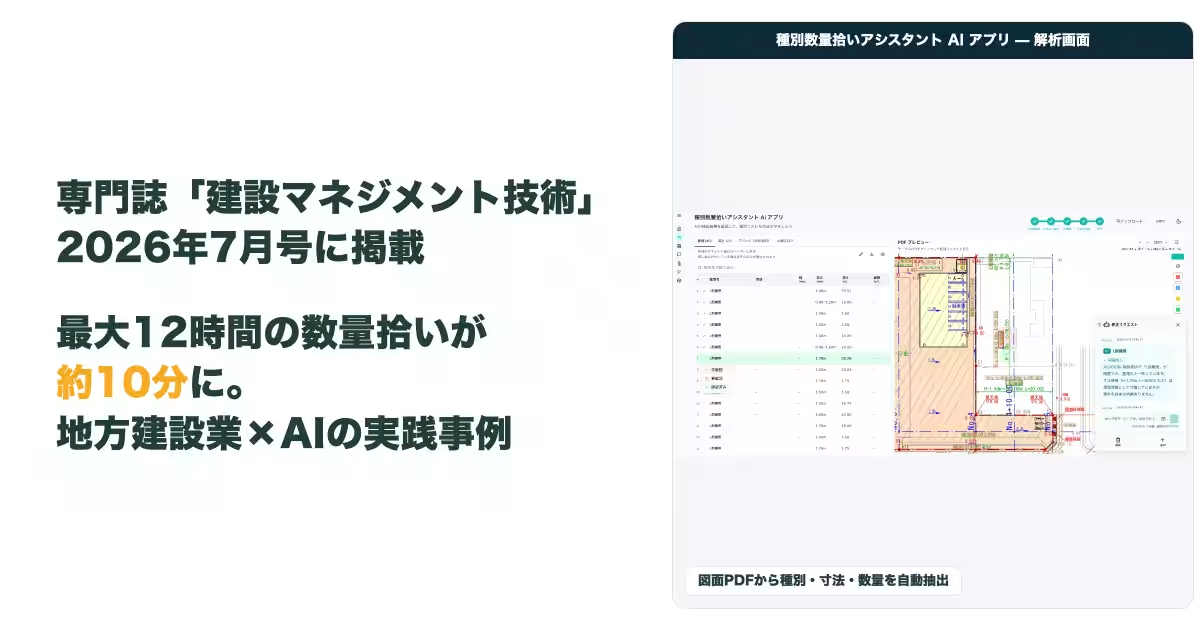
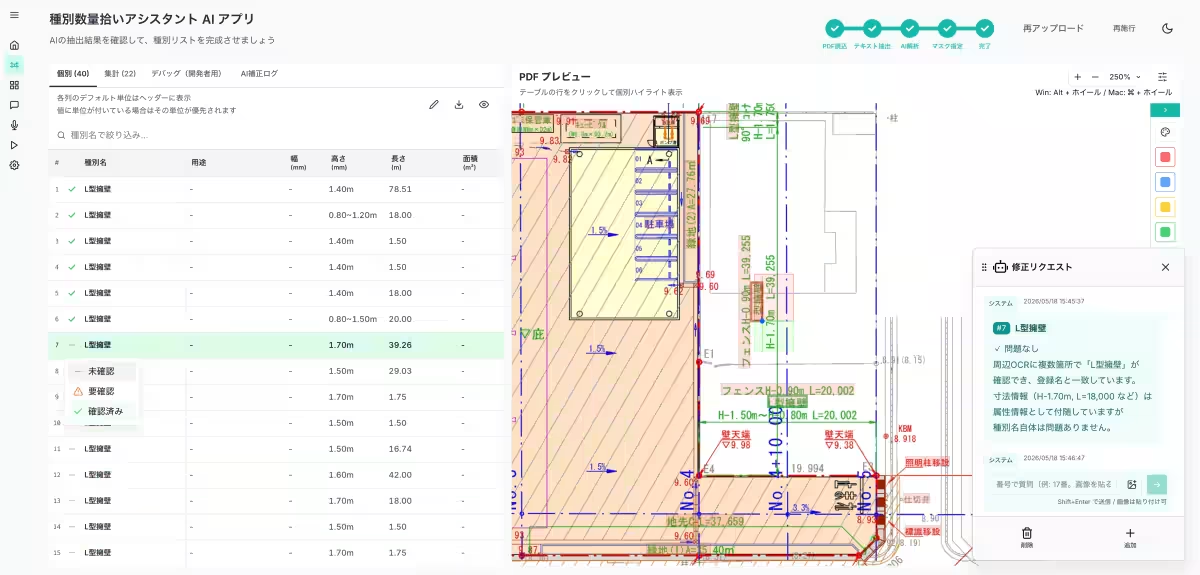
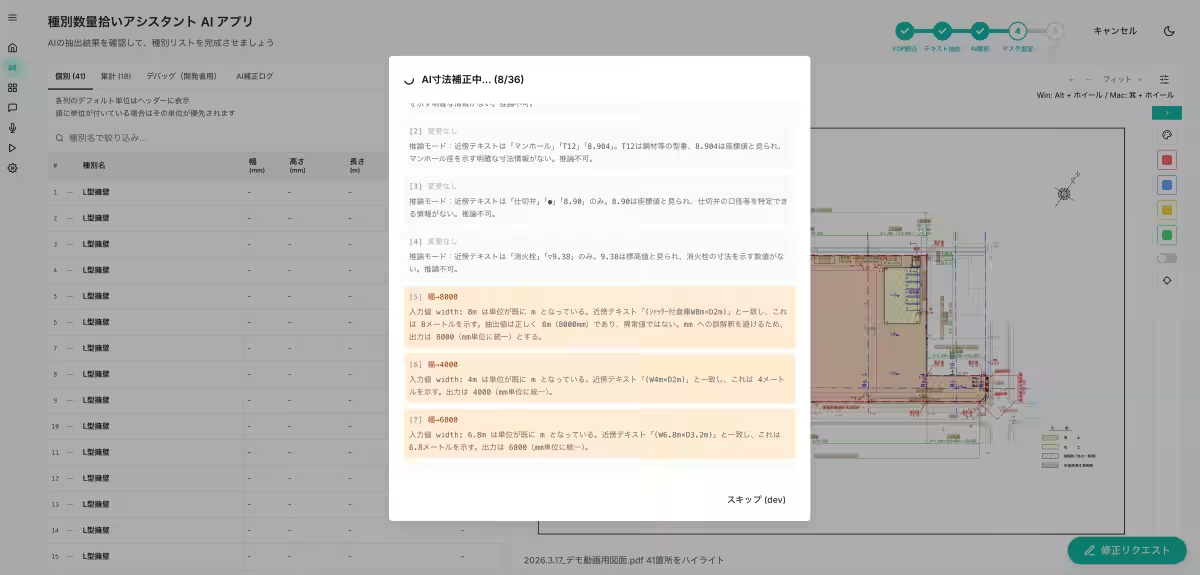
The newly developed Quantity Takeoff Assistant AI Application transforms this labor-intensive task into a nearly instantaneous process. Users can now upload design documents in PDF format, allowing the AI system to automatically extract structural elements, dimensions, and quantities.
This app generates a detailed summary in Excel format and highlights relevant areas on the drawings, enhancing the efficiency of the review process. It’s designed for bulk processing, allowing users to handle multiple drawings simultaneously. Importantly, the outputs generated by the AI are not considered final; manual verification by technicians remains central to the quality assurance process. This collaborative model of ‘AI with human oversight’ has facilitated a smoother implementation in the field.
Significant Outcomes
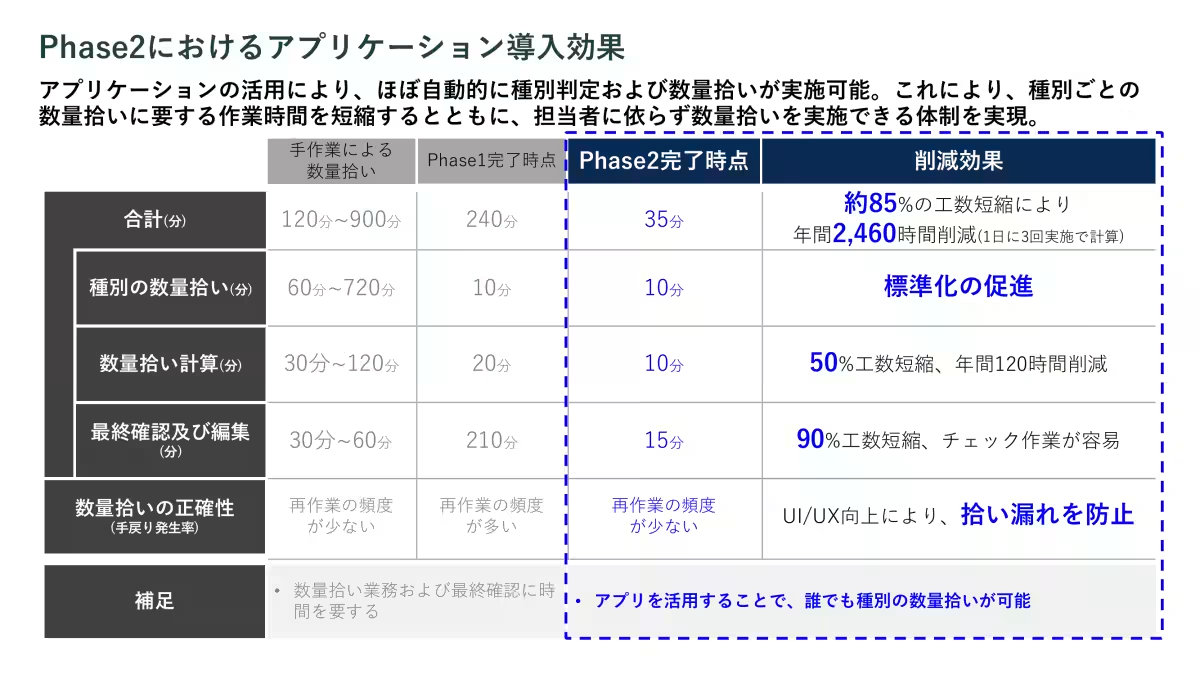
The introduction of this AI tool has dramatically reduced the time required for quantity takeoff, slashing it from a maximum of 12 hours to just about 10 minutes—an astonishing reduction. Overall labor hours have decreased from 15 hours to approximately 4, while the accuracy of material identification has seen a marked improvement, with virtually no misidentifications reported.
Beyond the quantifiable benefits, the impact on workplace dynamics has also been profound. Employees lacking specialized knowledge can now produce reports, opening previously restricted tasks to younger and less experienced staff. This not only leads to better resource allocation towards high-value work but also increases overall organizational productivity.
Insights from Leadership
In a recent statement, Masami Kurebayashi, President of Marubeni, commented on the project's significance:
“As we celebrate our 40th anniversary, we confront a labor shortage that deepens each year. The estimation process has relied heavily on the experience of veteran technicians, making it challenging to pass on knowledge to younger generations. With the introduction of AI through our collaboration with Renue, even less experienced employees can now efficiently generate quantity takeoffs, drastically improving our responsiveness in bidding situations.
The most notable achievement is the ability for a more diverse range of talent—including younger workers and women—to engage in estimation tasks. Our vision is to create an environment where anyone can thrive in the construction field, irrespective of their prior experience. We aim to extend this system to other construction companies facing similar challenges across the nation.”
Conclusion
The heart of this initiative lies in the ability to transform previously specialized knowledge into an accessible process through AI. This not only hastens the integration of younger workers but also allows for a concentrated focus on high-value tasks by existing staff. Both Renue and Marubeni envision rolling out this application as a Software as a Service (SaaS) tailored for the civil engineering industry, establishing a model that can be emulated nationwide as a way to harness AI in addressing sectorial issues.
Company Overview
- - Company Name: Renue Inc.
- - Location: 5th Floor, Shiodome City Center, 1-5-2 Higashi-Shinbashi, Minato City, Tokyo 105-7105
- - Representative: Yusuke Yamamoto
- - Industry: AI Consulting
- - Website: renue.co.jp
For inquiries concerning this release or the Quantity Takeoff Assistant AI Application, construction companies struggling with estimation tasks are encouraged to reach out at:
- - Email: [email protected]
- - Phone: 03-4500-7154

Topics Consumer Technology)

【About Using Articles】
You can freely use the title and article content by linking to the page where the article is posted.
※ Images cannot be used.
【About Links】
Links are free to use.