




Incentives for Executives: Stock Compensation with Transfer Restrictions
Overview of Stock Compensation Plans
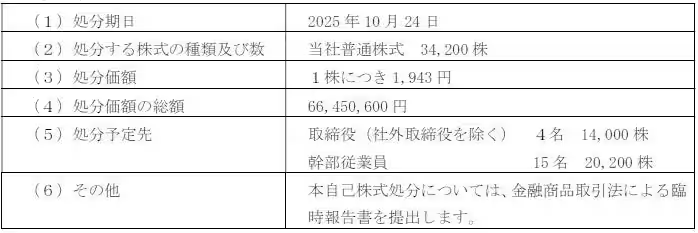
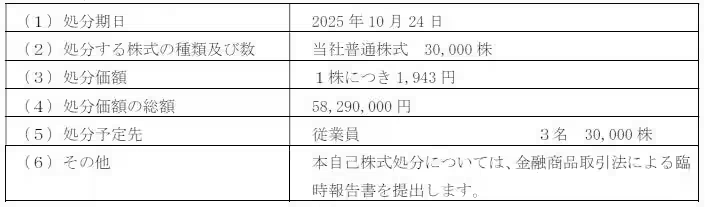
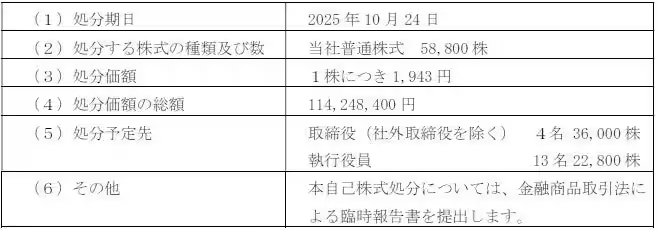
In a decision made during the board meeting on September 25, 2025, the company has approved the disposal of its own shares as part of stock compensation with transfer restrictions for selected executives. This article details the motivations and frameworks of the new incentive programs put in place for corporate executives.
Purpose of Restriction Stock Compensation
The introduction of the stock compensation program aims to provide incentives for executives, encouraging them to improve the sustainable corporate value and share value with shareholders. It involves awarding shares to executives under certain conditions and is intended to foster a closer alignment between the interests of executives and those of the shareholders.
Key Aspects of Program I: Stock with Restrictions
The stock compensation plan allows selected executives, who do not include outside directors, to receive cash compensation convertible into company shares. This allocation of company shares is restricted and is conditioned on various performance and continuous service criteria.
- Cap on Cash Compensation: Each executive can receive cash compensation of up to 200 million yen per term.
- Share Distribution Limits: The total number of shares issued or disposed of under this program is capped at 20,000 shares per term for each executive.
- Price Calculation: The share price will be determined based on the closing price on the Tokyo Stock Exchange on the prior trading day before the director board meeting.
A unique feature of this program is the 50-year transfer restriction period, which is designed to ensure that the interests of executives remain aligned with the long-term performance of the company.
Program II: Performance-based Stock Compensation
In line with the company’s mid-term management strategy, a second program was introduced with performance conditions tied to achieving specific goals. This program is designed to award stock based on the performance of both the individuals and the company over the next five years.
- - Annual Cash Compensation Limit: Similar to the first program, this plan allows for up to 200 million yen in cash compensation awarded to key executives annually.
- - Share Distribution Limit: The company will issue or dispose of up to 40,000 common shares annually.
- - Performance Measurement: Share issuance will hinge on meeting the performance goals outlined in the mid-term strategy, thus linking compensation directly to the company’s success.
Program III: Employee Stock Compensation
Finally, an employee-focused compensation program was established to incentivize certain qualifying staff members.
- - Stock Issuance to Employees: Employees satisfying specific criteria will be awarded restricted stock, funded through compensatory bonds.
- - Transfer Restrictions: Shares awarded via this program will also be subject to transfer restrictions for a designated period.
Each program’s operational framework includes conditions for share transfer restrictions and criteria for lifting these limitations based on performance and roles within the company. To manage these awards effectively, the company maintained an agreement with a financial institution to oversee the execution of restrictions.
Conclusion
The introduction of these stock compensation plans underscores the company's commitment to aligning executive incentives with shareholder interests while enhancing sustainable corporate value. With a clear structure and defined performance metrics, these programs are set to drive long-term growth and stakeholder engagement.
Each plan is governed by a set of defined rules ensuring fairness and transparency within the allocations, paving the way for a rewrite in how executives align their performance with the broader company vision. As these initiatives roll out, they are expected to not only enhance individual accountability but also foster a culture of shared success within the company.
Final Note
As the market continues to evolve, ensuring that compensation structures reflect both current performance and future potential will be crucial in maintaining a competitive edge.

Topics Business Technology)
【About Using Articles】
You can freely use the title and article content by linking to the page where the article is posted.
※ Images cannot be used.
【About Links】
Links are free to use.