



Trends in Tokyo's Office Market: Vacancy Rates and Rental Prices as of April 2026
Overview of Tokyo Office Market Trends
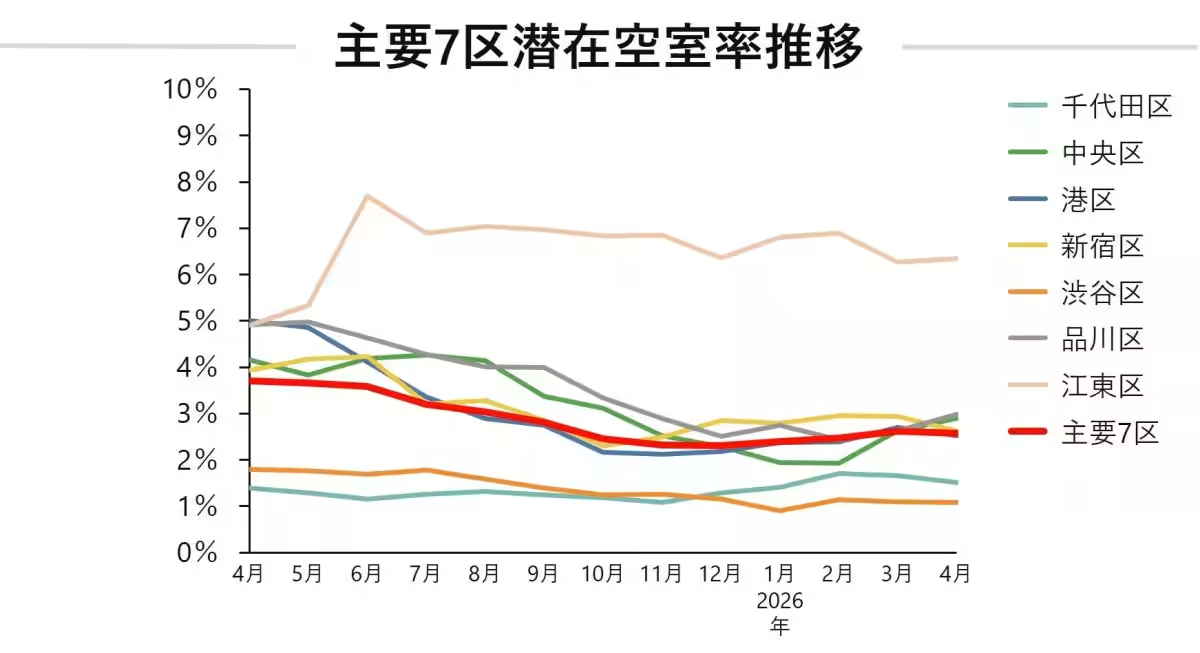
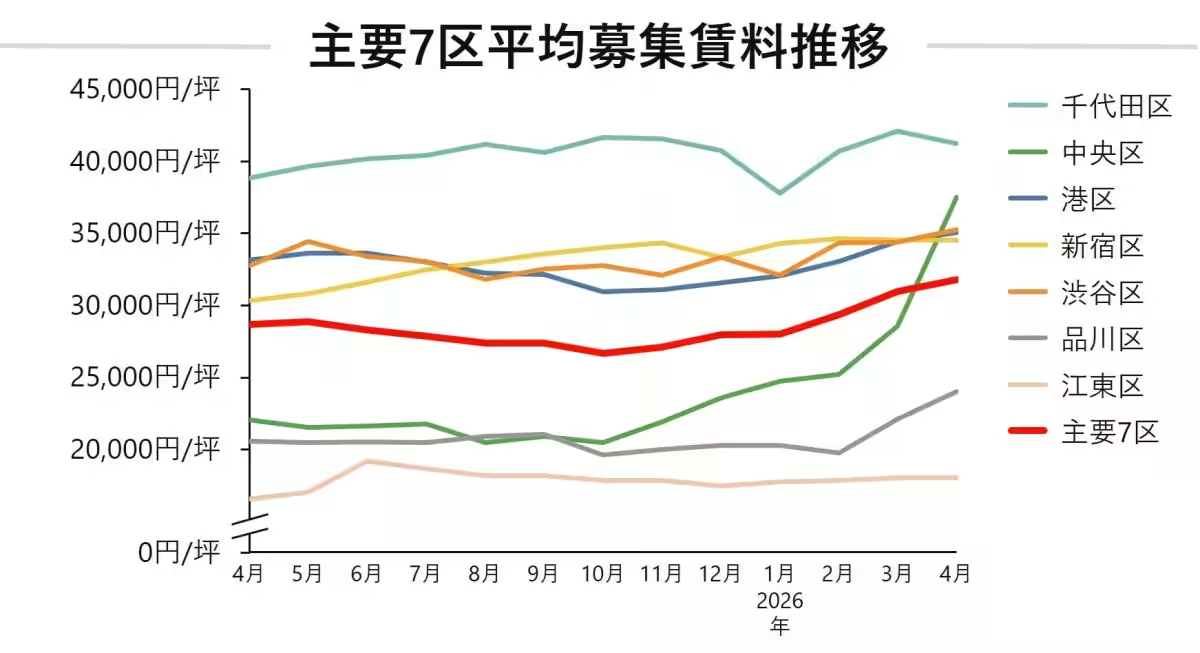
As of April 2026, significant trends have emerged in Tokyo's office market, particularly concerning vacancy rates and average rental prices. According to a recent survey conducted by Mitsubishi Estate Real Estate Services, the current potential vacancy rate stands at 2.57%, a slight decrease of 0.05 percentage points from the previous month. Meanwhile, the average rental price has shown a positive increase, now at 31,783 JPY per tsubo, representing an increase of 837 JPY compared to the previous month.
Key Findings
Potential Vacancy Rates
The data indicates that the potential vacancy rate for the major five districts has fallen to 2.19%, a decline of 0.10 percentage points from last month. For the seven major districts, the rate is 2.57%, illustrating a stable market despite fluctuations. These numbers hint at a healthy demand for office spaces in the most sought-after areas of Tokyo.
Average Rental Prices
The average rental price across the major five districts has reached 36,703 JPY per tsubo, increasing by 1,298 JPY from the previous month. In contrast, the seven major districts show a lower average of 31,783 JPY per tsubo, despite a notable increase. The rising costs reflect a competitive market, affected significantly by the demand dynamics within these districts.
Trends in Key Areas
In specific districts such as Nihonbashi Honcho and Muromachi, the average rental price has surged to 51,599 JPY per tsubo, an astounding increase of 5,933 JPY. This spike suggests that properties at lower price points are being absorbed more rapidly, thereby elevating the market around high-end offerings. Conversely, in areas like Kachidoki, an increase in new listings has led to a rise in potential vacancy rates, uncovering notable contrasts in rental prices, with properties still available for around 10,000 JPY per tsubo in the vicinity.
Space Requirements During Office Relocation
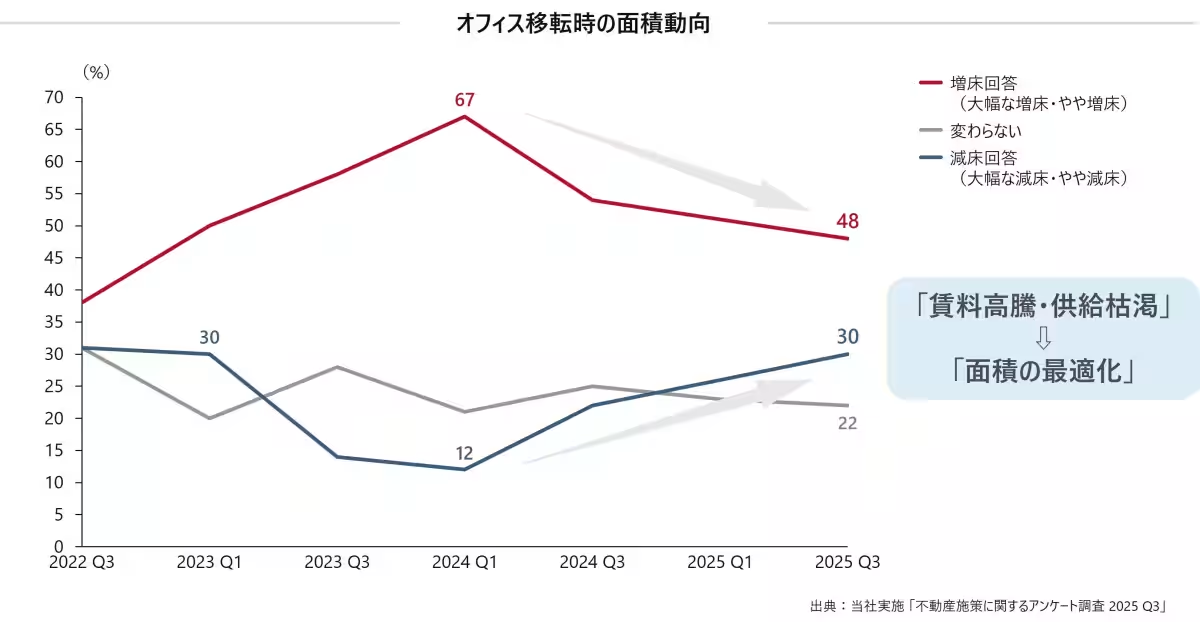
The current economic climate characterized by rising rents and dwindling supply has compelled companies to adapt. This shift has also been reflected in the current trends concerning office relocation space requirements. A survey conducted at the end of last year revealed that the percentage of companies opting for larger spaces has dropped below 50% for the first time since Q3 2022, while those choosing smaller spaces has risen to 30%, marking a peak not seen in two and a half years. Such shifts indicate a fundamental adjustment to align with the prevailing market conditions, prompting a strategic focus on optimizing space even in competitive price ranges.
Data Collection and Methodology
The survey covered a total of 993 buildings as of the end of April 2026. These buildings are registered in our database and include tenant buildings exceeding 3,000 tsubo located in six key districts: Chiyoda, Chuo, Minato, Shinjuku, Shibuya, and Shinagawa. Notably, this analysis excludes properties with extraordinary circumstances that may skew market trends.
The potential vacancy rate is defined based upon the long-term market supply status, focusing on immediately available spaces. This redefinition aims to offer a fresh perspective on market analysis. Additionally, the average rental price is based on weighted averages of the conditions of listed properties as of the survey's end date.
Conclusion
In conclusion, the Tokyo office market’s evolution is accelerating, shaped by economic pressures and changing business needs. The persistence of rising rental rates juxtaposed with strategic downsizing reflects a complex balance that businesses are currently navigating. For more detailed insights and data, you can refer to the full report provided by Mitsubishi Estate Real Estate Services.
About Mitsubishi Estate Real Estate Services
Mitsubishi Estate Real Estate Services, a subsidiary of Mitsubishi Estate, specializes in a comprehensive range of real estate services, including brokerage, consulting, and property management since its establishment on December 20, 1972. Leveraging long-standing expertise, we continue to meet diverse client needs effectively.
Topics Consumer Products & Retail)
【About Using Articles】
You can freely use the title and article content by linking to the page where the article is posted.
※ Images cannot be used.
【About Links】
Links are free to use.