



New Insights into Heart Failure: Fibroblasts and Non-Cardiac Cell Roles Uncovered
New Insights into Heart Failure: Fibroblasts and Non-Cardiac Cell Roles Uncovered
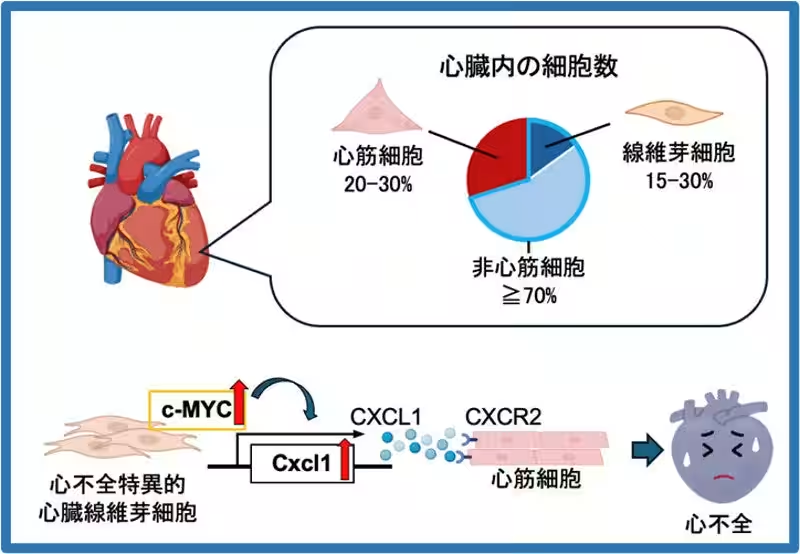
In a groundbreaking study conducted by researchers from Okayama University, the University of Tokyo, Keio University, and the International University of Health and Welfare, significant new findings regarding heart failure were revealed. Using a model of heart failure in mice, the team uncovered an unexpected mechanism through which fibroblasts, previously thought to function solely as structural support cells, actively contribute to the progression of heart failure. The research determined that these fibroblasts secrete CXCL1 via the c-MYC protein, leading to a decline in cardiomyocyte function, a crucial factor in heart failure.
This startling discovery emphasizes the role of non-cardiac cells in disease pathology and suggests a shift in how we understand heart failure. Traditionally, heart failure was primarily attributed to cardiomyocyte injury, but this new evidence highlights that fibroblasts can also directly influence the progression of the disease. The findings provide a fresh perspective on the complex dynamics at play within the failing heart and point to the need for a revised approach in developing therapeutic strategies.
Moreover, the researchers demonstrated that blocking the c-MYC-CXCL1-CXCR2 pathway could prevent the exacerbation of heart failure. This represents a significant advancement in identifying potential treatment targets that go beyond cardiomyocytes. The clinical implications of this research are promising, particularly given the rising prevalence of heart failure amid an aging population. Targeting non-cardiac cellular mechanisms may lead to innovative therapies aimed at slowing the progression of heart failure and improving patient outcomes.
The results of this important study were published on September 10, 2025, in the prestigious journal Nature Cardiovascular Research. The complete respect for the c-MYC-CXCL1-CXCR2 axis represents a key development in understanding how heart function can be compromised, offering new avenues for treatment development and potential future clinical applications.
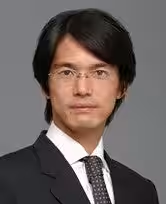
Professor Shinsuke Yuasa of Okayama University, one of the lead authors of the study, expressed that the findings challenge the long-held belief that heart failure arises solely from cardiomyocyte issues. The team aims to further explore the role of cardiac fibroblasts in heart failure and pursue new treatment avenues based on their discoveries. As this research advances, collaboration with clinical partners may become increasingly critical, especially considering the therapeutic implications for patients suffering from this serious condition.
Given the increase in heart failure diagnoses, particularly among the elderly, this research represents a vital step towards evolving treatment modalities. By recognizing the importance of fibroblasts in heart disease, there is the potential to develop more comprehensive treatment strategies that consider the entire cellular environment of the heart, not just isolated cardiomyocyte function.
This knowledge will likely play an essential role in the future of cardiology and could lead to life-saving interventions that target various aspects of heart failure beyond conventional treatment methods. The community eagerly anticipates further findings from ongoing research that could validate these mechanisms in human patients and lead to transformative changes in how heart failure is treated.
In summary, the collaboration among these prestigious Japanese universities has illuminated a complex yet pivotal role of fibroblasts, redefining them from mere structural cells to active participants in heart failure progression. This newfound understanding is bound to spur innovation in treatment and drastically alter the therapeutic landscape for patients facing heart-related illnesses.
For more in-depth information about this research, you can find the full article on Nature Cardiovascular Research.

Topics Health)
【About Using Articles】
You can freely use the title and article content by linking to the page where the article is posted.
※ Images cannot be used.
【About Links】
Links are free to use.