



Young Employees in Japan Increasingly Seek Global Opportunities Amid Domestic Challenges
Growing Interest in Global Opportunities Among Young Employees in Japan
In recent years, the declining population in Japan has made it increasingly important for companies to expand overseas. A recent survey conducted by beyond global Japan has shed light on the evolving attitudes of young employees regarding international work. The survey targeted 875 participants, comprising first-year and third-year graduates working at Japanese firms with overseas branches.
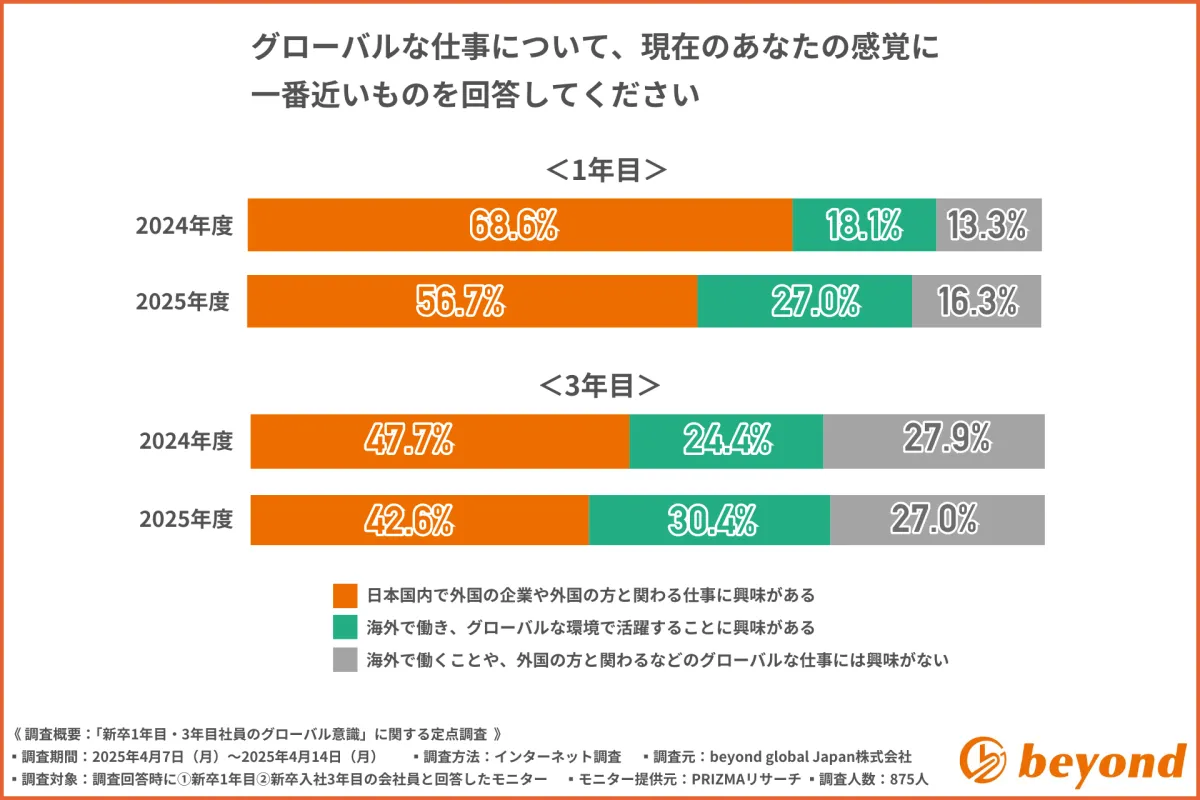
Last year’s study found that about 70% of new employees were interested in global work within Japan, whereas interest in working abroad stood at just under 20%. This year, however, a significant shift in sentiment has surfaced.
Survey Insights
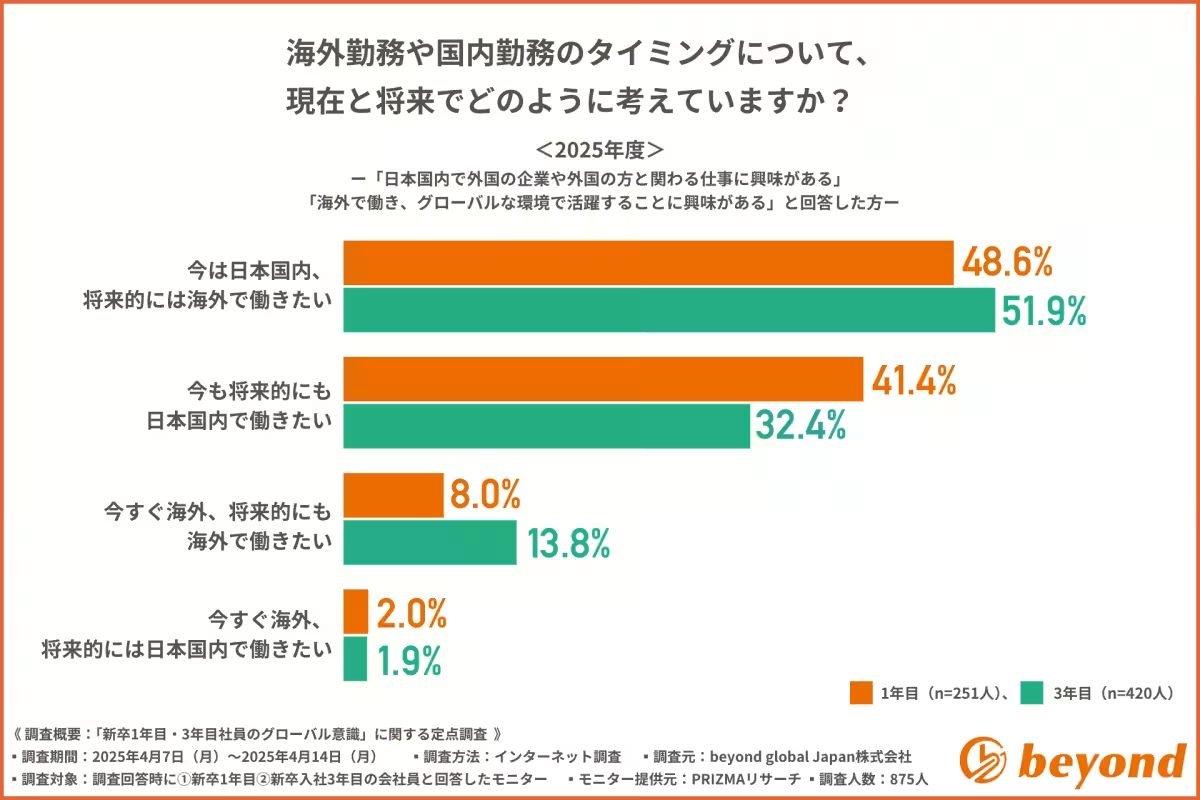
The survey, which took place from April 7 to April 14, 2025, revealed an increase in the desire among first-year employees to work abroad, rising from 18.1% last year to 27%. Conversely, interest in domestic roles involving foreign companies declined by nearly 10%.
Changes Noted
When comparing first-year to third-year graduates, a notable difference emerged: first-year employees displayed less interest in global roles, but their positivity towards such opportunities contrasts sharply with their more experienced counterparts who are showing an increasing interest in overseas positions over their early domestic experiences.
After three years in the workforce, many young professionals have gained insights into the workforce's realities and are beginning to consider working abroad more seriously. Trends suggest that this new generation is increasingly aware of global challenges and opportunities as international travel restrictions from prior years ease.
Challenges and Perceptions
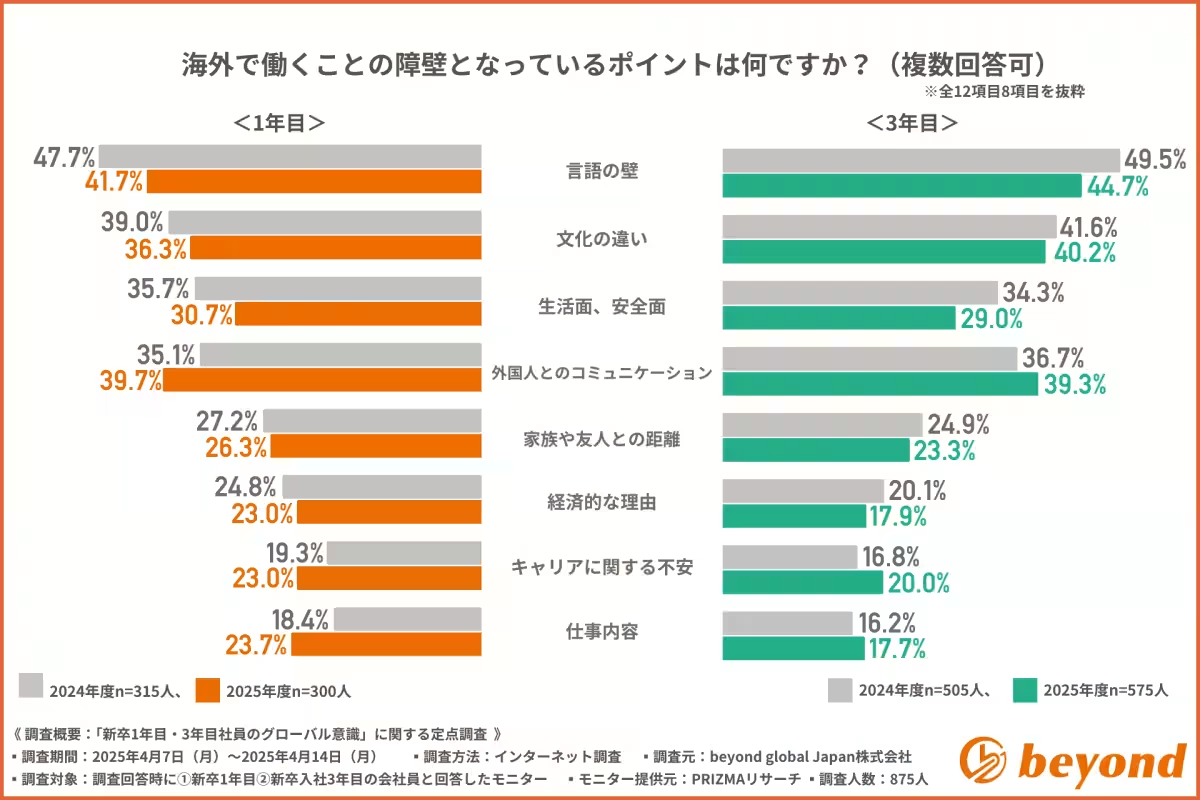
Despite these evolving aspirations, when asked about barriers to working overseas, respondents cited language and cultural differences as significant hurdles. While these concerns have lessened over the previous year, the challenge of effective communication persists. Young people today have greater exposure to language learning through school systems and technology but remain cautious about interacting with foreigners directly.
An intriguing finding from the survey revealed that over 60% of participants expressed interest in working abroad if their concerns were alleviated. This highlights a parallel between their aspiration for global experience and the hesitations they face.
Stagnation in Japan
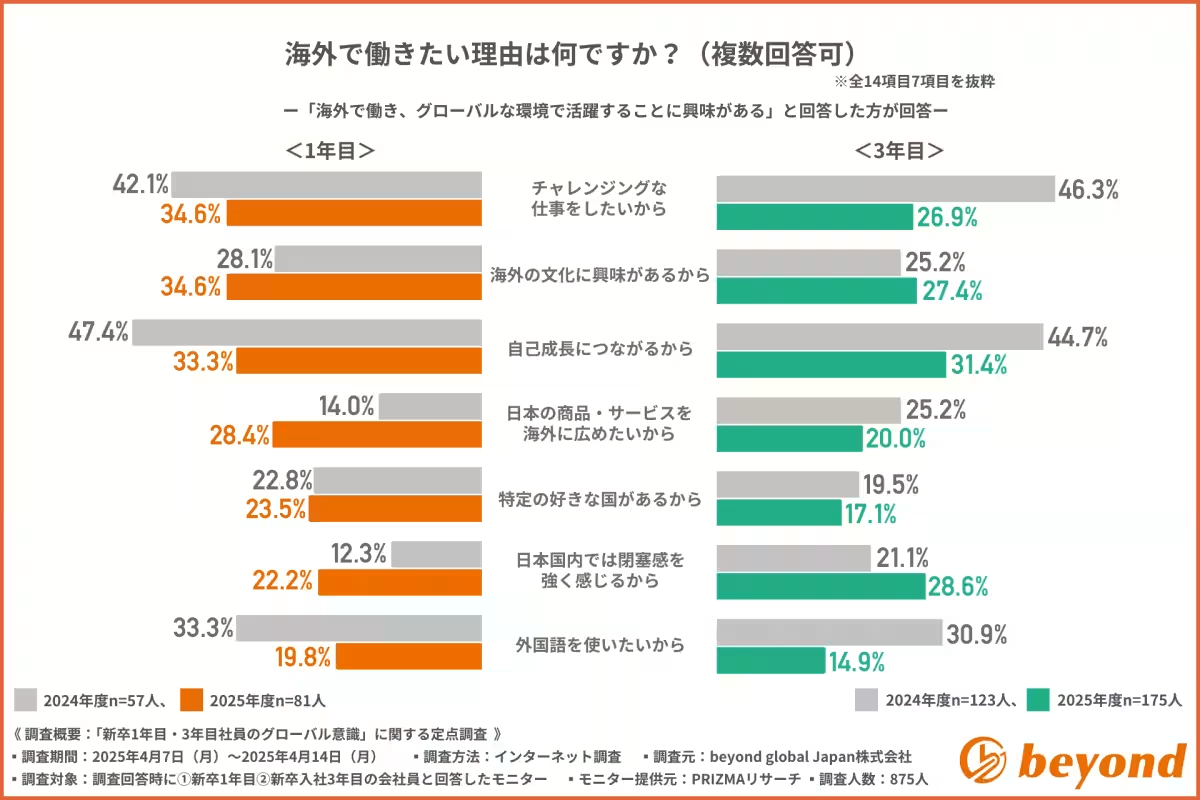
The increase in global interest may be attributed to a growing sense of stagnation among young employees in Japan. This sentiment appears to be stronger among third-year employees, many of whom reported feeling confined within the limits of the domestic job market. As they navigate professional experiences, they are increasingly aware of the disconnect between their career expectations and actual job prospects.
Opportunities for Growth
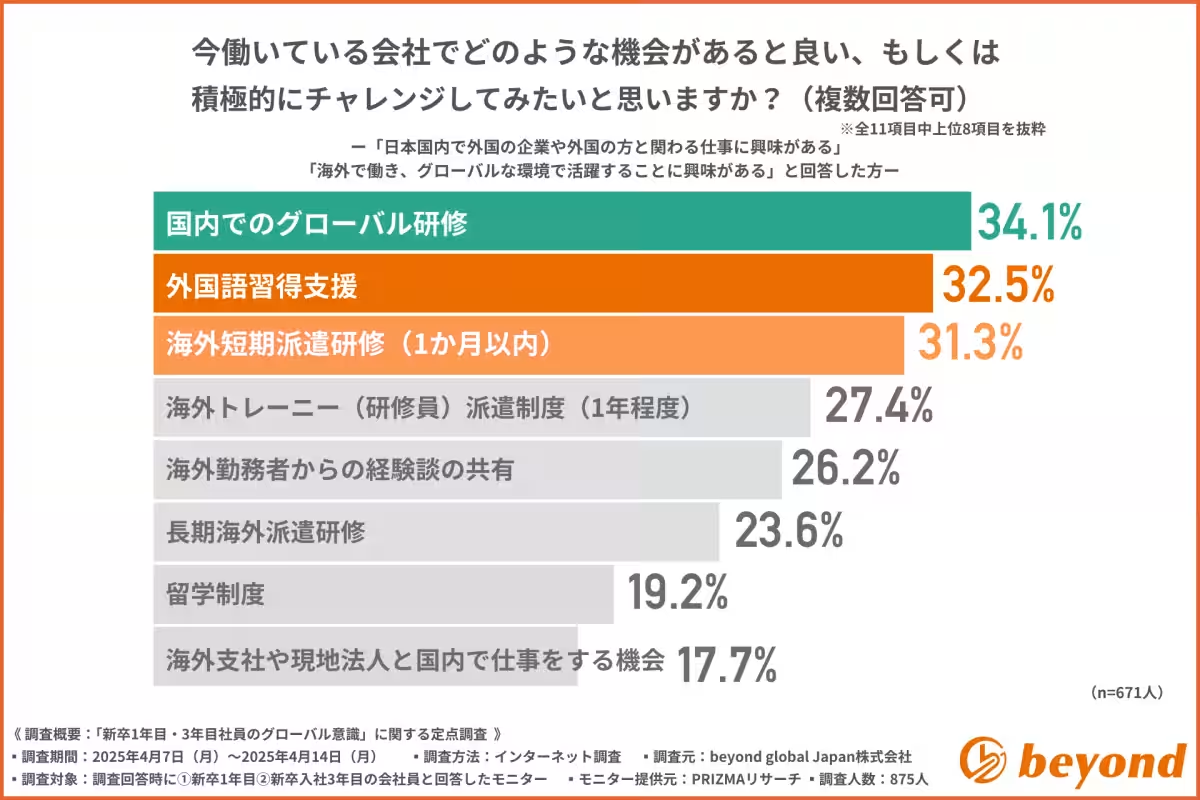
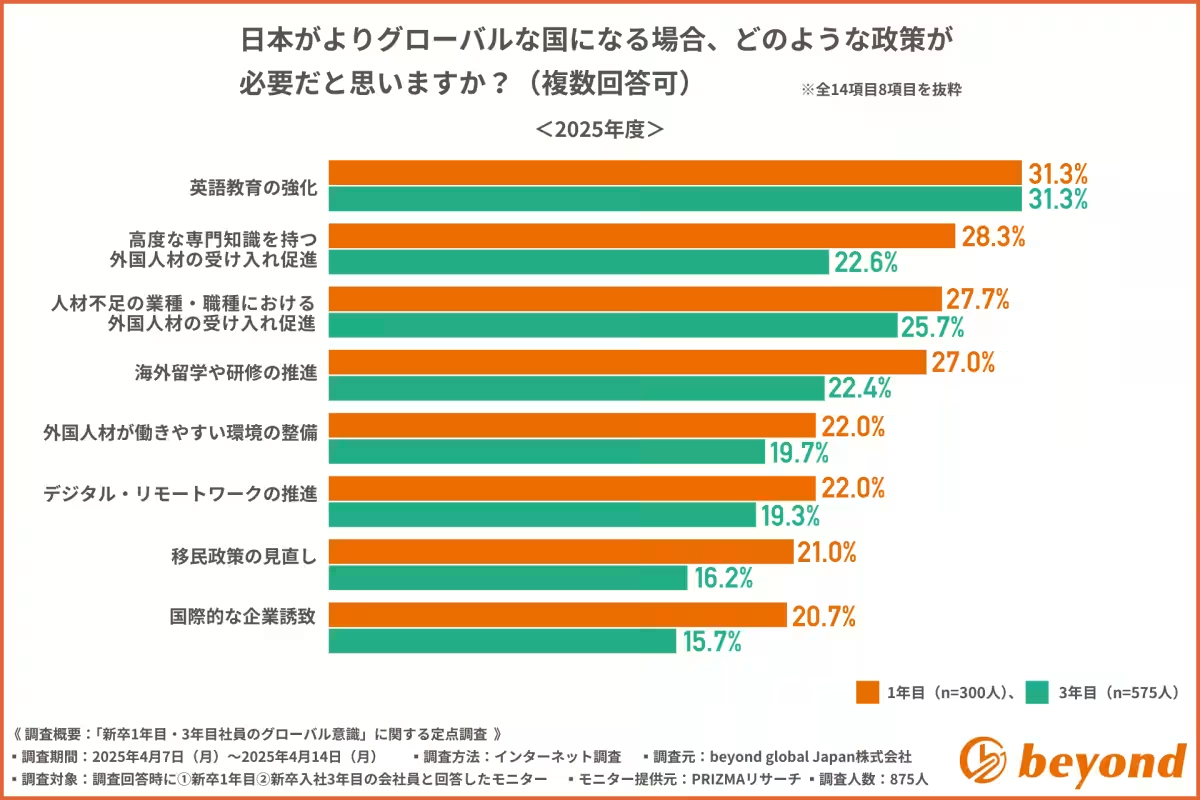
Employee feedback regarding what opportunities could encourage them to embrace global roles included suggestions for domestic global training, language support, and short overseas assignments. These insights present a clear expectation for organizations to provide gradual exposure to international environments, including training that offers practical experiences.
Supporting Global Aspirations
In light of the survey findings, it’s evident there has been a subtle but meaningful change in perceptions toward global work among new graduates in Japan. Companies need to adapt to these shifting desires by fostering an environment that supports challenges and growth opportunities abroad.
The company beyond global Japan has positioned itself as an essential partner in organizational development with a global perspective, advocating for a future in which Japanese corporations can thrive in international markets.

Topics Business Technology)

【About Using Articles】
You can freely use the title and article content by linking to the page where the article is posted.
※ Images cannot be used.
【About Links】
Links are free to use.