



Exploring the Divide Between Management and Young Employees on Leadership Perceptions
Understanding the Leadership Perception Gap in Organizations
In a recently conducted survey by Shake Co., a Tokyo-based company, significant disparities have been uncovered regarding the perceptions of "ideal organizational structure" and "leadership" between management (specifically at the manager level) and younger employees with 3 to 10 years of experience. As traditional management styles become less effective in today’s dynamic business environment, these findings prompt a deeper reflection on how leadership is understood across different levels of an organization.
The Rise of New Management Challenges
Amidst reports of management burdens, such as the challenges faced by playing managers and the so-called punishment game mentality in management roles, there is an urgent call for change. Managers are increasingly plagued by the question of how to enhance their skills and adapt their leadership styles to meet the modern workplace's requirements. In this context, the research conducted by Shake aimed to bridge the gap between managerial expectations and the realities faced by young professionals.
Key Objectives of the Survey
- - Study Duration: April 10 to April 13, 2026
- - Methodology: Online survey conducted by PRIZMA
- - Participants: 1,005 individuals, consisting of both management and young professionals
This data provides enlightening insights into what each group considers vital for an ideal workplace and how these perceptions can shape future leadership practices.
What Defines an Ideal Workplace?
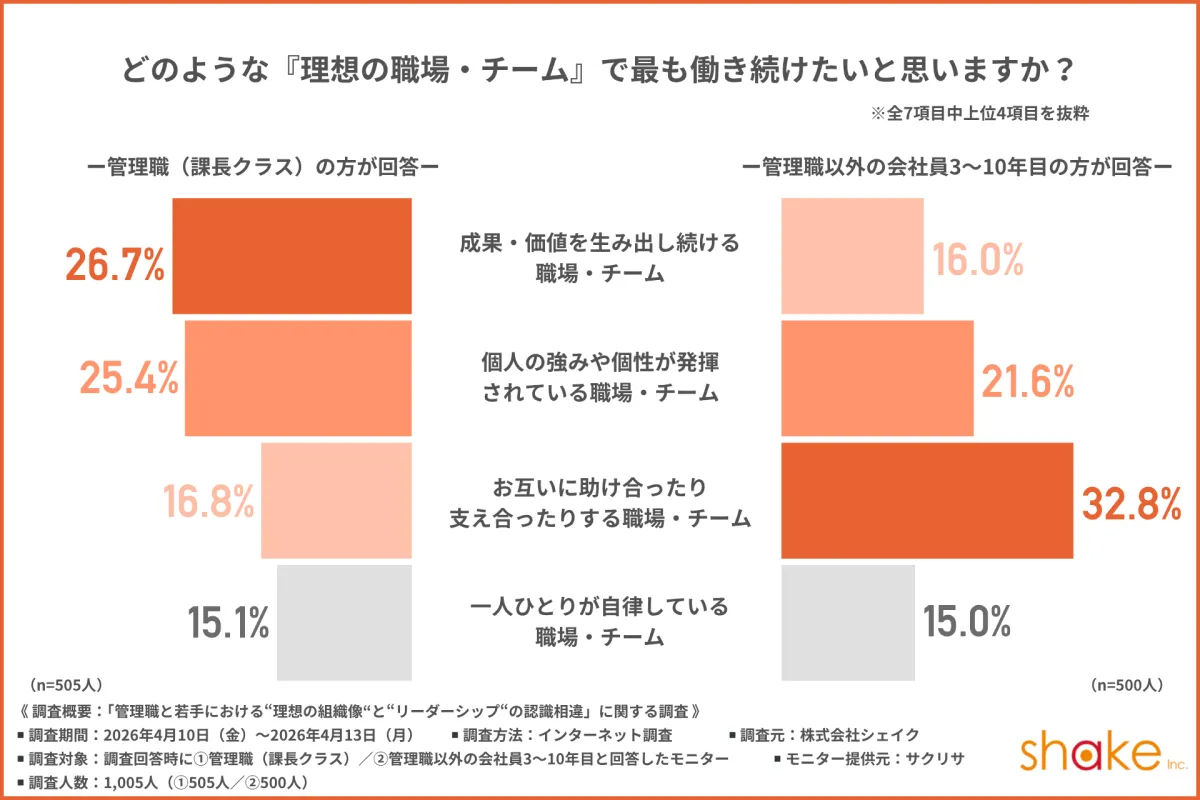
When questioned about the type of workplace they prefer, responses were divided as follows:
- - From Management:
- Environment that highlights individual strengths (25.4%)
- Supportive coworker interactions (16.8%)
- - From Young Professionals:
- Environment that highlights individual strengths (21.6%)
- Continuous value creation (16.0%)
The results indicate that while management places a premium on output-driven environments, younger employees prioritize interdependence and support among coworkers. This divergence highlights the potential misalignment between managerial expectations and employee satisfaction, suggesting a potential area for development in organizational culture.
The Perception of Leadership
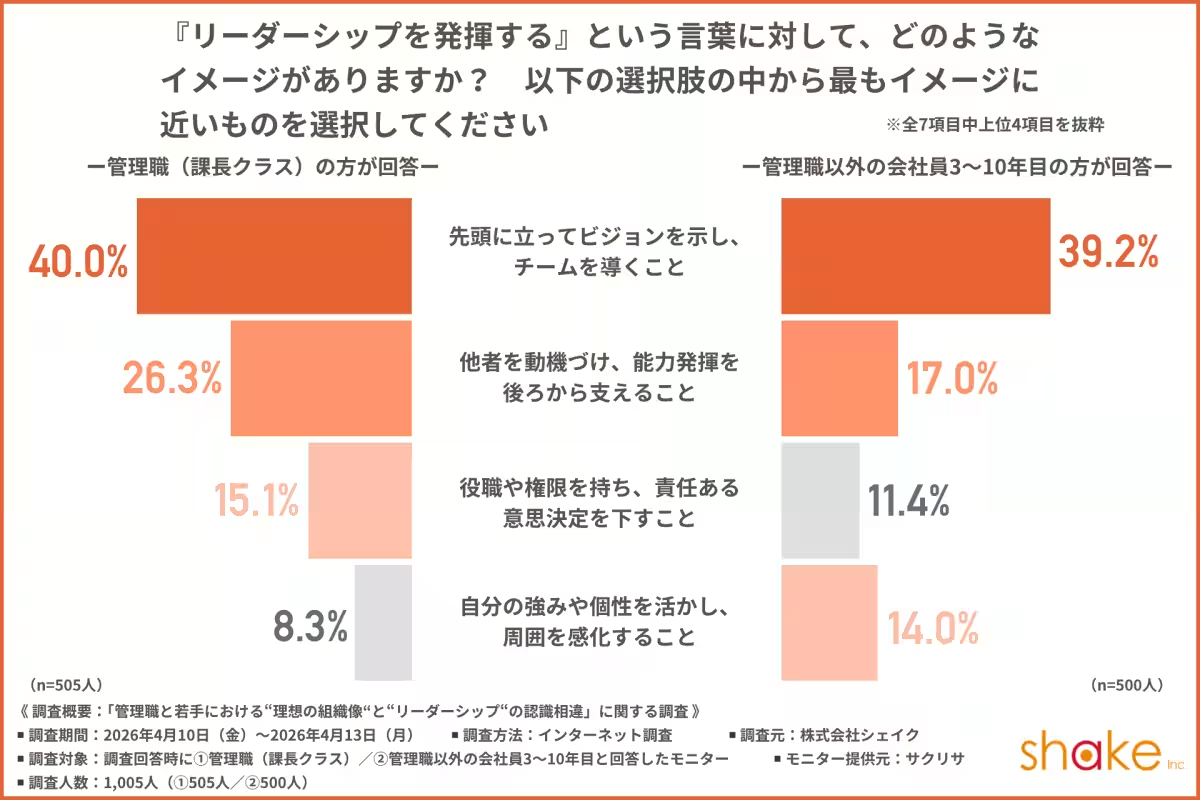
When asked about their views on what it means to exhibit leadership, both managers and younger employees recognized the importance of guiding teams through vision and motivation. Here’s the breakdown:
- - Management:
- Motivating others and supporting from the back (26.3%)
- Decision-making driven by hierarchy (15.1%)
- - Young Employees:
- Motivating others (17.0%)
- Influencing through personal strengths (14.0%)
The emphasis on visionary leadership is apparent; however, where managers focus on authority and decision-making, younger employees lean towards influence through authenticity and personal engagement, suggesting a more fluid interpretation of leadership at different levels of an organization.
Bridging the Leadership Divide
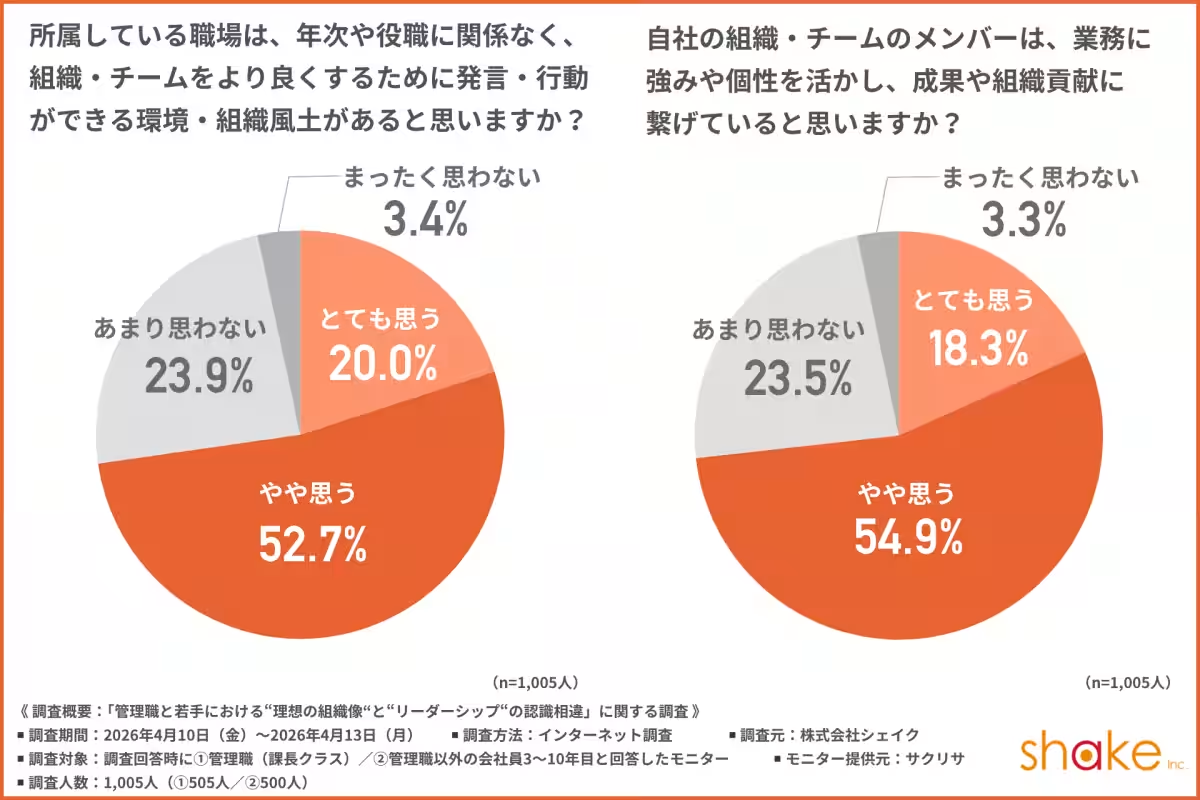
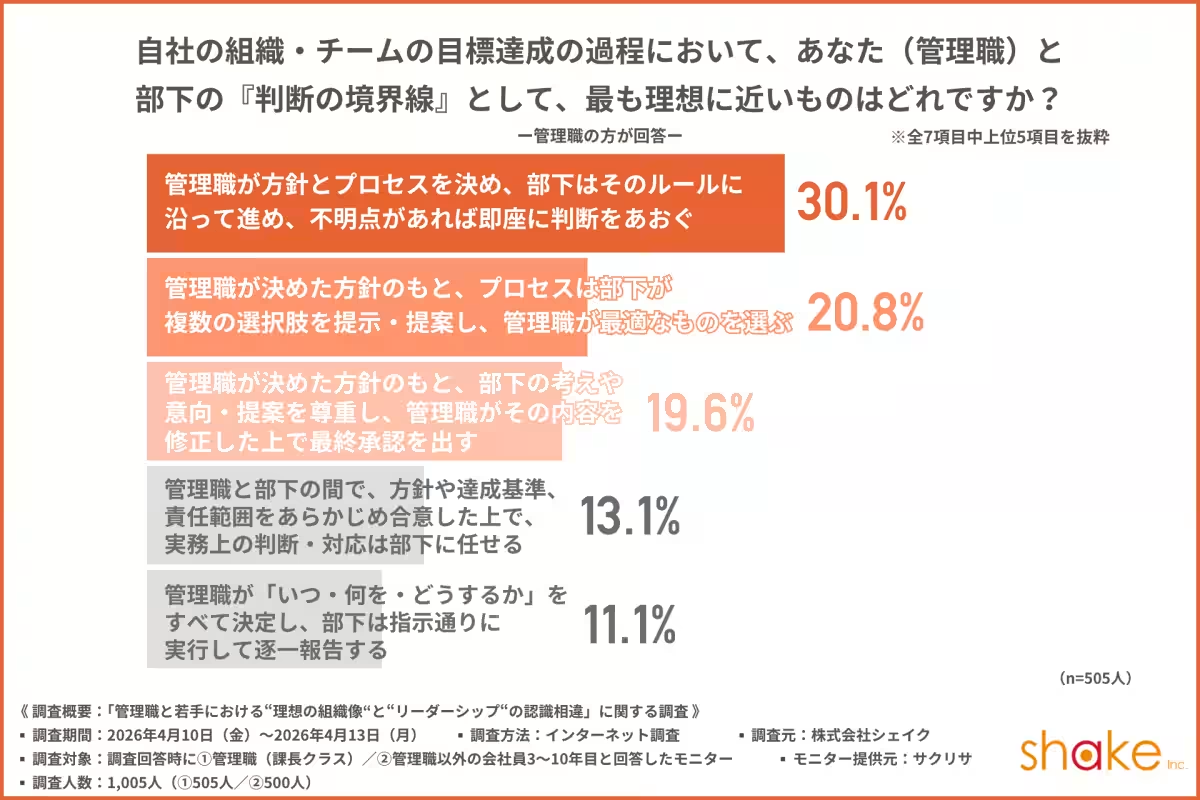
The survey also explored the boundaries between managerial decision-making and employee input. It appears that most managers prefer retaining control over decision-making processes while simultaneously respecting employee suggestions. This trend suggests a need for more inclusive decision-making, where young employees feel empowered to contribute actively rather than just follow predefined paths.
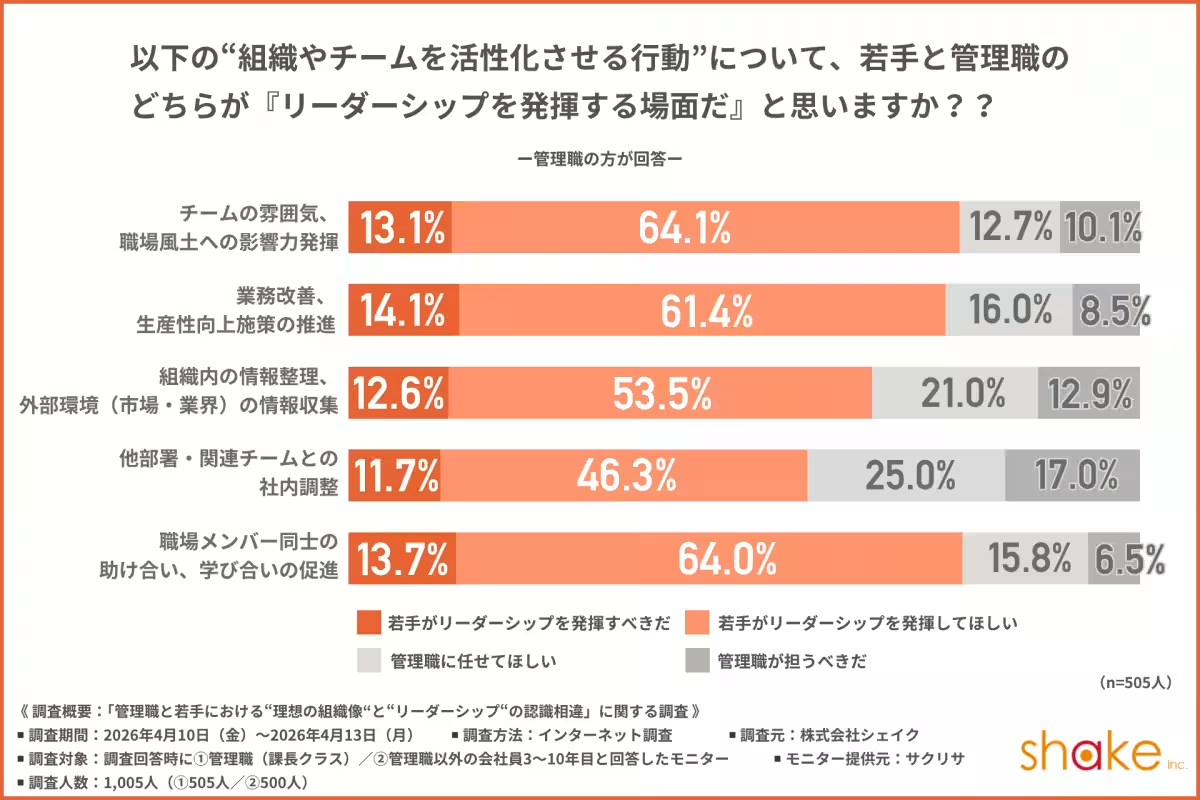
Furthermore, a significant number of managers have expressed an expectation for younger employees to take initiative in fostering workplace relationships and improving team dynamics. This contrasts with the relatively lower expectations for them to engage in interdepartmental coordination or external engagement activities - suggesting a focus on internal processes rather than broader organizational impacts.
Supporting Emergent Leadership
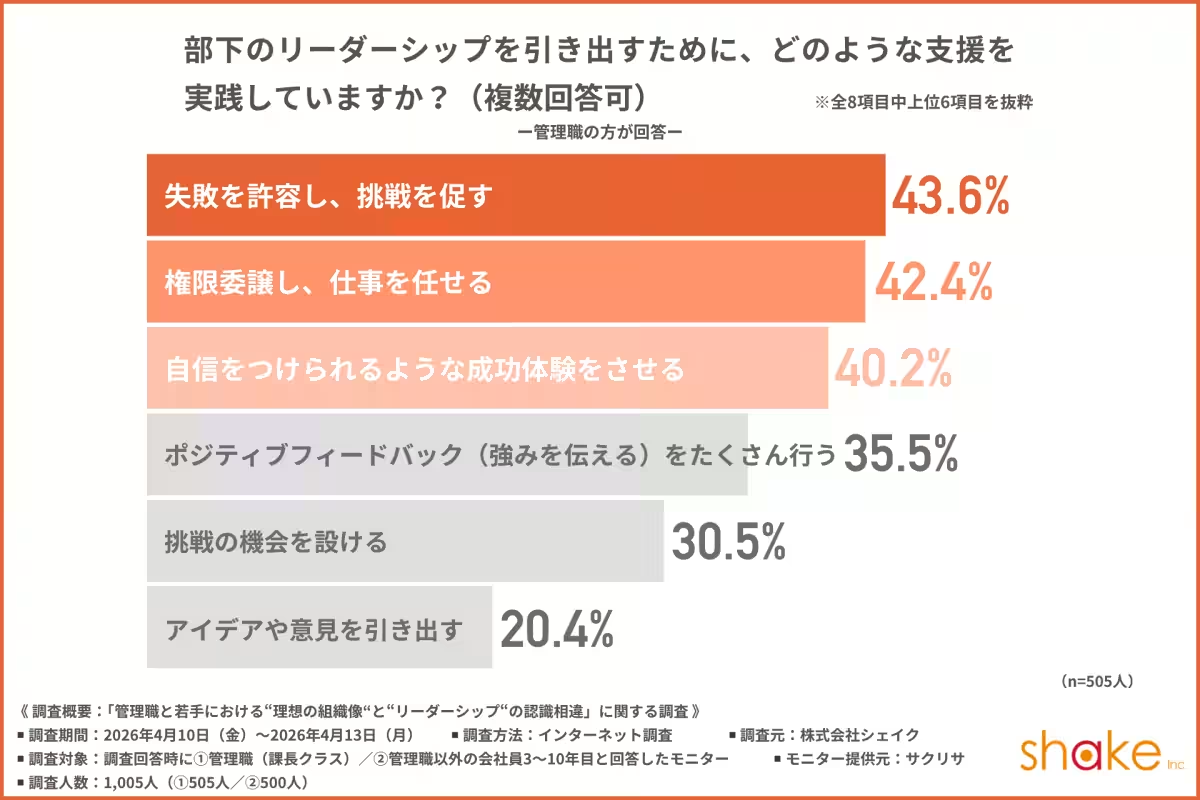
To facilitate young employees' leadership journeys, many managers are cultivating environments that allow for trial, error, and active participation. The top three methods employed include:
- - Encouraging risk-taking and accepting failures (43.6%)
- - Delegating authority and responsibilities (42.4%)
- - Offering opportunities for success to build confidence (40.2%)
This approach indicates a balanced perspective in which managers seek to guide rather than control, fostering a culture of responsibility, growth, and innovation among young employees.
Young Employees’ Leadership Aspirations
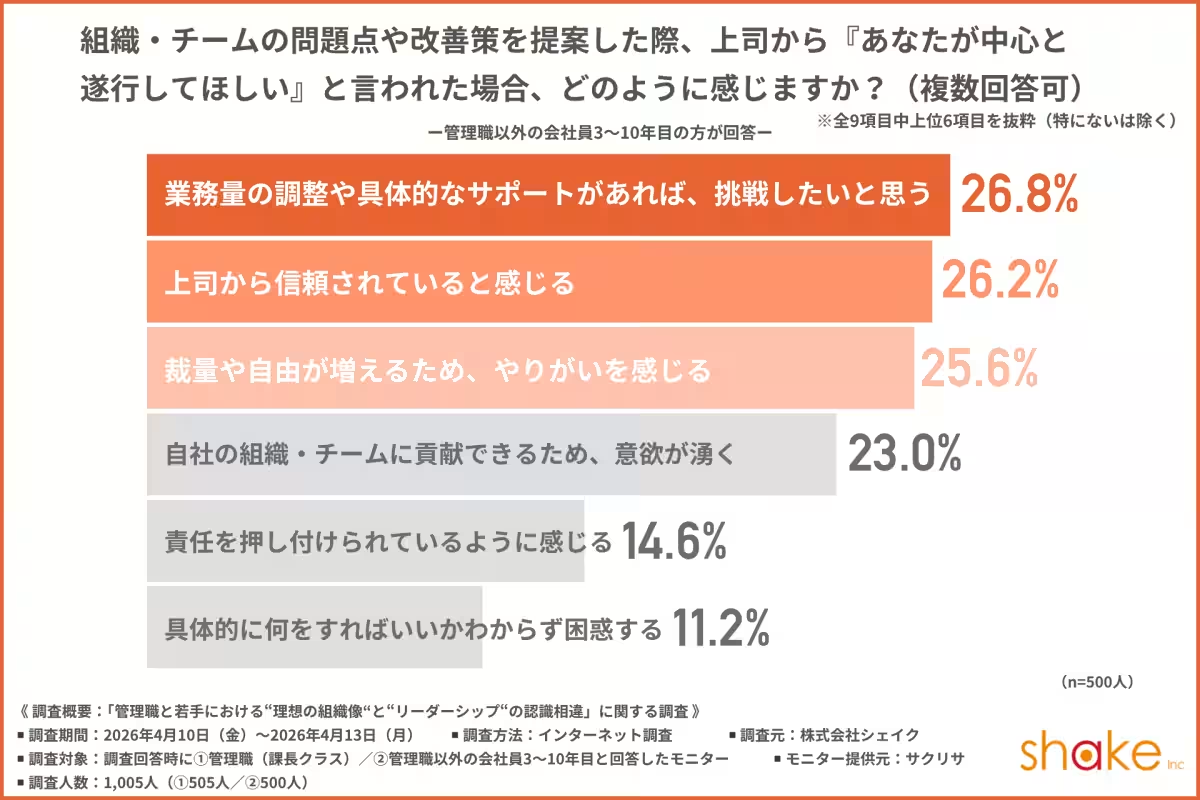
When young professionals were asked about their willingness to take on leadership roles within their teams, the majority expressed a desire to be more active, particularly when they feel supported adequately by their supervisors. The survey showed:
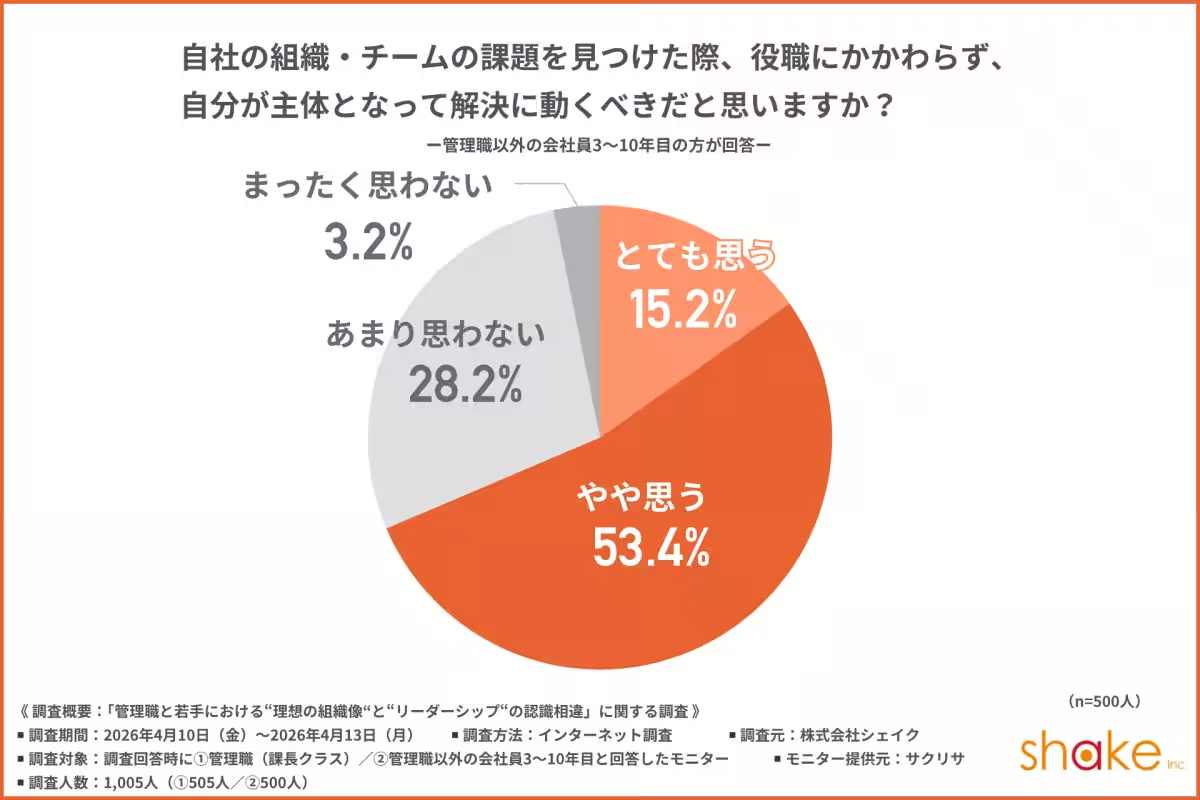
- - 70% agreed on the importance of addressing organizational challenges regardless of hierarchical position.
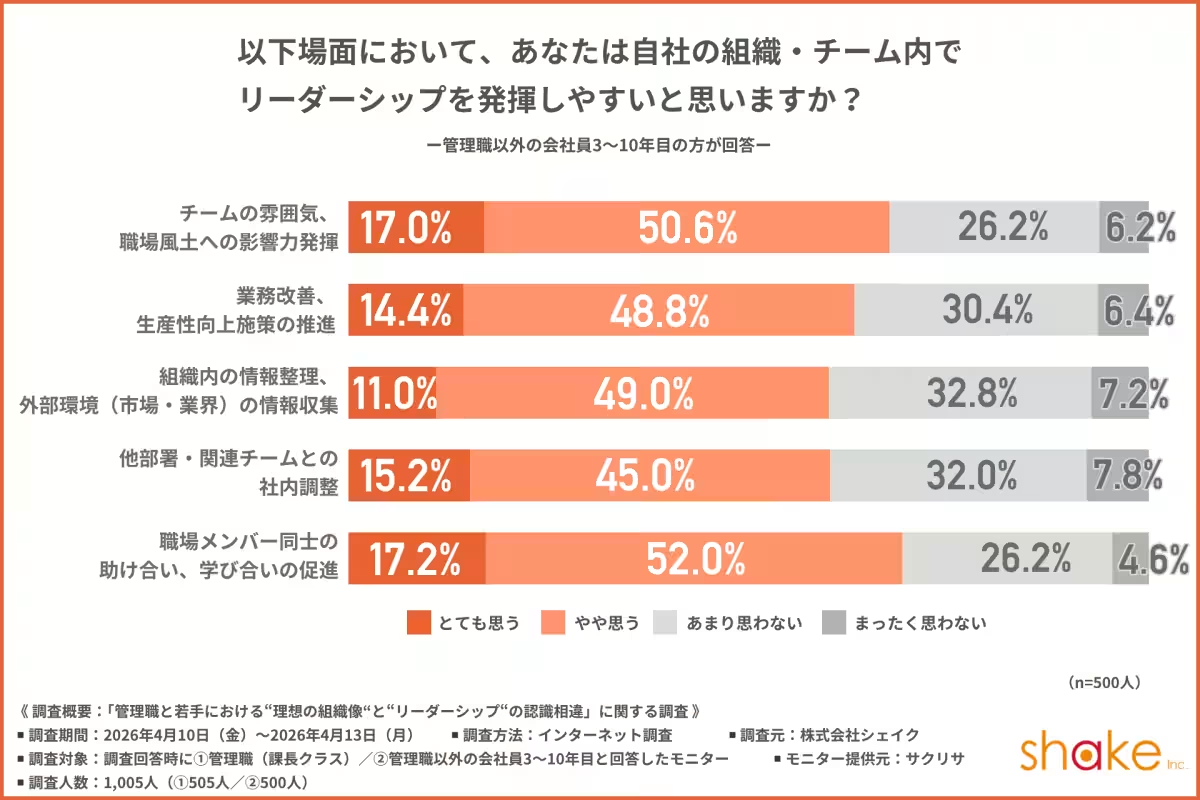
- - A similar percentage reported feeling comfortable taking initiative within their teams, especially in informal settings like enhancing workplace culture and mutual support.
However, there remains a clear distinction between their comfort in leading peer interactions versus formal organizational duties, highlighting an aspect of potential developmental training for emerging leaders.
Conclusion: Towards a Shared Leadership Model
The dissonance between management and younger employees reveals a vital opportunity for organizations to evolve their leadership models towards a shared leadership approach. This could empower all members to take ownership and responsibility within their roles, aligning their skills with organizational goals. Given the high self-efficacy reported among young employees, companies like Shake are positioned to create frameworks that support these shifts effectively.
To further explore the detailed findings of this survey, stakeholders are invited to access a comprehensive report provided by Shake, focused on enhancing organizational development through leadership training and supportive roles.
For more insights, please visit Shake Co.'s website.

Topics People & Culture)
【About Using Articles】
You can freely use the title and article content by linking to the page where the article is posted.
※ Images cannot be used.
【About Links】
Links are free to use.