



Emerging Trends in Japan's Workforce: Work-Life Balance Takes Precedence Over Compensation
Emerging Trends in Japan's Workforce
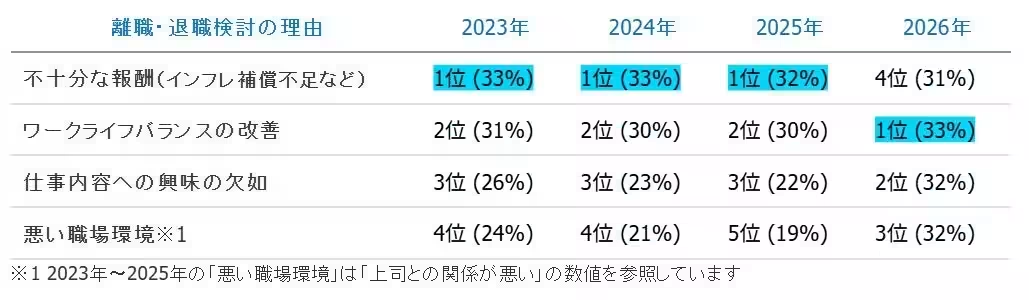
In a groundbreaking report published by Randstad, the leading staffing agency headquartered in Chiyoda, Tokyo, the results of their 2026 Employer Brand Research have shed light on the evolving motivations of Japanese workers when it comes to job resignation. For the first time in history, 'work-life balance' has taken the top spot as the primary reason for leaving a job, surpassing the long-standing leader, 'inadequate compensation'. This marks a significant shift in workplace priorities for workers across different generations.
Work-Life Balance: The New Priority
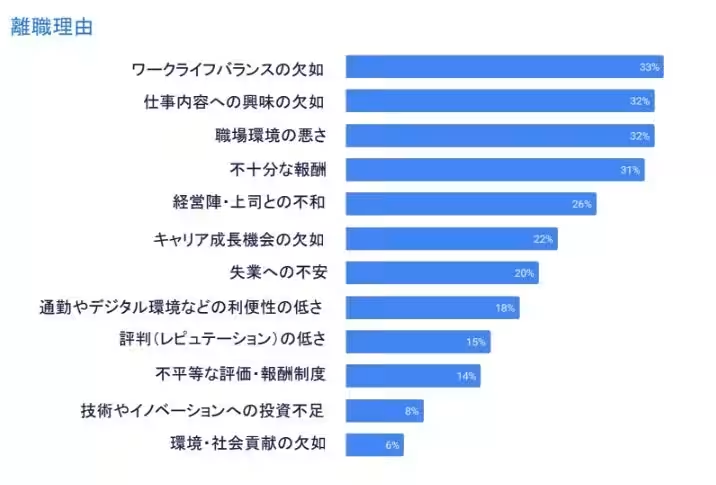
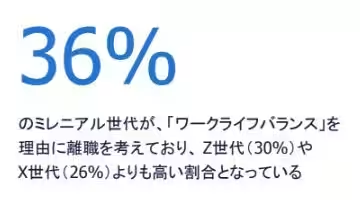
Among the factors prompting Japanese employees to leave their jobs, the desire to improve their work-life balance was cited by 33% of respondents. This surpasses the reasons of dissatisfaction with job roles and adverse workplace conditions, which were both reported by 32% of participants. Inadequate compensation followed closely in fourth place at 31%. This shift indicates that employees are increasingly prioritizing their mental and physical well-being, seeking meaningful improvements in their daily work environments rather than just monetary rewards.
Interestingly, the labor market in Japan remains relatively stagnant, with only 14% of workers planning to change jobs in the first half of 2026 and just 7% having done so in the past six months. Compared to global trends, this conservative outlook reflects a unique challenge in Japan's approach to workforce mobility. However, organizations are urged to address the high resignation risks associated with unmet daily expectations, making employee retention a crucial focus of many companies.
Generational Perspectives on Job Selection
Despite 'attractive salaries and benefits' reigning as the most important criterion for job selection, a significant disparity between expectations and reality emerges. While 59% of respondents highlighted salaries and benefits as vital in their job choices, assessments of their current employment skewed towards stability and work-life balance instead, with compensation ranking further down.
This highlights a concerning gap wherein employers are unable to sufficiently meet expectations regarding compensation, underscoring the need for adjustments in workplace strategies.
Interestingly, generational gaps reveal that younger employees, particularly from Generation Z, are less likely to prioritize job security, with only 38% viewing it as essential compared to 53% of Generation X. This younger demographic tends to focus more on opportunities for personal growth and learning, seeking to enhance their 'employability' rather than relying on a single employer for long-term job security. This shift in focus is accompanied by a desire for transparent communication and professional development opportunities.
The Challenge of Remote Work and Job Design
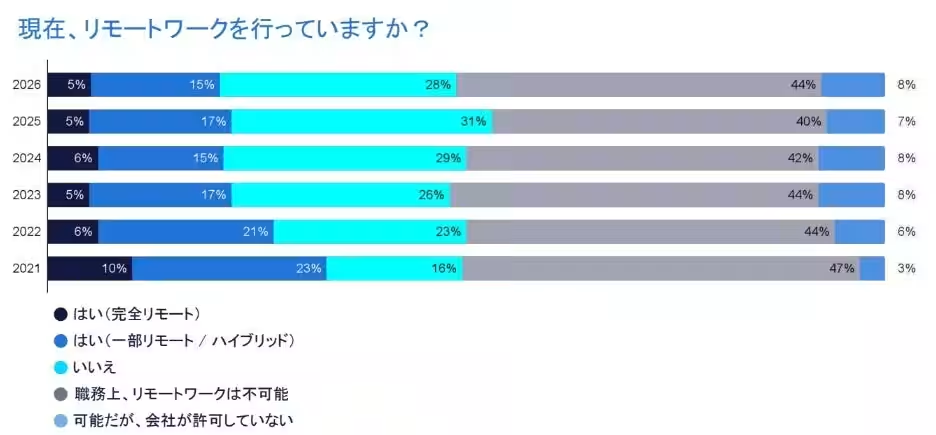
Despite the ongoing discourse around flexibility and remote work, only about 20% of Japanese employees engage in remote work to any degree. The main barrier cited for not adopting remote work practices stems from job roles that do not allow it, showing a structural issue within Japanese companies where job functions are largely designed for onsite execution.
The findings from Randstad’s Employer Brand Research 2026 provide a crucial insight into the changing dynamics of the Japanese workforce. As companies struggle to adapt to the desires of their employees, incorporating flexible work options and reassessing the traditional notions of job security will be critical for maintaining employee satisfaction and retention.
Conclusion
The Japan-based Employer Brand Research points to a need for re-evaluating workplace culture, incentives, and structures in the name of employee wellness and satisfaction. As the dynamics of the workforce continue to evolve alongside generational shifts and changing expectations, employers who can blend a strong work-life balance ethos with fair remuneration practices are likely to emerge as leaders in attracting and retaining top talent. For organizations aiming to thrive, this is not just an opportunity but a vital necessity to navigate Japan's unique labor landscape.

Topics People & Culture)

【About Using Articles】
You can freely use the title and article content by linking to the page where the article is posted.
※ Images cannot be used.
【About Links】
Links are free to use.