



Understanding Cognitive Warfare: The New Information Risks for Companies
Insight into Cognitive Warfare: New Challenges for Enterprises
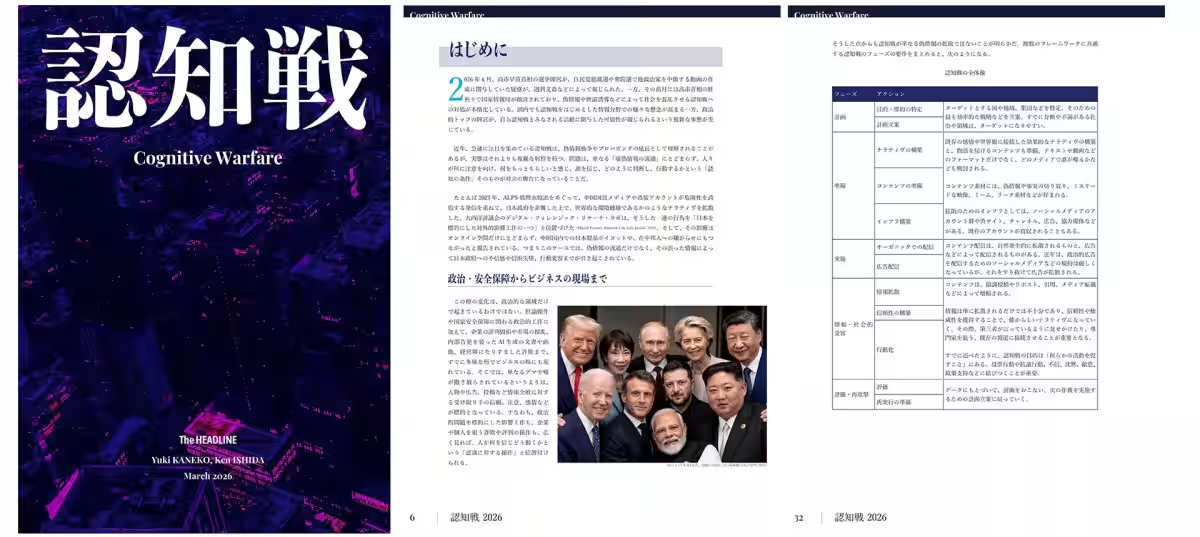
In today’s rapidly changing information environment, the concept of cognitive warfare has emerged as a significant challenge that businesses must address. Reverse Studio has recently published a white paper titled "Cognitive Warfare," exploring the complexities of this new form of information risk that goes beyond traditional crises and reputation management.
What is Cognitive Warfare?
Cognitive warfare refers to efforts aimed at influencing individuals' perceptions and judgments through various means, including the spread of misinformation, impersonation, and emotive communications. Unlike simple fake news, cognitive warfare leverages human emotions, meaning that merely correcting facts won't resolve issues entirely.
The Necessity of Addressing Cognitive Warfare Now
The proliferation of social media and generative AI in our daily lives has transformed how companies engage in public relations and information dissemination. As public trust shifts, cognitive warfare is no longer just a concern in the realms of politics and security; it has become a pressing issue for businesses as well.
Companies are now facing not only reputational risks but also threats that can undermine trust from stakeholders, such as customers, employees, and investors. The white paper highlights actual cases of damage caused by market disruptions, reputation attacks, and impersonations targeting executives. Understanding these evolving risks is critical for safeguarding brand value in this turbulent time.
Key Considerations Explored in the White Paper
1. Why is cognitive warfare a pressing issue now?
2. Definitions and mechanics of cognitive warfare
3. Key actors and their methods of attack
4. Case studies focusing on businesses and executives as targets
5. Potential responses and strategies for companies
This white paper serves as a valuable resource for corporate leaders, public relations personnel, and risk management teams who are grappling with these emerging challenges. The following specific concerns are addressed:
- - Companies feel that the rise of generative AI and social media has increased their information risk landscape but struggle to understand the specifics of these changes.
- - It is increasingly difficult to assess whether providing accurate information is sufficient when faced with criticism or doubt online.
- - Uncertainty exists regarding the extent of preparation needed against misinformation or impersonation affecting their organization.
- - Establishing trust from customers, investors, and employees has become more complicated than just issuing official statements.
- - There are growing concerns that traditional crisis management strategies may not be enough to deal with these new information risks.
Support for Tackling New Information Risks
Reverse Studio aims to assist companies in analyzing their susceptibility to information risks and provide guidance for both proactive measures and crisis responses. This includes media relations, PR strategies, risk management, and tailored briefings for management teams.
Download Information
The white paper is available for free at this link.
About Reverse Studio
Reverse Studio, founded in January 2022, is headquartered in Roppongi, Tokyo. The company specializes in providing comprehensive support for navigating the complex information environments in which modern businesses operate.
For further information, visit Reverse Studio’s website.
Topics Business Technology)
【About Using Articles】
You can freely use the title and article content by linking to the page where the article is posted.
※ Images cannot be used.
【About Links】
Links are free to use.