



New Research Unveils Plastic Transport in Rivers During Heavy Rainfalls
New Insights into Plastic Transport during Floods
Recent research conducted by a team led by Assistant Professor Mamoru Tanaka and Professor Yasuo Nihei from the Tokyo University of Science has provided valuable insights into the transport of microplastics and mesoplastics in rivers during extreme rainfall events. This study, particularly focused on four urban rivers in Japan—Tsurumi, Tamagawa, Asakawa, and Yamato—uncovers findings that could significantly change our understanding of how plastics enter aquatic environments during floods.
Significance of the Study
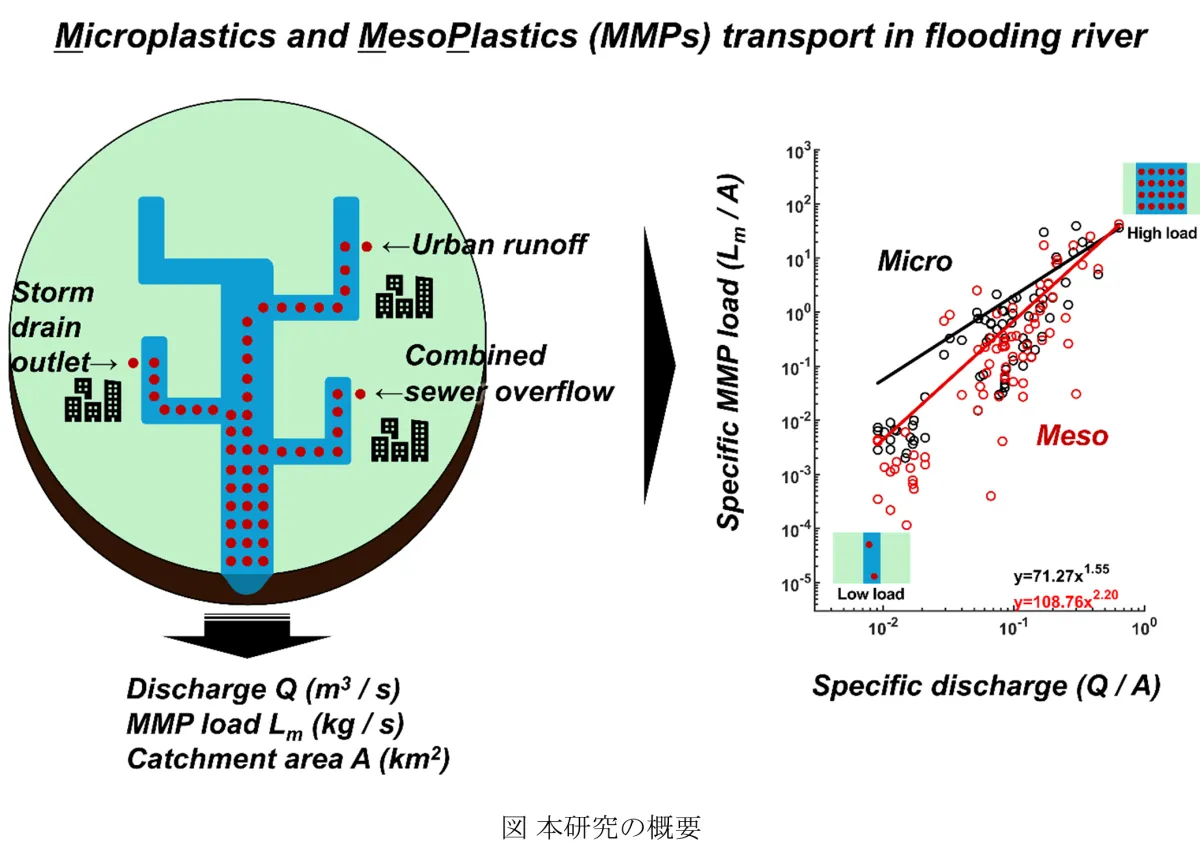
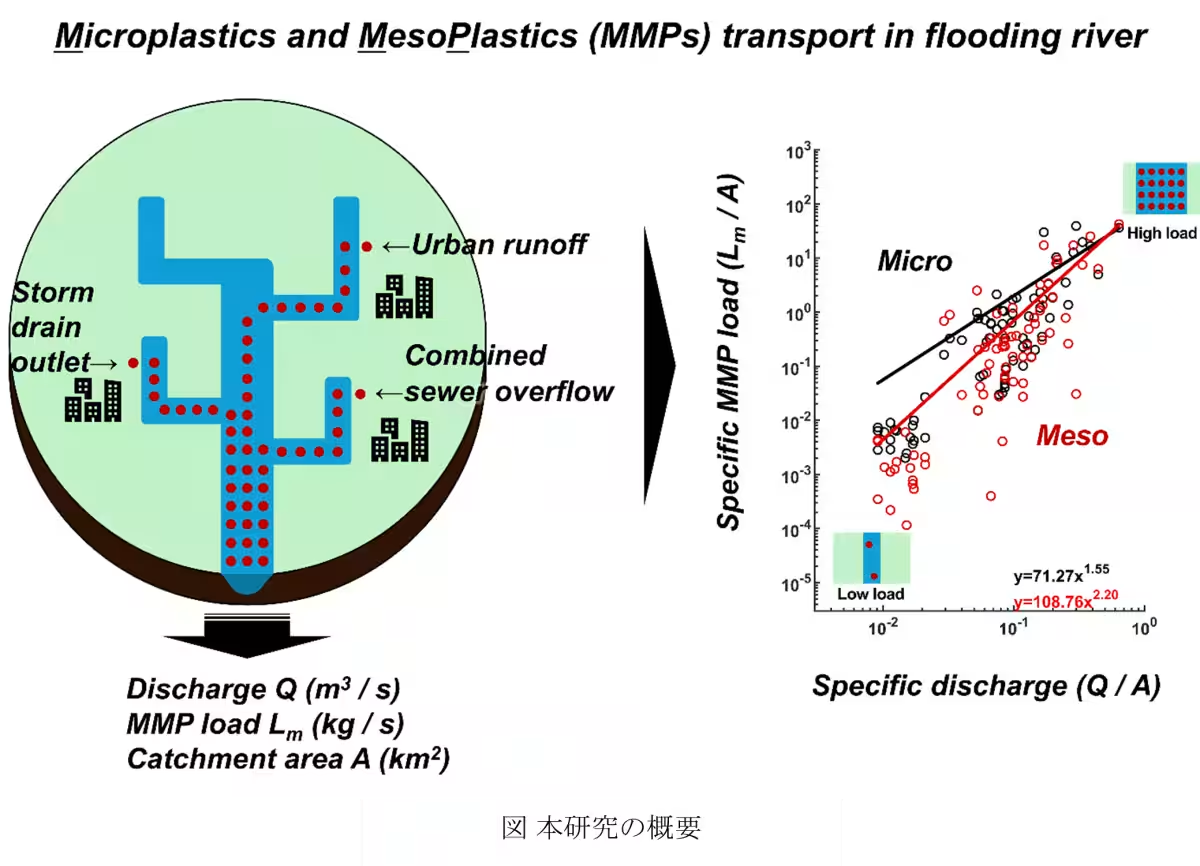
Most previous studies have addressed plastic transport under normal river flow conditions, often neglecting the dynamics during floods. The findings from this research shed light on a critical aspect of environmental science: the overwhelming majority of plastic transport occurs during a brief period of flooding. In fact, it was found that nearly 90% of the annual transport of mesoplastics happened during just 43 days of heightened flow caused by severe weather.
The researchers developed a straightforward equation that relates river flow rates to plastic transport amounts, making it easier to estimate how much plastic is washed into rivers based on flow data. This empirical formula, applicable across different catchment areas and rainfall scales, signals a breakthrough in monitoring efforts and provides a model for estimating plastic emissions on a per capita basis.
Key Findings
1. Dramatic Increase in Plastic Concentration: Continuous observations during rainy periods revealed that concentrations of microplastics and mesoplastics could increase by an astonishing factor of 10 to 10,000 as river flow rates surged. The research suggests that not only does increased flow facilitate the movement of existing plastics in the river, but floodwaters also carry in plastic debris accumulated in the watershed prior to the rainfall.
2. Establishment of Universal Load-Discharge Relationships: The team was able to derive empirical equations demonstrating the relationship between river flow (Q') and the loading of microplastics (L'm) and mesoplastics (L'm). For microplastics, the formula obtained is L'm = 71.27Q'1.55, while for mesoplastics, it is L'm = 108.76Q'2.20. These relationships were shown to hold true across varied urbanization rates and population densities, indicating that plastic transport can be reliably estimated using flow data under various conditions.
3. Intermittent Plastic Transport: The analysis also highlighted a significant temporal bias in plastic transport. For example, within certain rivers, a striking 90% of their annual mesoplastic transport occurred within just 43 days characterized as high-flow periods, underscoring a pattern of extreme intermittent transport related solely to flooding conditions.
Importance of Monitoring During Flood Events
This research has critical implications for our understanding of plastic pollution. It emphasizes the necessity of monitoring river systems during flood events to capture the true scale of plastic transport. Traditional assessments that focus solely on periods of normal flow have likely underestimated the extent of plastic pollution reaching waterways and, ultimately, the ocean.
In conclusion, Professor Tanaka emphasizes that similar studies have not thoroughly addressed various conditions in rivers as his team has. The work not only enhances scientific understanding but also provides practical tools for environmental monitoring and policymaking. As cities face a rising threat from wastewater overruns during rainfall, capturing the movement of plastics amidst such conditions becomes even more crucial in combating plastic pollution.
Conclusion
The findings of this pioneering research will be formally published in the international journal "Water Research" on December 15, 2025. They aim to serve as a foundation for developing effective strategies to combat plastic pollution and emphasize the need for comprehensive environmental assessments during floods—a growing concern in light of increasing rainfall variability due to climate change.
- ---
This study was supported by grants from the Ministry of the Environment, Japan, the Environmental Restoration and Conservation Agency (ERCA), and the River Foundation.
Topics Environment)
【About Using Articles】
You can freely use the title and article content by linking to the page where the article is posted.
※ Images cannot be used.
【About Links】
Links are free to use.